Picture this: a rock flicks off a transport truck on the 401, and crack, there’s a lightning bolt across your line of sight. You ring around, and the first question the shop asks isn’t “when are you free?” It’s “OEM, OEE or aftermarket?”
Cue the blank stare. Three acronyms, three prices, and not one person has explained why a bit of curved glass should cost anywhere from “decent dinner” to “small holiday”.
Fair enough. At Famous Auto Glass LTD., we get asked this daily, so here’s the straight-up, no-jargon version. By the end you’ll know exactly why these three windscreens differ in specifications, which one suits your ride, and how to dodge the dodgy ones. Grab a cuppa, mate.
First Things First: What’s Actually in Your Windshield?
An OEM or OEE windshield isn’t one sheet of glass. It’s a laminated sandwich: two layers of glass with a clear plastic interlayer (usually PVB) squished between them. That plastic is why a chip doesn’t turn into a shower of shards and why the glass stays put in a collision.
Modern windscreens also carry a whole lot of extras:
- A ceramic black frit band around the edge (it protects the urethane adhesive from UV and gives the bond a surface to grip)
- A camera bracket or cut-out for driver-assist systems
- Rain sensor and light sensor zones
- Solar-reflective or infrared-filtering coatings
- Acoustic interlayers that dull road noise
- Heated wiper parks, antenna lines, or a head-up display (HUD) wedge layer
Every one of those is a “specification”. And the three glass types handle them differently, which is the whole story of this blog.
The 60-Second Cheat Sheet
|
Feature |
OEM |
OEE |
Aftermarket |
|---|---|---|---|
|
Made by |
The supplier contracted by your carmaker |
Independent makers, built to match the original |
Independent makers, quality varies widely |
|
Carmaker logo |
Yes |
No |
No |
|
Fit to original |
Identical |
Very close |
Hit-and-miss |
|
ADAS / camera friendliness |
Designed around it |
Usually fine when calibrated |
Depends on the brand |
|
Typical cost |
Highest |
Mid |
Lowest |
|
Best for |
Newer, tech-heavy, leased vehicles |
Most everyday cars |
Older, budget-first vehicles |
Keep that handy. Now let’s get into the why.
OEM: The Glass Your Car Was Born With
OEM stands for Original Equipment Manufacturer. It’s the same glass that went into your vehicle on the factory line, built to the carmaker’s own drawings and tolerances, and usually stamped with the manufacturer’s logo.
What makes the spec so tight?
- Exact curvature. Your windscreen is bent to a precise shape. A few millimetres out and you get wind noise, distortion at the edges, or a bond line those never quite seats.
- Exact thickness and tint. These affect clarity, glare and how much heat gets into the cabin.
- Exact sensor geometry. The camera zone, the rain sensor window and the HUD layer are built to match the car’s electronics.
The catch? You’re paying for the logo and the paperwork as much as the glass. Some cars, especially newer models and certain luxury or EV brands, do call for OE-spec glass, and we’ll flag that when you book.
OEE: Same Brief, Different Badge
OEE means Original Equipment Equivalent. Think of it as a very good cover version. These windscreens are produced to match the original’s shape, thickness, optical quality and safety performance. They just don’t wear the carmaker’s logo, and they usually come from a different factory.
Why do so many shops lean on OEE for car windshield replacement? Because for the majority of vehicles, good OEE glass does the same job for less money. Independent testing overseas has also found that OEE glass from a reputable supplier didn’t hurt driver-assist performance when the camera was properly calibrated afterwards. The key phrases there are “reputable supplier” and “properly calibrated”. Not all glass is made equal, and that brings us to the wild west.
If you’re weighing up a quote, our car windshield replacement team can tell you which glass type is available for your exact make, model and trim.
Aftermarket: The Wild West (With Some Good Sheriffs)
“Aftermarket” is the catch-all for glass not made to the carmaker’s contract. Some of it is brilliant. Some of it, well, let’s say it makes you appreciate your own eyeballs.
The spec differences you can run into:
- Slight curvature variation, leading to wind whistle or a bond that needs more fiddling
- Optical distortion at the edges, which you notice most at night or in the rain
- Inconsistent tint or coating, so one windscreen looks a bit green or reflective next to your factory side glass
- Camera bracket or frit placement that’s a few millimetres off, which can make calibration a headache
- Thinner or lower-grade interlayers affecting noise and strength
The upside? It’s the cheapest option and it’s often the only option for older or rarer vehicles where OEM isn’t made anymore. The trick isn’t avoiding aftermarket glass, it’s buying it from an installer who vets the brand.
Why the Specs Actually Differ (It’s Not Just Marketing)
Here’s the bit most blogs skip. There are three real reasons OEM and OEE windshields don’t always match perfectly:
-
Licensing and tooling. The carmaker owns the design data. Independent OEE glass manufacturers have to reverse-engineer shapes and tolerances from real OEM windscreens, so tiny variations can creep in.
-
Production runs. OEM glass is built in huge, dedicated batches to specific tolerances. OEE windshield suppliers cover hundreds of models and juggle tooling, so consistency depends on how good their manufacturing process is.
-
Component choices. Interlayers, coatings and ceramic inks are specified by the carmaker for OEM windshields. For OEE glass, it’s the supplier’s call, and cost pressure is real.
That’s it. No conspiracy, just manufacturing reality.
The Modern Headache: ADAS Cameras
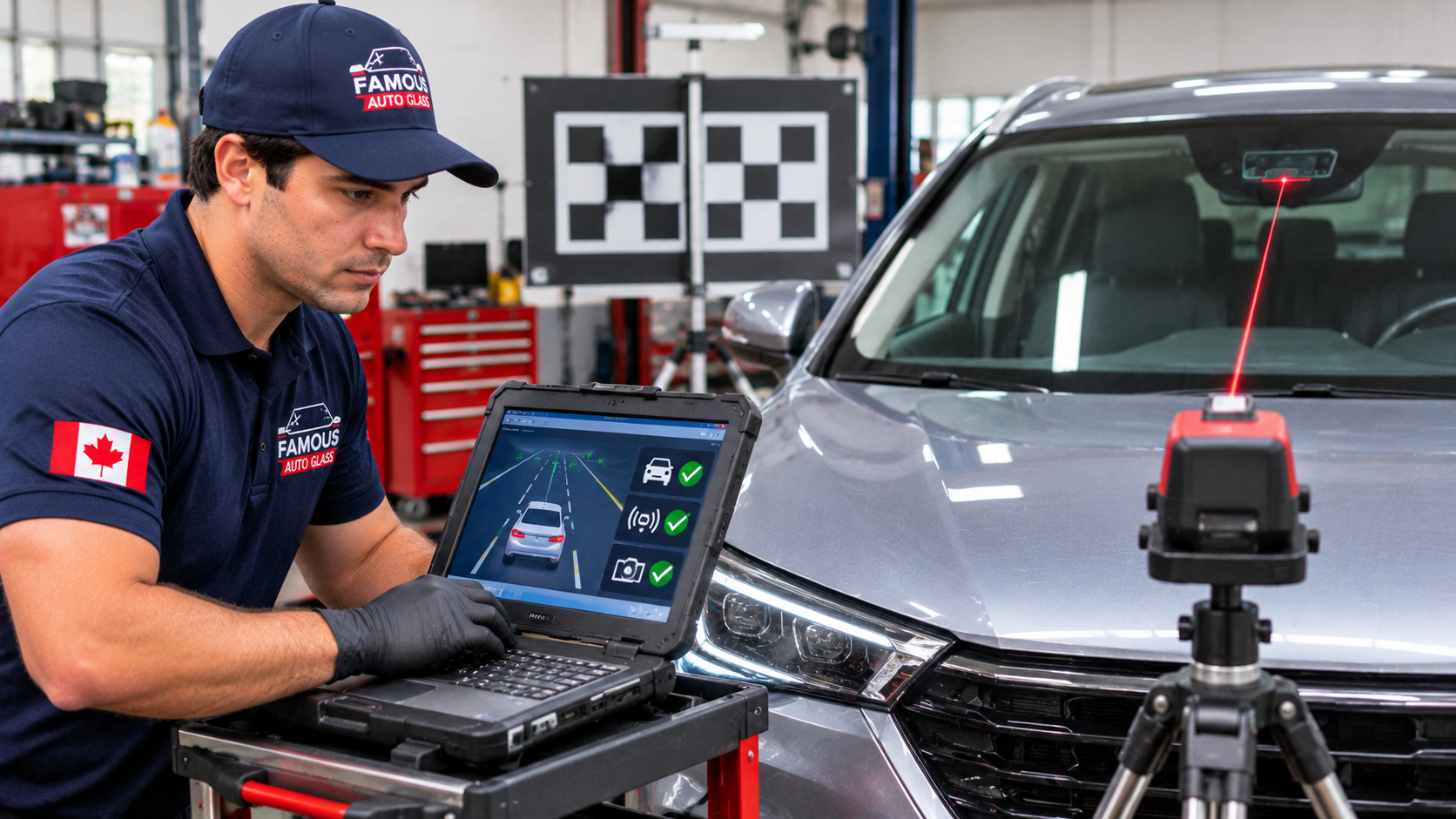
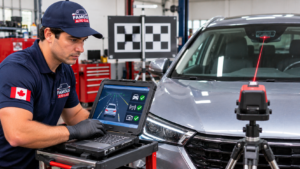
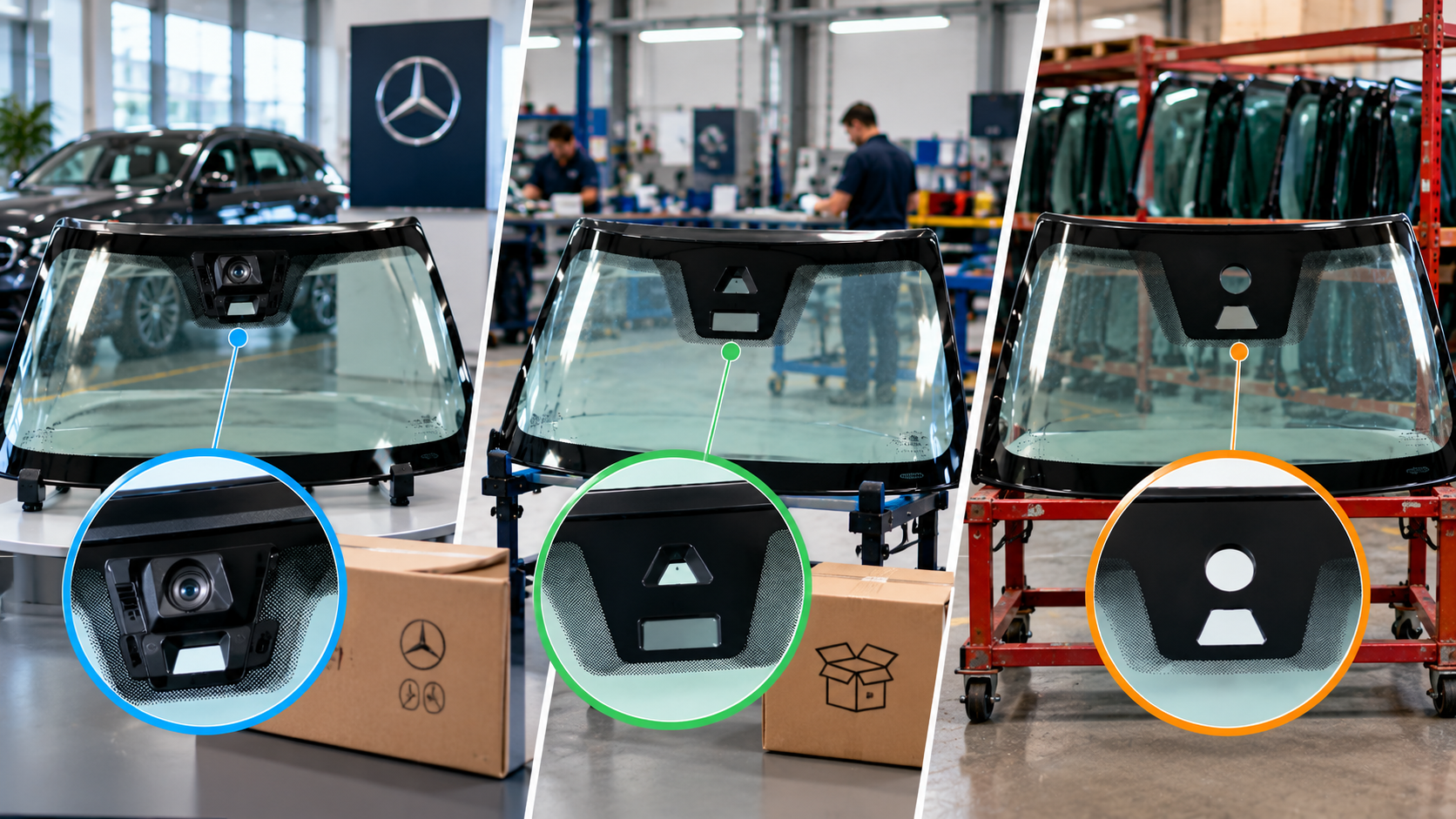
Lane-keeping, automatic emergency braking and adaptive cruise often rely on a camera mounted behind the windshield. That camera “reads” the road through the glass, so anything that changes how light passes through OEM or OEE glass can throw readings off: tint, distortion, bracket position, even a thin air bubble in the bond.
That’s why calibration matters more than the badge. After any windshield swap on a camera-equipped vehicle, the system should be recalibrated to the manufacturer’s procedure. Some carmakers publicly recommend OEM glass for specific driver-assist systems, while independent research suggests quality OEE glass can work well when calibrated correctly. The honest takeaway: check your owner’s manual, ask your installer whether they use OEM or OEE windshields, and never skip the calibration step. If a shop shrugs and says “nah, it’ll be right”, walk away.
What about Canadian Standards?
Good news: in Canada, windshields have to meet federal safety requirements for automotive glazing (look for Transport Canada’s CMVSS 205 standard and the related markings on the glass). So even the humblest legitimate windscreen has cleared a safety bar. The differences we’ve covered are about fit, optics, sensor compatibility and long-term durability, not whether the glass is legal.
Reputable glass will carry its certification marks. If you can’t find any, that’s a red flag bigger than a stop sign.
Money Talk: Who Pays for What?
Most drivers don’t pay out of pocket for the whole job, so here’s the practical bit:
- Many Canadian policies treat glass as an optional add-on or fall under comprehensive cover, often with a deductible that varies by policy.
- Some insurers will approve OEE or aftermarket glass by default and ask you to cover the difference if you insist on OEM.
- Cars on a lease or with strict driver-assist systems may have specific glass requirements.
Not sure what your policy says? Our insurance claim support page walks you through it, and we’re happy to help you sort out your glass claim paperwork so you’re not stuck on hold with a robot.
Before You Replace: Can It Be Repaired Instead?
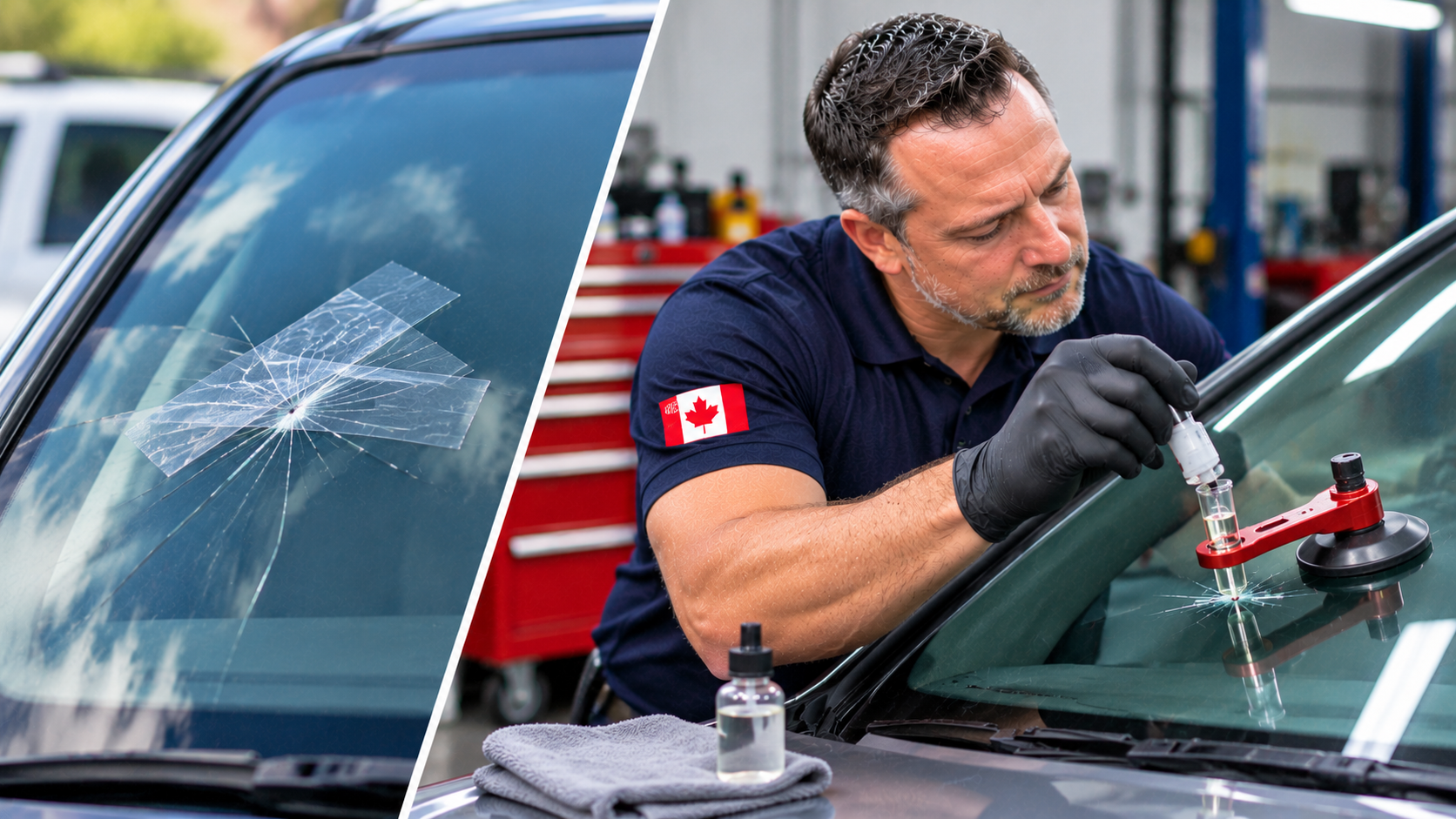
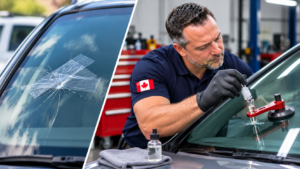
Here’s a cheeky truth: the cheapest windscreen is the one you don’t need. A small chip (roughly the size of a loonie or less) that hasn’t spread can often be filled with resin, which restores strength and stops the crack from travelling. Our chip or crack repair service is built exactly for that, and it’s usually faster and cheaper than any replacement.
Leave it, though, and a Canadian winter does the rest. One cold morning, one blast of the defroster and your chip has gone cross-country. If you’re hunting windshield repair Brampton way, Brampton drivers can book with our local crew and be back on the road before the coffee goes cold.
No Time? We’ll Come to You
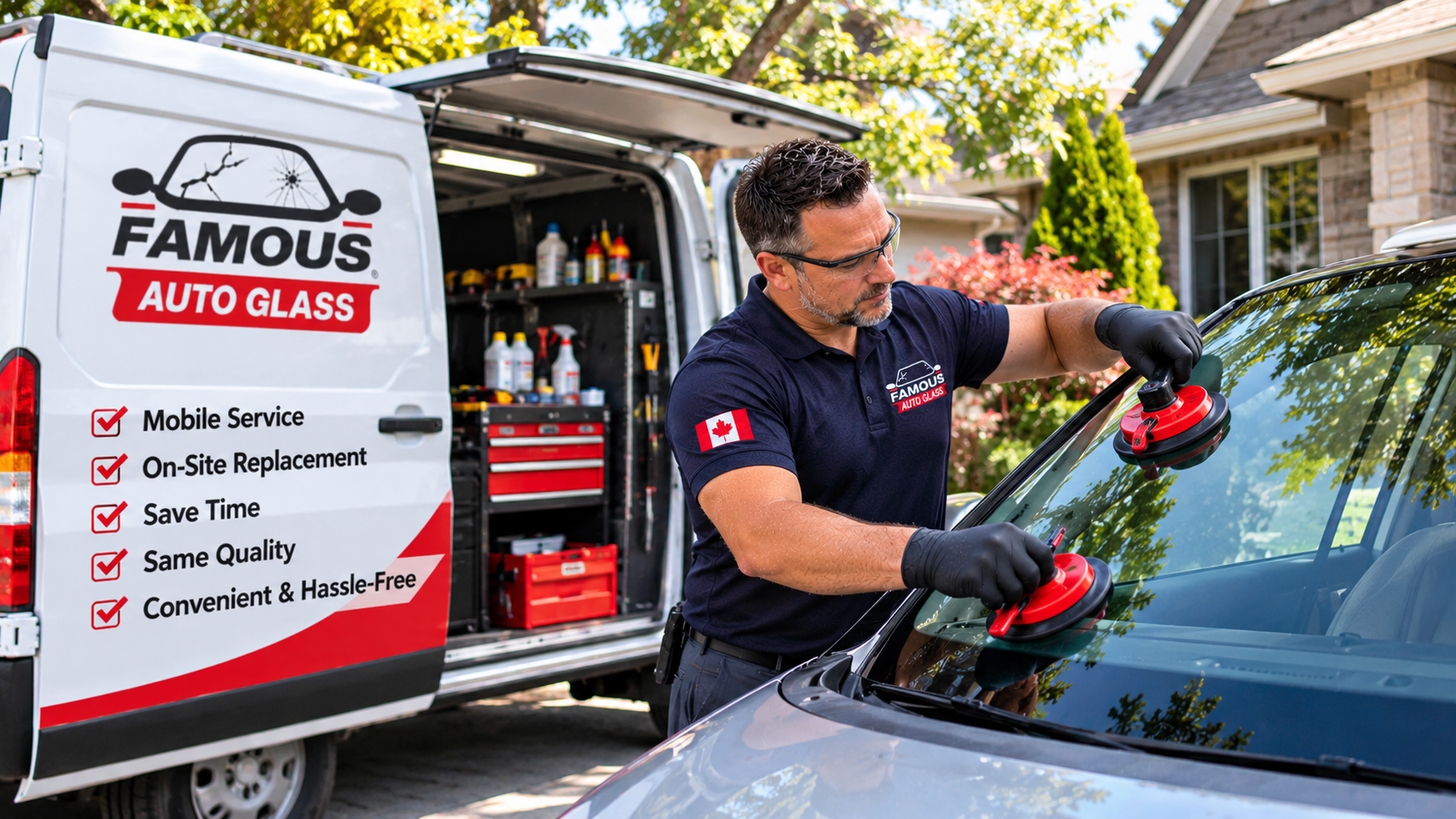
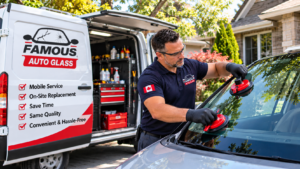
Life’s busy. Between work, school runs and hockey practice, who has a spare morning to sit in a waiting room? Our mobile windshield replacement service brings the whole setup to your driveway or workplace car park. Same quality glass, same careful install, minus the waiting-room magazines from 2014.
Just remember adhesive needs time to cure, so follow your technician’s drive-away guidance and keep the car away from car washes for the recommended window.
It’s Not Only the Windshield
The OEM / OEE / aftermarket story applies across the car, not just the front glass:
- Back-glass: rear glass replacement usually involves tempered glass with defrost lines and sometimes antenna elements, so the electrical spec matters as much as the shape.
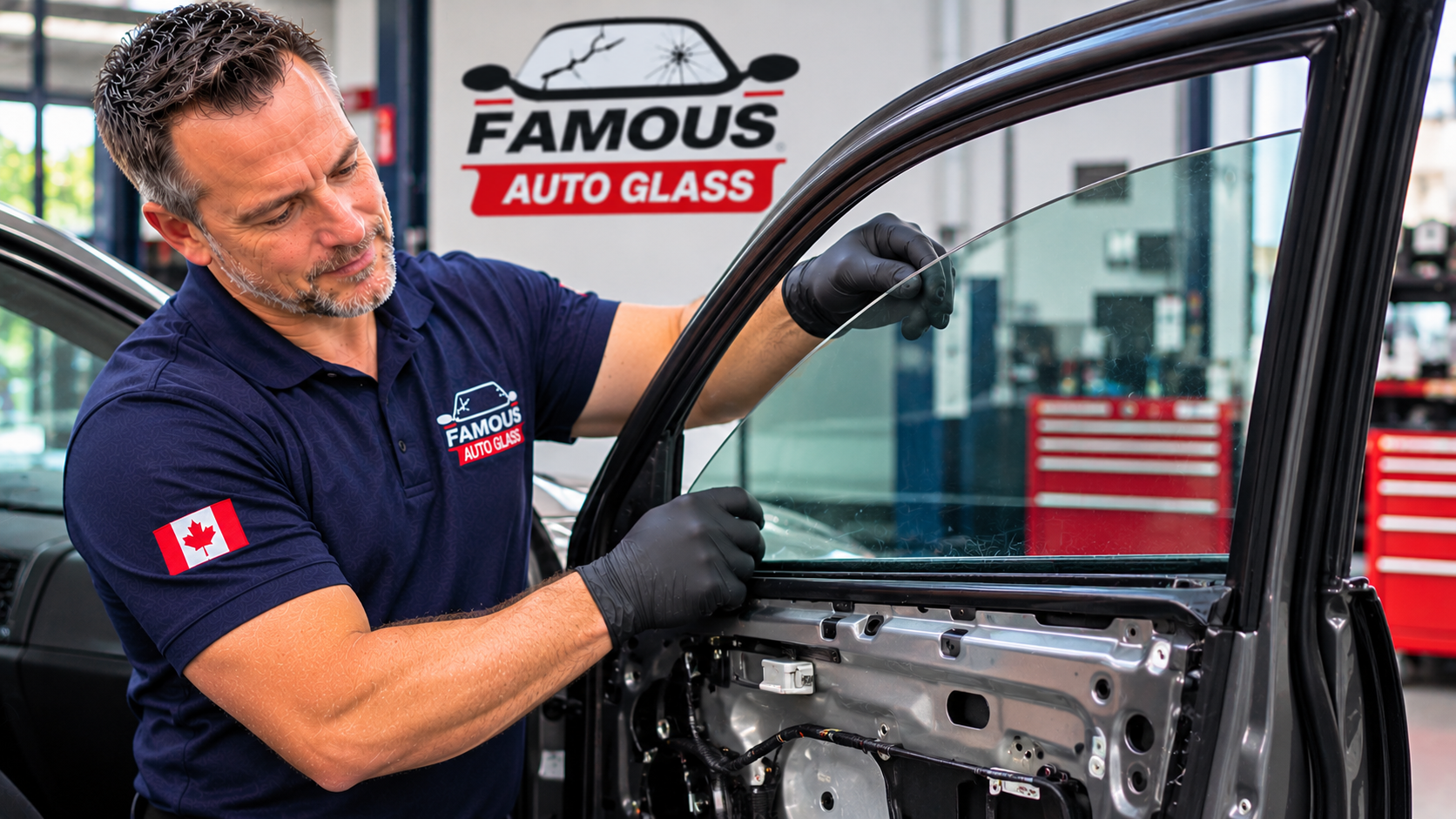
- Side windows: if you’ve got a smashed side window, the right glass will match your tint, thickness and window-regulator fit, and some vehicles use laminated door glass for noise and security.
- Mirrors: a busted side mirror can hide heating elements, blind-spot indicators, power-fold motors and cameras, so “just a mirror” isn’t always just a mirror.
Different parts, same principle: the closer the spec, the happier your car.
Which One Should You Pick?
Here’s a quick rule of thumb. It’s a guide, not gospel:
- Choose OEM if your vehicle is new, leased, loaded with driver-assist tech, or the manufacturer specifically requires it.
- Choose OEE if you drive a typical daily vehicle and want quality without the premium.
- Choose aftermarket if the car is older, budget matters most, or OEM isn’t produced any more, as long as the installer stands behind the brand.
Still scratching your head? The honest answer comes from your VIN, your camera setup and your budget. Pop us a message through our contact page and we’ll tell you what’s actually best for your car, not just what’s in stock.
Replacement windshield glass must also meet applicable vehicle glazing safety requirements. Learn more about Canada’s Motor Vehicle Safety Standards for automotive glazing.
How to Spot a Dodgy Windscreen Quote
Before you say yes to anything, ask these:
- What brand and type of glass is it? (OEM, OEE or aftermarket, in plain words)
- Does it come with certification marks?
- Is ADAS calibration included if my car needs it?
- What adhesive do you use and how long until I can drive?
- What’s the warranty on workmanship and leaks?
A confident shop answers these in seconds. A shifty one waffles.