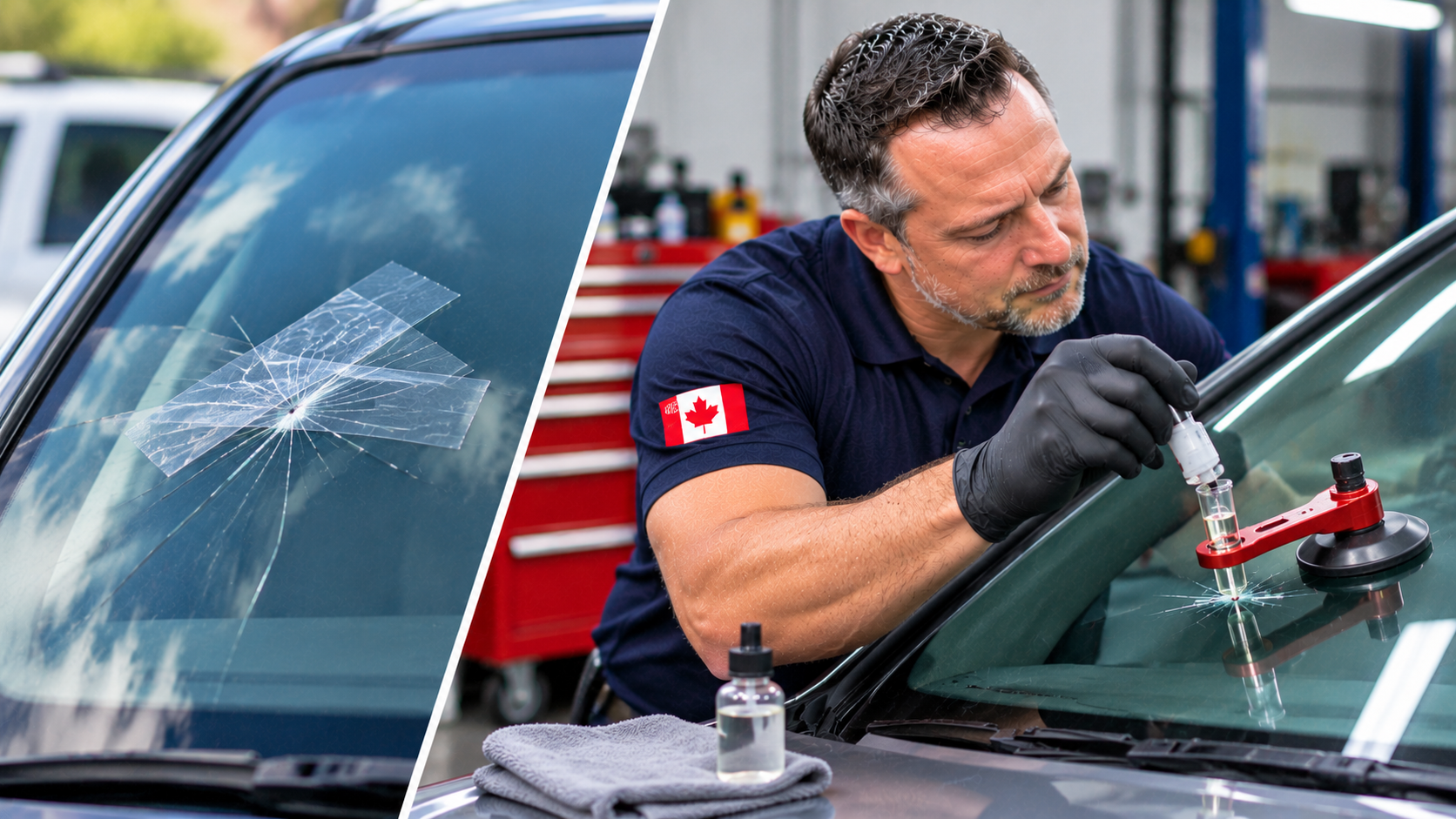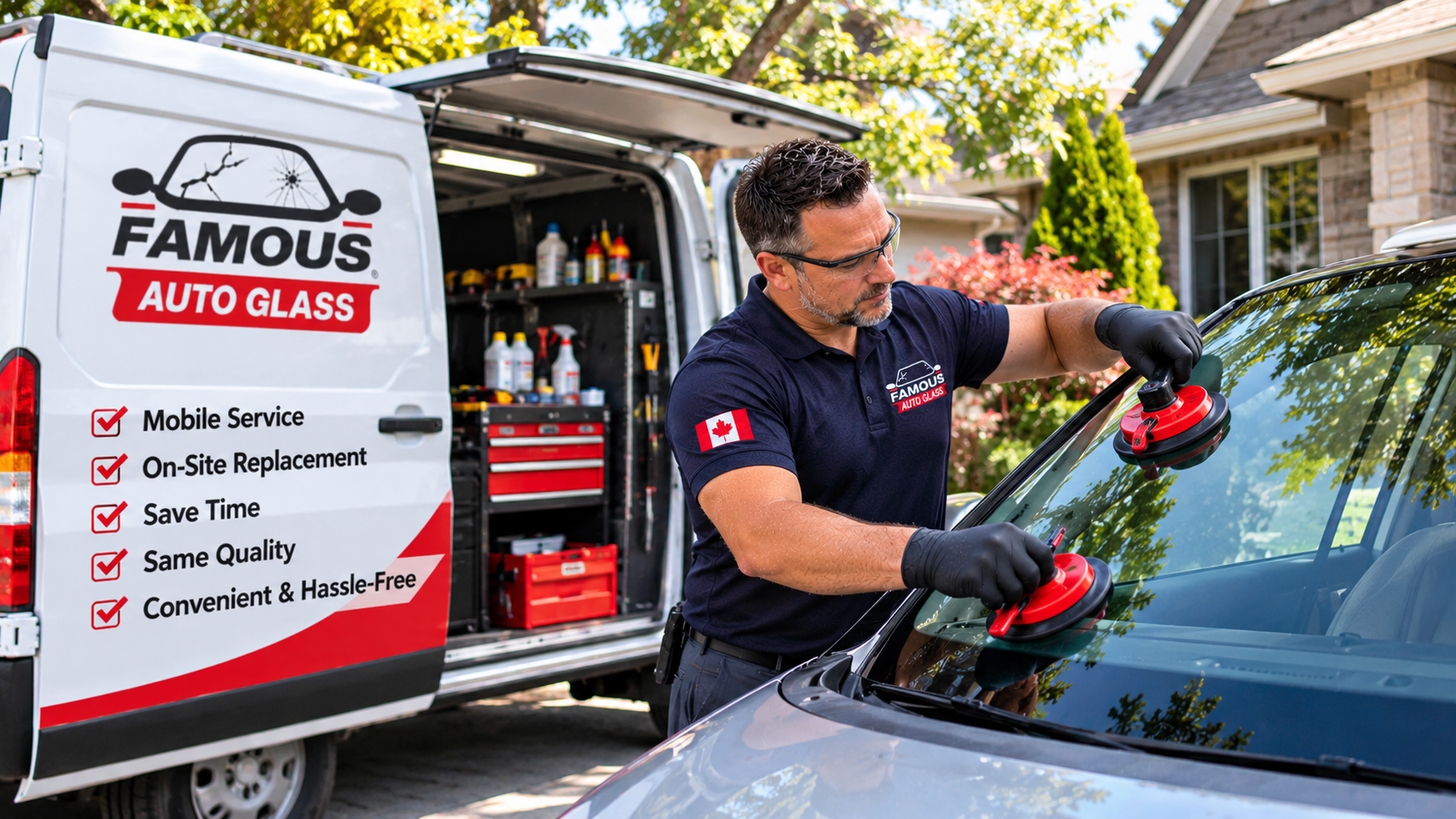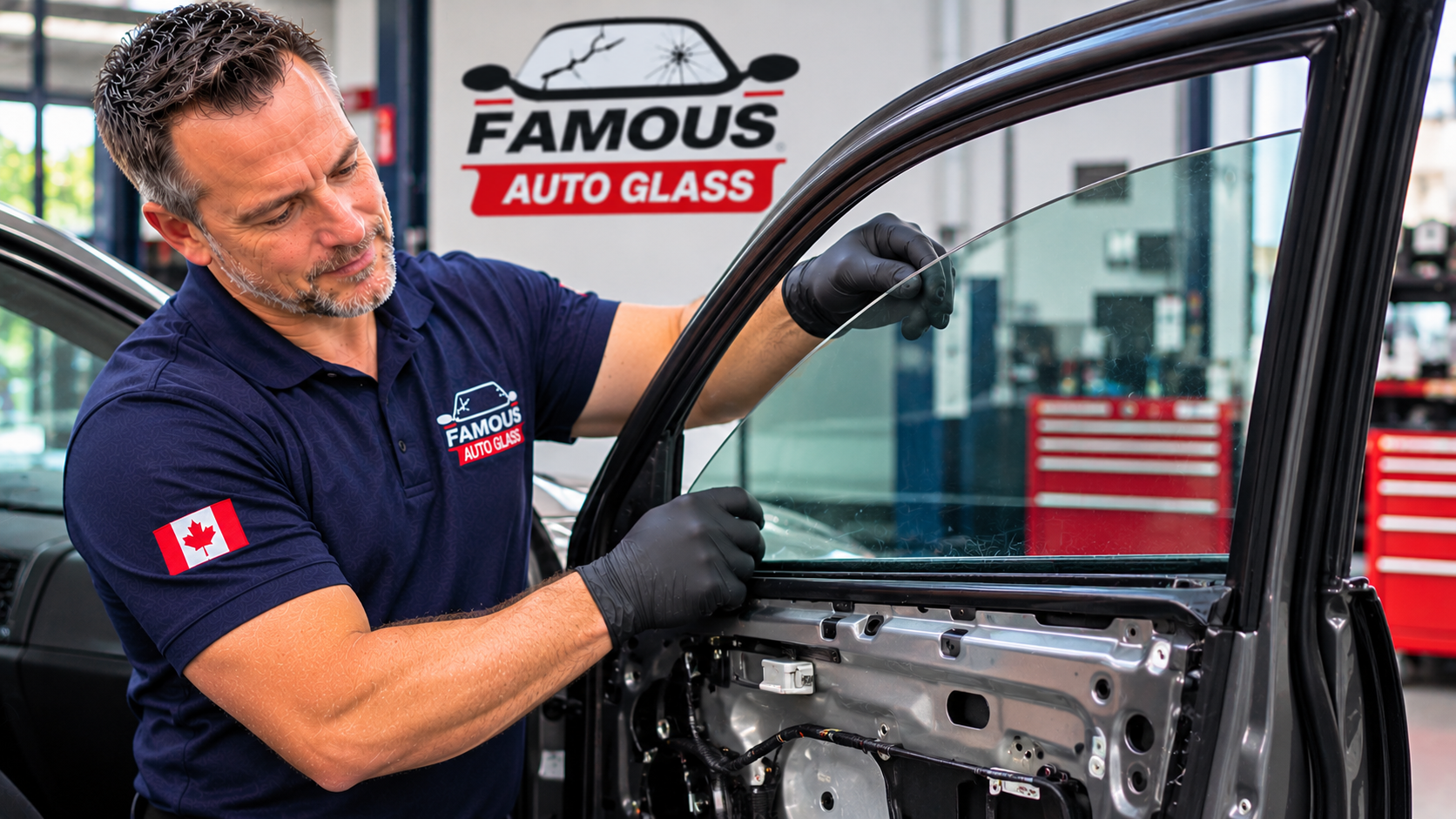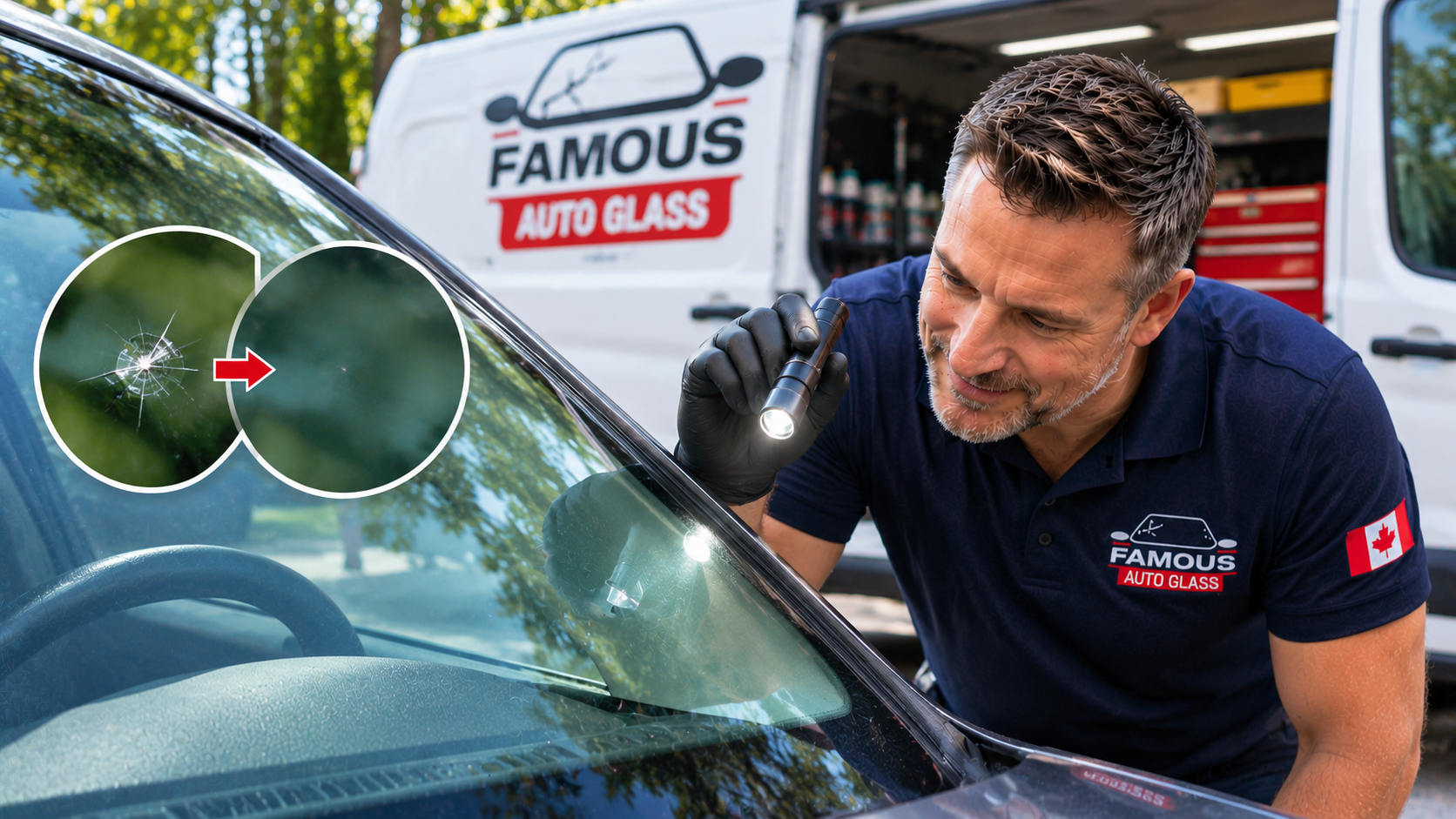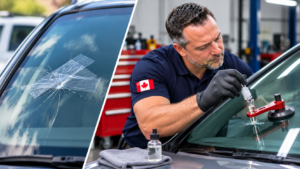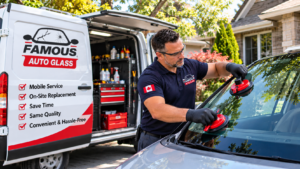
Every driver in Toronto knows the sound: a pebble kicks off the 401, snaps against the glass, and a tiny bullseye appears right where you look. The fastest reaction is to stick a piece of clear tape over it or dab on a bottle of drugstore resin and carry on. It feels like a win. But is it a dependable auto glass fix, or just a way of postponing a bigger bill?
At Famous Auto Glass LTD., we see the answer every week. A reliable auto glass fix restores strength, clarity and safety, while a temporary solution merely hides the damage for a while. In this guide, we break down exactly what separates the two, so you can make a calm, informed decision the next time your windshield takes a hit.
Why Your Windshield Does Far More Than Block the Wind
Before comparing repair methods, it helps to understand what you are actually repairing. A modern windshield is not a single sheet of glass. It is laminated: two layers of glass bonded around a thin plastic interlayer. That sandwich is why a stone strike usually leaves a chip instead of shattering the whole pane, and why the glass stays in one piece during a collision.
The windshield is also bonded to the vehicle’s frame with urethane adhesive, which means it contributes to the rigidity of the cabin. It helps support the roof in certain rollover situations and gives the passenger-side airbag a firm surface to deploy against. On many newer vehicles it also carries cameras and sensors for lane-keeping and collision-avoidance systems.
Once you see the windshield as a safety component rather than a pane of glass, the standard for repair rises. Any dependable auto glass fix must protect the layered structure, preserve a clear field of view, and leave the glass able to do its job in a crash. A repair that only looks tidy from the outside does not meet that standard.
What We Mean by a Temporary Solution
A temporary solution is anything that makes damage less noticeable or slows it down without actually restoring the glass. Drivers reach for these quick answers for understandable reasons: they are cheap, immediate, and require no appointment. Common examples include:
- Clear tape or packing tape over the chip to keep dirt out
- Clear nail polish or superglue dripped into the damaged spot
- Low-cost resin kits applied in a driveway without vacuum equipment
- Sealant or silicone smeared over a crack
- The classic “wait and see” approach
None of these are foolish. A strip of tape can genuinely protect a chip for a day or two while you arrange a visit to the shop. The problem starts when a stopgap becomes the plan. A simple test helps: does the method restore both the structural bond and the optical clarity of the glass? If the answer is no, it is a temporary measure, and it should not be mistaken for a real auto glass fix.
The Anatomy of a Reliable Auto Glass Fix
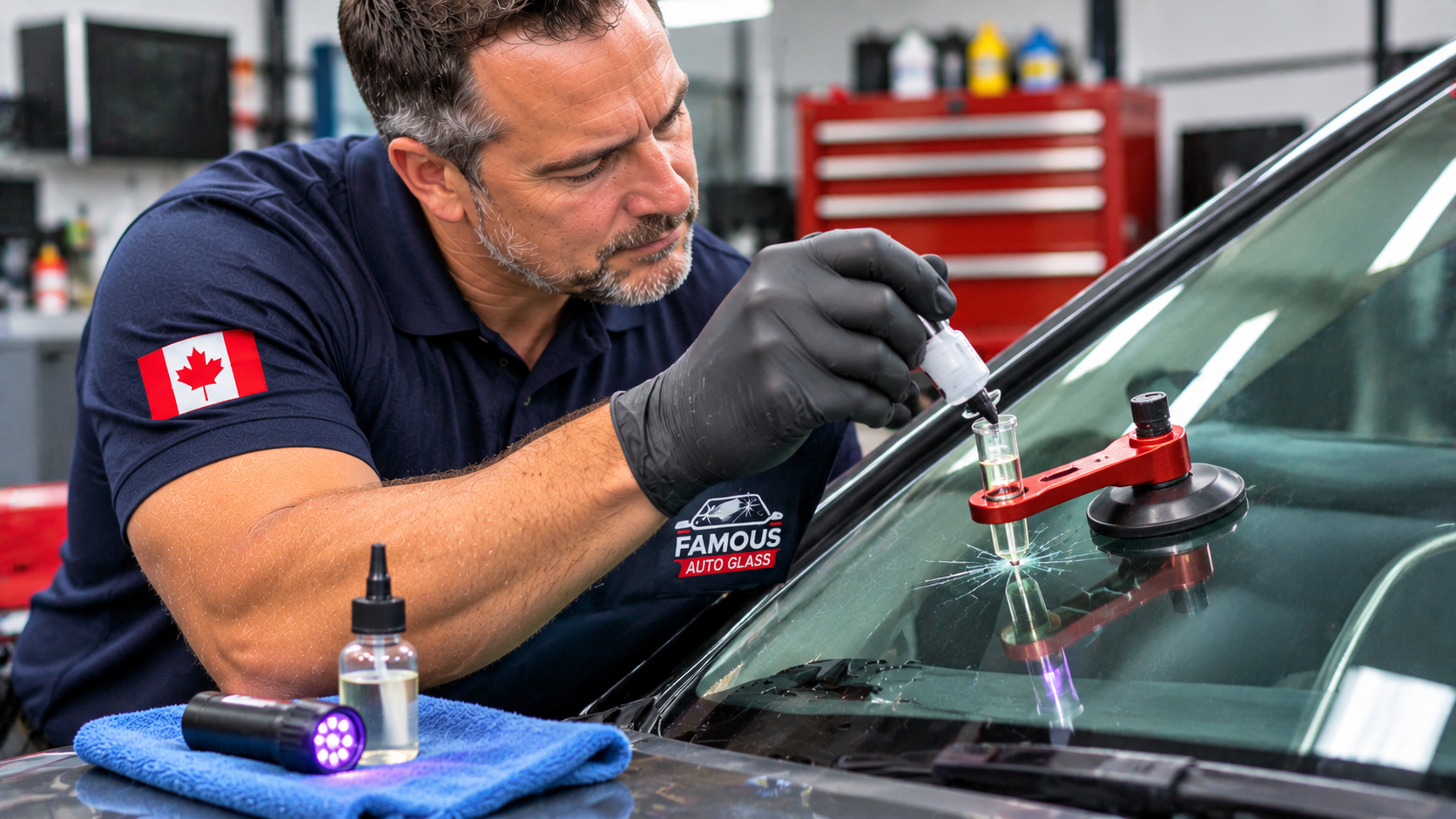
A reliable repair is a controlled process, not a product you buy off a shelf. While every shop has its own routine, a proper chip or crack repair generally follows these stages:
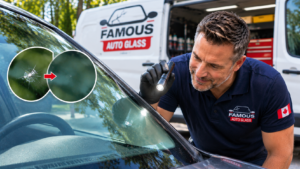
- Inspection: the technician checks the size, depth, type and location of the damage, and confirms it has not reached the inner layer.
- Cleaning: loose glass fragments, dirt and moisture are carefully removed from the impact point.
- Vacuum and injection: air is drawn out of the break, and a professional-grade resin is injected so it fills even the tiniest fissures.
- UV curing: ultraviolet light hardens the resin so it bonds with the surrounding glass.
- Finishing: excess resin is scraped away and the surface is polished flush.
Our windshield chip and crack repair service is built around exactly this kind of method, because every skipped step is a place where a repair can fail later. That is the heart of the matter: a reliable auto glass fix is defined by how it is done, not just by whether the damage looks smaller afterwards.
Resin Quality and Curing: Where Quick Fixes Fall Apart
If there is one place where temporary solutions fall apart, it is the resin. Professional resins are engineered with a very low viscosity so they flow deep into hairline cracks, and they are formulated to have a refractive index close to that of glass, which is why a good repair becomes nearly invisible.
Many consumer kits use thicker resin that sits at the surface. Without a vacuum to pull air and moisture out first, tiny pockets stay trapped inside the break. Those pockets scatter light, creating a cloudy blemish, and they remain weak points where a crack can restart. Cheap resins can also yellow with sun exposure over time.
Curing matters just as much. Resin that is only partially hardened may look fine on day one but shrink, lift or cloud later. Controlled UV curing ensures the resin reaches full strength before the wipers, the car wash or the freeze-thaw cycle puts it to the test. This level of control is exactly why a professional auto glass fix tends to hold up far better over the long term.
Why Timing Changes Everything
Even the best technician works at a disadvantage if the damage has been left alone too long. An open chip is like a small wound: every day it stays exposed, it collects road dust, washer fluid, rain and the oils from your wipers. Once contaminants settle in, resin cannot bond as cleanly, and the repair may show more clearly afterwards.
Then there is movement. A slammed door, a pothole, a sudden temperature change, or even the vibration of an ordinary commute puts stress on the weak spot. A chip that was stable on Monday can grow into a long crack by Friday. At that point, a simple repair may no longer be an option and replacement becomes necessary.
This is why speed is one of the biggest advantages in glass care. The best auto glass fix is usually the one completed early, while the damage is small, clean and fully repairable.
When a Chip Can Be Fixed and When It Cannot
Not every break can be saved, and an honest shop will tell you so. As a general guideline, chips smaller than a loonie and short cracks are often good candidates for repair, provided they have not reached the edge of the glass, have not penetrated through to the inner layer, and are not sitting directly in the driver’s main line of sight. Damage in that zone can leave a slight distortion even after a careful repair, so replacement is often the safer call. Exact limits vary between shops and manufacturers, so treat these as guidance rather than a promise.
We walk through the details in our article on windshield chip repair in Toronto and when a chip can actually be fixed, which is worth a read before you decide anything. The key takeaway is simple: a trustworthy provider will recommend an auto glass fix only when it can genuinely restore the glass, and will recommend replacement when it cannot. Be wary of anyone who promises to repair everything.
Temporary vs Reliable: A Side-by-Side Look
Sometimes a quick comparison makes the picture clearer. Here is how the two approaches typically stack up:
|
Factor |
Temporary Solution |
Reliable Repair |
|
Structural strength |
Not restored |
Bond restored in the damaged area |
|
Appearance |
Often cloudy or patchy |
Greatly reduced, often hard to notice |
|
Moisture and dirt |
Can seep in over time |
Sealed out by cured resin |
|
Crack spread |
Still likely |
Significantly reduced |
|
Equipment |
Tape, kits, sealant |
Vacuum tools, pro resin, UV light |
|
Long-term cost |
Often higher after a failed patch |
Usually lower overall |
The pattern is clear. Temporary options win on speed and upfront cost, while reliable repairs win on almost everything that matters over the following months and years.
The Hidden Costs of Cheap Patches
The cheapest option on the day is rarely the cheapest option by the end of the year. When a temporary patch fails, several costs tend to appear at once. The chip you could have repaired in under an hour has now spread into a crack that needs a full replacement. If your vehicle has driver-assistance cameras mounted behind the glass, a new windshield may also require recalibration, which adds time and cost. You may need to rebook, take more time off, or drive around with compromised visibility in the meantime.
There is a quieter cost too. Once a chip has been filled with low-grade resin, sealant or glue, the damaged area is contaminated. A technician trying to carry out a proper repair afterwards has to work around that material, which can reduce the quality of the result. In other words, a failed temporary auto glass fix can close the door on a clean repair that would have been possible earlier.
Myths That Keep Drivers Stuck with Quick Patches
A few persistent beliefs push people toward stopgaps. The first is that small chips are harmless. They often start small, but they sit on a pane that flexes constantly, and flexing is what turns a chip into a crack.
The second is that superglue does the same job as automotive resin. It does not. It is not designed to stay clear, cure under UV light or bond with laminated glass, and it can make professional repair harder later. The third is that damage only matters if you can see it. A chip outside your direct line of sight can still weaken the glass and spread.
Dropping these myths is the first step toward better decisions. Glass does not heal by itself, and time rarely works in your favour.
The Toronto Factor: Salt, Slush and Freeze-Thaw
Our climate is hard on glass. Toronto winters bring salt, sand and slush that fling debris at windshields, and the daily freeze-thaw cycle makes tiny gaps expand and contract. Blasting a defroster at full heat on an icy windshield can create a sudden temperature difference that is enough to push an existing chip into a crack. In summer, a hot dashboard and a cold blast of air conditioning can cause similar stress.
A sealed, fully cured repair helps here because there is no open channel for water to enter and freeze. A taped or glued chip, on the other hand, can trap moisture inside the break. When that moisture freezes and expands, it can pry the damage wider. For local drivers, a reliable auto glass fix is not just about appearance. It is about making sure the glass can handle everything the Canadian weather throws at it, season after season.
What Ontario Law Expects from Drivers
Visibility is not just a comfort issue; it is a legal one. Ontario’s Highway Traffic Act includes requirements about drivers having a clear view through their vehicle’s windows, and a crack running across your line of sight can draw unwelcome attention from an officer or cause problems when your vehicle needs a safety standards certificate. If you want specifics for your situation, read the legislation or check with the Ministry of Transportation, as rules and enforcement can vary.
What matters for most drivers is the practical takeaway. A cloudy patch, a spreading crack or a layer of tape in your field of view is not something you want to rely on at highway speed. A well-executed auto glass fix keeps your view clear, which keeps you safer and keeps you on the right side of the rules.
Insurance and Glass Repair: Know Your Options
Many drivers delay repairs because they assume the cost will be painful. In practice, many comprehensive auto insurance policies include some form of glass coverage, and in some cases repair costs little or nothing out of pocket depending on your deductible and the terms of your plan. Because every policy is different, it is worth checking your coverage before assuming you will pay in full.
If paperwork is what puts you off, our insurance claim support team can help guide you through the process so you are not left guessing. Acting early often works in your favour: repairing a small chip is generally a smaller claim than replacing a whole windshield later. Choosing a reliable auto glass fix at the first sign of damage is therefore often good for both safety and your wallet.
How to Spot a Trustworthy Technician
Not every provider works to the same standard, so it pays to know what good looks like. A trustworthy technician or shop will typically:
- Inspect the damage carefully before quoting
- Explain whether repair or replacement is the right call, and why
- Use professional-grade resin, vacuum equipment and UV curing
- Be open about the limits of a repair, including that a small blemish may remain
- Stand behind the work with a clear warranty or guarantee
- Understand how modern windshields interact with driver-assistance technology
Reviews, certifications and a willingness to answer questions are all good signs. If a provider rushes you, avoids details or promises a repair that looks too perfect, take that as a cue to ask more questions.
Questions to Ask Before You Book
A few simple questions can reveal a lot:
- What exact method and resin do you use?
- Do you use vacuum and UV curing?
- Is this a permanent auto glass fix, or a short-term stopgap?
- Will the repair stop the damage from spreading, and what happens if it does?
- What does the warranty cover?
- Will my insurance cover it, and can you help with the claim?
Straight, confident answers are usually a good indicator. Vague replies are not. At Famous Auto Glass LTD., we are happy to answer all of these in plain language, because informed customers make better decisions and tend to be happier with the result.
What to Do in the First Hour after a Chip
If you have just picked up a chip, the next hour matters. A few safe steps can protect the glass until a technician sees it:
- Pull over safely and avoid touching or pressing on the damage
- Keep the area dry and clean; a piece of clear tape can help keep out moisture and dirt for a short while
- Avoid slamming doors, driving over rough roads, or using full-blast heat or air conditioning on the glass
- Take a quick photo for your records, which can help with an insurance claim
- Book an appointment as soon as you can
Think of these as bridges, not destinations. They help you get to the repair in good shape, but they do not replace it. Once you know the damage is repairable, book the auto glass fix promptly, ideally within days rather than weeks.