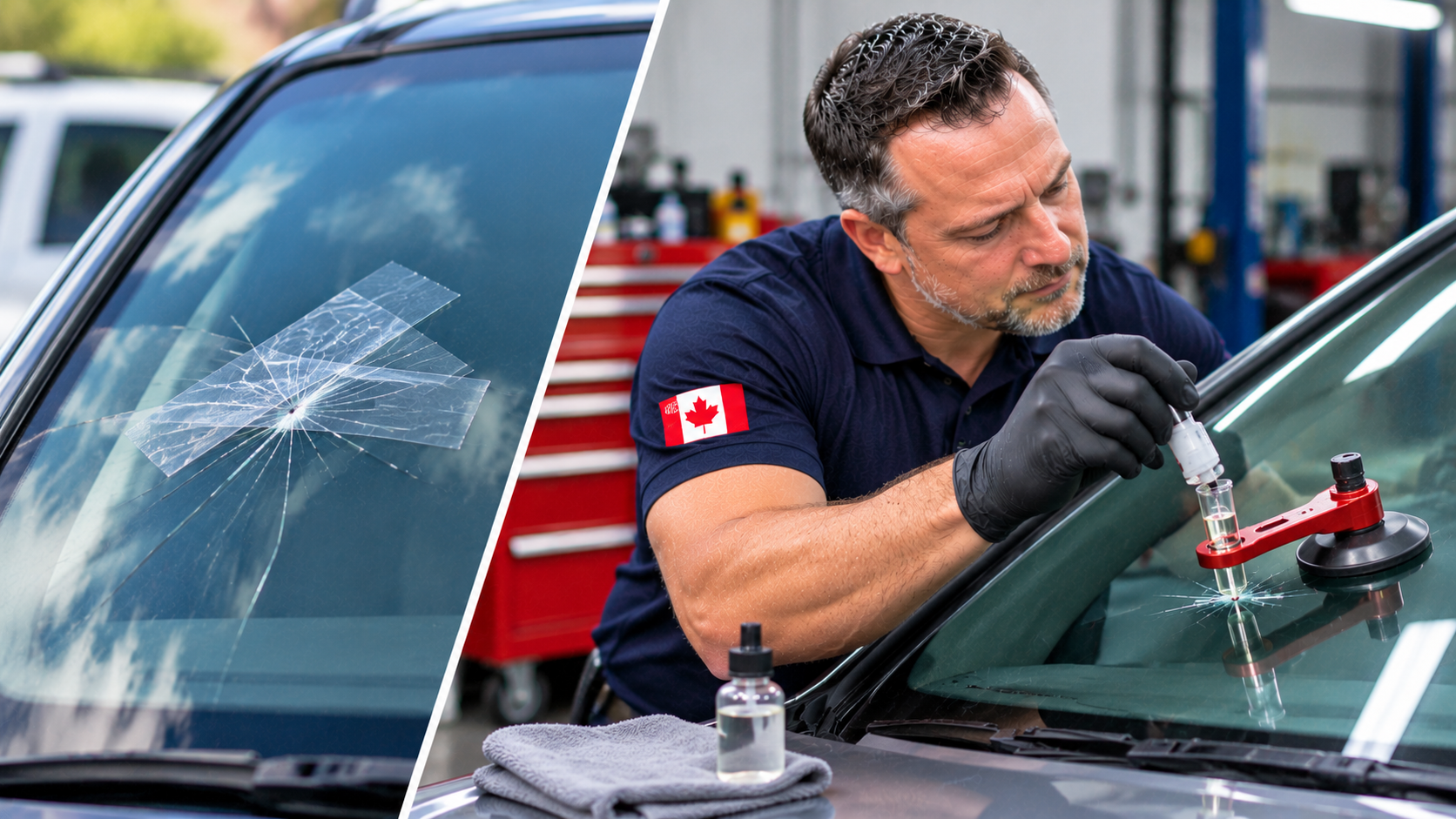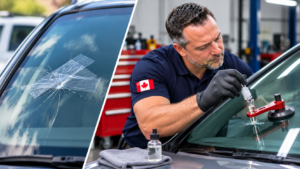
Picture two mates, Dave and Priya. Both smack a stone on the 401 on the same grey Tuesday. Both end up with a crack creeping across the glass like a bad Wi-Fi signal.
Dave drives a 2012 hatchback. Priya drives a 2022 crossover with lane-keep assist and automatic emergency braking. Same crack, same day, same road.
Here’s the twist: Dave’s fix is basically “out with the old glass, in with the new, cuppa while the urethane cures.” Priya’s job has a whole extra chapter. Her windshield isn’t just glass anymore. It’s a mounting point for the car’s eyes.
That’s what this guide is about. At Famous Auto Glass LTD., we replace windshields on everything from old workhorses to camera-loaded 2025 models, and the biggest question we hear is: “Why is mine so different to my mate’s?” Fair question. Let’s sort it out properly.
The Short Answer (For Those Who Skim, No Judgement)
A standard car windshield replacement is a mechanical job: remove the damaged glass, prep the frame, fit the new windshield, bond it, and let it cure safely.
An ADAS-equipped vehicle does all of that and then needs its forward camera (and sometimes related sensors) recalibrated so safety features see the road exactly where they should. Skip that step and your lane assist, adaptive cruise or auto-braking could behave like they’ve had one too many Tim Hortons double-doubles.
If you want the full picture on the standard job, our car windshield replacement service page covers the basics. Keep reading for the ADAS difference.
What a Standard Windshield Replacement Actually Involves
If your car is older, or a base model without driver-assist tech, the job runs like this:
- Inspection. The technician checks the damage, the frame, and for rust or old sealant issues.
- Trim and wiper removal. Cowl panels, mouldings and wipers come off carefully.
- Cutting out the old glass. The old urethane bond is sliced away without damaging the pinch weld.
- Surface prep. The frame gets cleaned and primed where needed. This is the unglamorous bit that decides whether your windshield stays put in a collision.
- New glass, new adhesive. A fresh bead of urethane goes on and the new windshield is set precisely.
- Cure time. The safe drive-away time depends on the adhesive and the weather. In a Canadian January, that matters more than you’d think.
- Final checks. Leak test, trim refit, a once-over for clean glass and happy wipers.
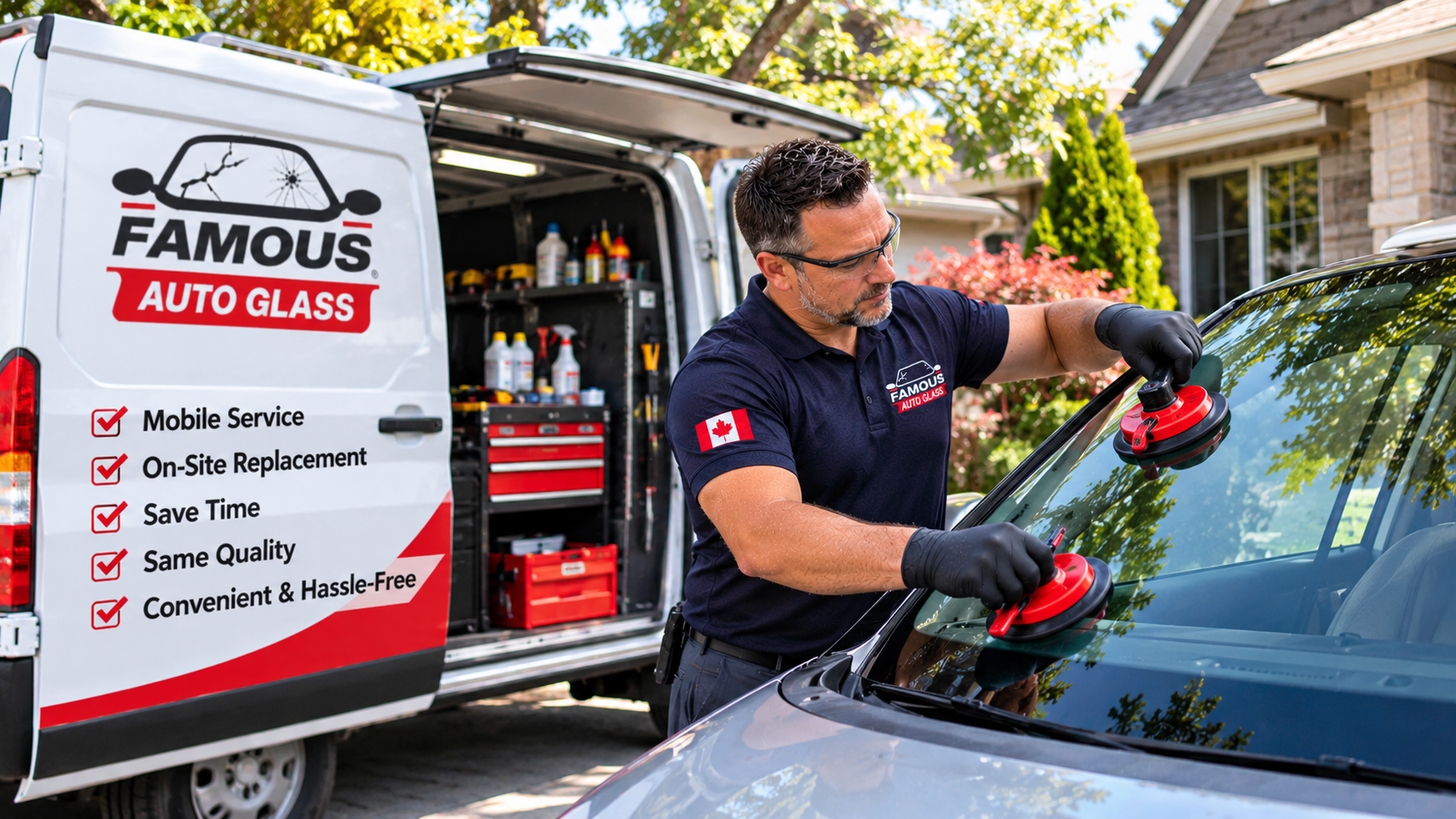
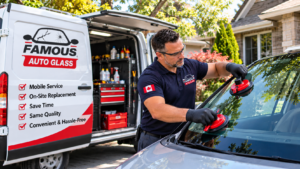
Straightforward, and for many vehicles it’s also a good candidate for mobile windshield replacement, where the tech comes to your driveway or workplace.
So What Exactly Is ADAS? (And Why Is It Stuck to Your Glass?)
ADAS stands for Advanced Driver Assistance Systems. It’s the umbrella for features like:
- Lane departure warning and lane-keep assist
- Automatic emergency braking
- Adaptive cruise control
- Forward collision warning
- Traffic sign recognition
- Automatic high beams
Many of these rely on a camera mounted behind the windshield, usually up near the rearview mirror. It looks down the road, spots lane lines, vehicles and pedestrians, and feeds that information to the car’s computer.
Here’s the catch. That camera has been calibrated to look at the world through a specific piece of glass in a specific position. Change the glass, and even a tiny shift in angle (a fraction of a degree) can change where the system thinks the lane edge is, or how far away that truck in front really is.
Small angle at the camera, big error at 100 metres. Geometry is rude like that.
How Windshield Replacement Differs: Standard vs ADAS
|
Standard car |
ADAS-equipped vehicle |
|
|---|---|---|
|
Glass type |
Standard laminated windshield |
Glass with specific camera bracket position, optical clarity and sometimes heated or acoustic layers |
|
Pre-scan |
Usually not needed |
Diagnostic scan to check for stored faults |
|
Camera handling |
N/A |
Camera removed or carefully detached and refitted |
|
After install |
Cure time, final checks |
Cure time, plus recalibration (static, dynamic or both) |
|
Time on the job |
Often around an hour plus cure time |
Longer, since calibration can add one to three hours depending on the vehicle |
|
Cost |
Glass and labour |
Glass, labour and calibration |
|
Skill and gear |
Core glass skills |
Core glass skills plus calibration targets, scan tools and manufacturer procedures |
Notice the pattern? The glass swap itself is similar. It’s the brain surgery afterwards that separates the two.
The Glass Itself Isn’t Just “Glass”
ADAS windshields often have tighter tolerances for the camera mounting area: bracket location, clarity, and the tint band or coating around the sensor window. A windshield that looks identical but sits a few millimetres differently, or has slightly different optical properties, can throw the camera’s view off.
That’s why we’re picky about glass quality for camera-equipped vehicles, and why the cheapest quote isn’t always the cheapest outcome.
Static vs Dynamic Calibration (Without the Eye-Glaze)
After an ADAS windshield replacement, the camera has to be recalibrated to the manufacturer’s procedure. There are three flavours:
Static calibration. The vehicle stays parked in a controlled space, usually a level floor with good lighting. Printed targets are positioned at precise distances and angles, and the scan tool teaches the camera where “straight ahead” is.
Dynamic calibration. The tech drives the vehicle on well-marked roads at set speeds while a scan tool monitors the camera learning its position in real time. It needs clear lane markings and decent conditions, which is a fun ask when you’ve got slush, salt spray and low sun in February.
Static plus dynamic. Some manufacturers want both, one after the other.
Which one your car needs isn’t up to us, your mate, or Google. It’s set by the vehicle manufacturer and can differ by make, model, year and even trim. Canada is a big market with lots of brands, so there’s a huge range of procedures floating around.
Does a Chip or Crack Repair Dodge All This?
Sometimes, yes, and it’s the best news in this article.
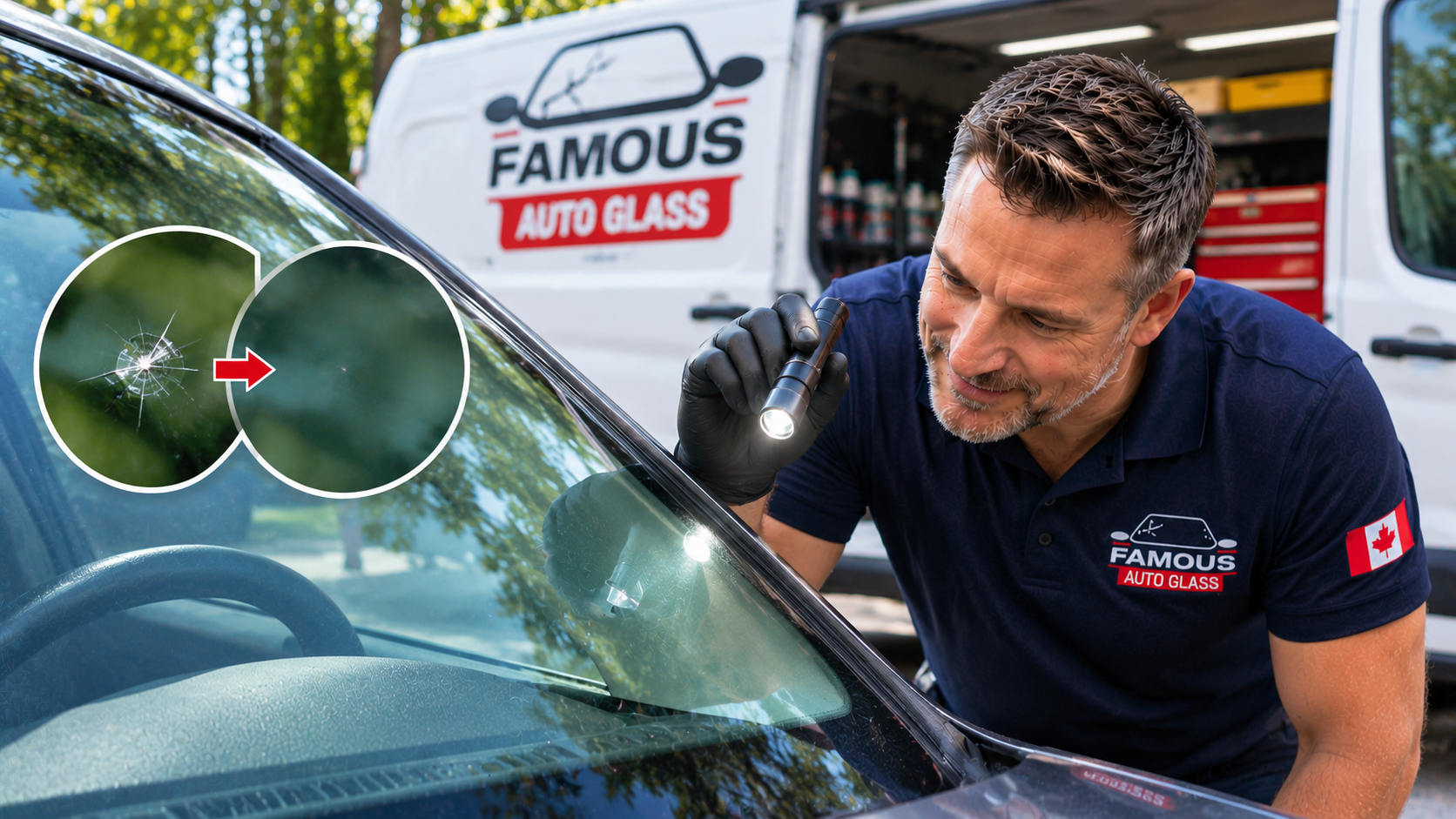
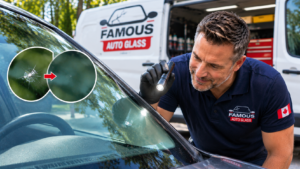
If the damage is small, outside the driver’s critical view, and not too close to the edge or the camera zone, a windshield chip and crack repair can save the original glass. No new windshield means the camera stays where it was, which usually means no recalibration headache.
The catch is timing and location. A chip left to collect dirt, moisture and a few freeze-thaw cycles turns into a crack, and a crack that reaches the edge or the camera zone often means replacement. If you’ve got a star-shaped chip winking at you from the passenger side, get it looked at before Canadian winter does its thing.
Not sure if yours is repairable? Have a quick look through our contact page and send us a photo.
Can You Still Get Mobile Windshield Replacement With ADAS?
Short answer: often yes, but it depends.
Mobile service is brilliant for standard cars. The glass swap is the same whether it happens in a shop bay or your driveway in Brampton.
With ADAS, it comes down to which calibration your vehicle needs:
- Dynamic calibration can often be done on the road after the mobile install, provided the weather, lane markings and traffic cooperate.
- Static calibration needs a controlled, level, well-lit space with room for targets, which usually means a workshop environment.
So a mobile windshield replacement for an ADAS car may be a two-step affair, or the car may need to come into the shop for the calibration part. Our mobile auto glass service team will tell you straight which route suits your vehicle, rather than promising you a driveway miracle.
Windshield Repair Mississauga: Local Roads, Local Problems
If you’re in the GTA, you already know the drill. Gravel trucks on the 401 and 403, construction zones that never seem to end, and winter road salt that makes every tiny chip an invitation to spread.
Our auto glass service in Mississauga covers windshield repair and replacement for local drivers, whether you’re in a base-model runabout or a loaded SUV with a camera cluster that costs more than your first car. Temperature swings matter here too: cold glass plus a blast of cabin heat is the fastest way to turn a harmless chip into a full crack.
What About the Other Glass? Rear, Door and Mirrors
Windshields get all the glory, but here’s how the rest of your auto glass fits into the ADAS conversation.
Rear glass replacement. Usually a simpler job than a windshield. Most cars don’t have a forward-facing camera back there, but the rear glass can carry defrost grid lines, antenna elements, a wiper port or a camera. A rear glass replacement also tends to involve a lot of tiny tempered-glass fragments in the boot, so a thorough clean-up is part of a good job.
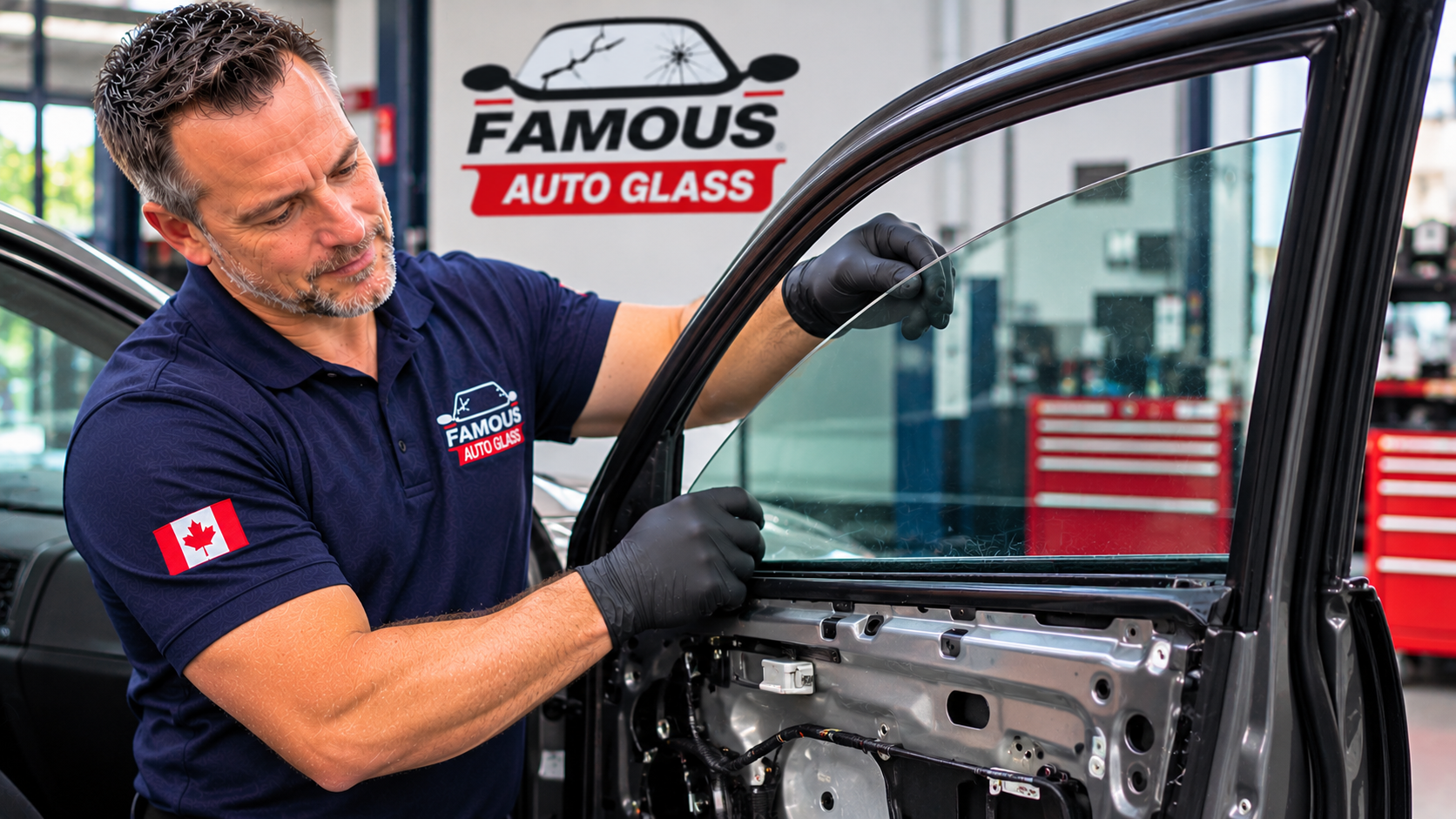
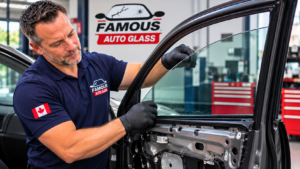
Door glass replacement. Side windows are tempered glass (they shatter into small pieces, not shards), and for most vehicles the swap doesn’t involve calibration. A proper door glass replacement includes cleaning the inside of the door cavity so nothing rattles around later.
Side mirror replacement. Here’s the sneaky one. Modern mirrors can include blind-spot indicators, heating, turn signals, power folding and even cameras for surround-view systems. A side mirror repair or replacement on a feature-heavy car is more than a glass-and-plastic swap. The new unit needs to match the original’s tech, and in some vehicles, features may need checking after the swap.
The bottom line: windshield work is where calibration is usually front and centre, but the rest of your auto glass can still hide technology. Always tell your technician what your vehicle has.
The Money Bit: Cost and Insurance
Right, let’s talk dollars, because nobody likes surprises.
Standard replacement cost is glass plus labour. ADAS replacement adds calibration, which means more time, more specialised equipment and more technicians training. Industry sources in Canada have noted calibration often adds a few hundred dollars or thereabouts depending on the vehicle and procedure, and that not every insurer treats it the same way.
A few tips so you don’t get stung:
- Check your policy for glass coverage and whether it includes calibration.
- Ask for the calibration cost upfront, as a separate line.
- Keep your calibration report. Insurers sometimes want proof the job was completed to manufacturer specs.
- Don’t skip it to save money. A system that’s out of alignment is worse than a system that’s off, because it may act when it shouldn’t (or not act when it should).
If you’d like a hand navigating the paperwork, our insurance claim support team can walk you through it so you’re not left deciphering policy fine print at 9pm.
How to Tell Whether Your Car Has ADAS
Not sure which camp you’re in? A few quick clues:
- Look near the rearview mirror. A camera housing or a cluster of small lenses sits against the glass on most ADAS vehicles.
- Check the dash. Icons for lane departure, collision warning or adaptive cruise on startup are a strong hint.
- Scan your owner’s manual for “driver assistance,” “pre-collision,” “lane keeping” or similar.
- Your VIN and trim level help your glass tech confirm the exact setup.
When you book with us, give us the make, model, year and any features you know about. We’ll sort out the details from there.
Why Choosing the Right Auto Glass Shop Matters More Now
Ten years ago, “windshield replacement” was a fairly uniform job. Today, two cars of the same age can need wildly different procedures. That means the right shop needs to:
- Identify ADAS equipment before quoting
- Source suitable glass with the correct bracket and optical properties
- Follow manufacturer calibration procedures, not guesswork
- Be upfront about what’s done in-house, on the road, or in a partner facility
- Give you documentation afterwards
At Famous Auto Glass LTD., our approach is simple: tell you what your car needs, why, and what it’ll cost, then do the job properly. Browse our auto glass services to see everything we offer, from chips to complete replacements.
Frequently Asked Questions
Do I really need calibration if my new windshield looks perfect?
If your vehicle has a windshield-mounted camera or related system, yes, in most cases. Looking perfect and seeing perfectly are different things. The camera’s view can be off by a tiny angle without any visible clue, and the only way to confirm and correct it is through the manufacturer’s calibration process.
Can a standard windshield be fitted to an ADAS car if it fits the frame?
Not safely. Fit isn’t the same as function. The bracket position, glass clarity and camera window all matter. The windshield needs to be the right one for your vehicle’s camera setup, not just the right shape.
What happens if I skip ADAS calibration after replacement?
Features may work poorly or not at all, and in some cases may react incorrectly. Lane assist could pull when it shouldn’t, or collision warnings could trigger late or too early. You may also see dashboard warning lights, and a claim or resale inspection may raise questions.
How long does an ADAS windshield replacement take compared to a standard one?
The glass swap is similar, but calibration can add roughly one to three hours depending on the vehicle and method. Weather and conditions can influence dynamic calibration, so it’s smart to allow extra time and ask for an estimate when you book.
Will a windshield chip repair affect my ADAS camera?
Typically no, since the original glass and camera remain in place. That said, repairs very close to the camera’s field of view may not be recommended, because the repaired spot can leave slight distortion. That’s one reason we assess location as well as size.
Is aftermarket glass okay for ADAS vehicles?
It depends on the quality and whether it meets the specs for your vehicle’s camera system. The key points are correct bracket placement, optical clarity and manufacturer compatibility. Ask your glass provider what they’re fitting and why.
My rear window cracked. Does that need calibration?
Usually not, unless your vehicle has a rear-glass-mounted sensor or camera. It’s still worth mentioning any rear tech when you ask about rear glass replacement.
The Wrap-Up (Before Your Cuppa Goes Cold)
A standard windshield replacement is a solid, skilled glass job. An ADAS windshield replacement is that plus the digital handshake that tells your car’s safety systems where the road really is.
Neither is complicated if the team behind it knows what they’re doing. So whether you’ve got a hardworking old hatch or a camera-stuffed crossover, the playbook is the same: get it assessed, understand the process, and don’t skip the steps that keep you safe.
Got a chip, a crack, or a “what is that light on my dash” moment after a replacement? Get in touch with Famous Auto Glass LTD. today, and we’ll sort out the right fix for your vehicle. You can also browse more guides on our auto glass blog for tips on keeping your glass in top nick.