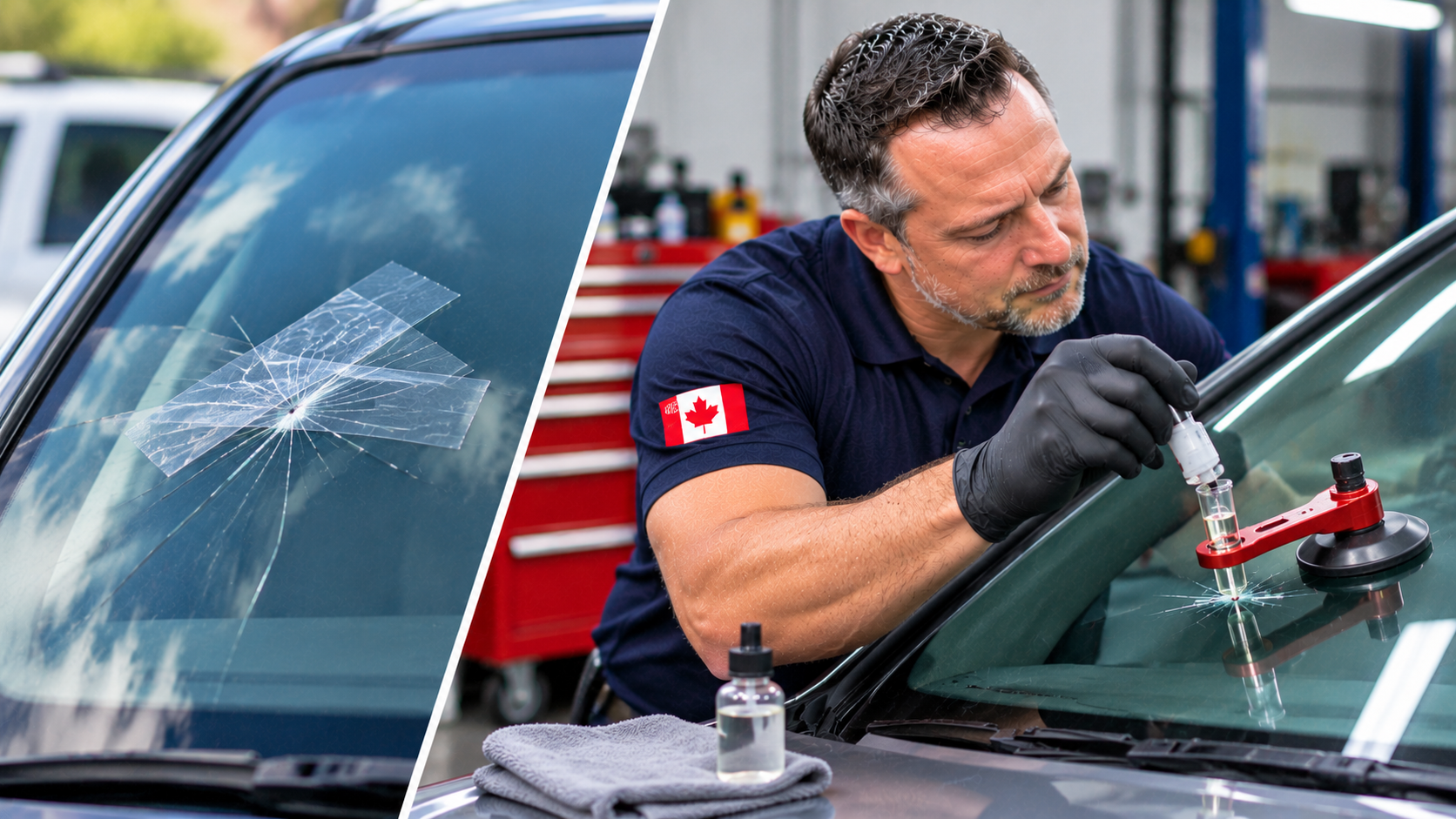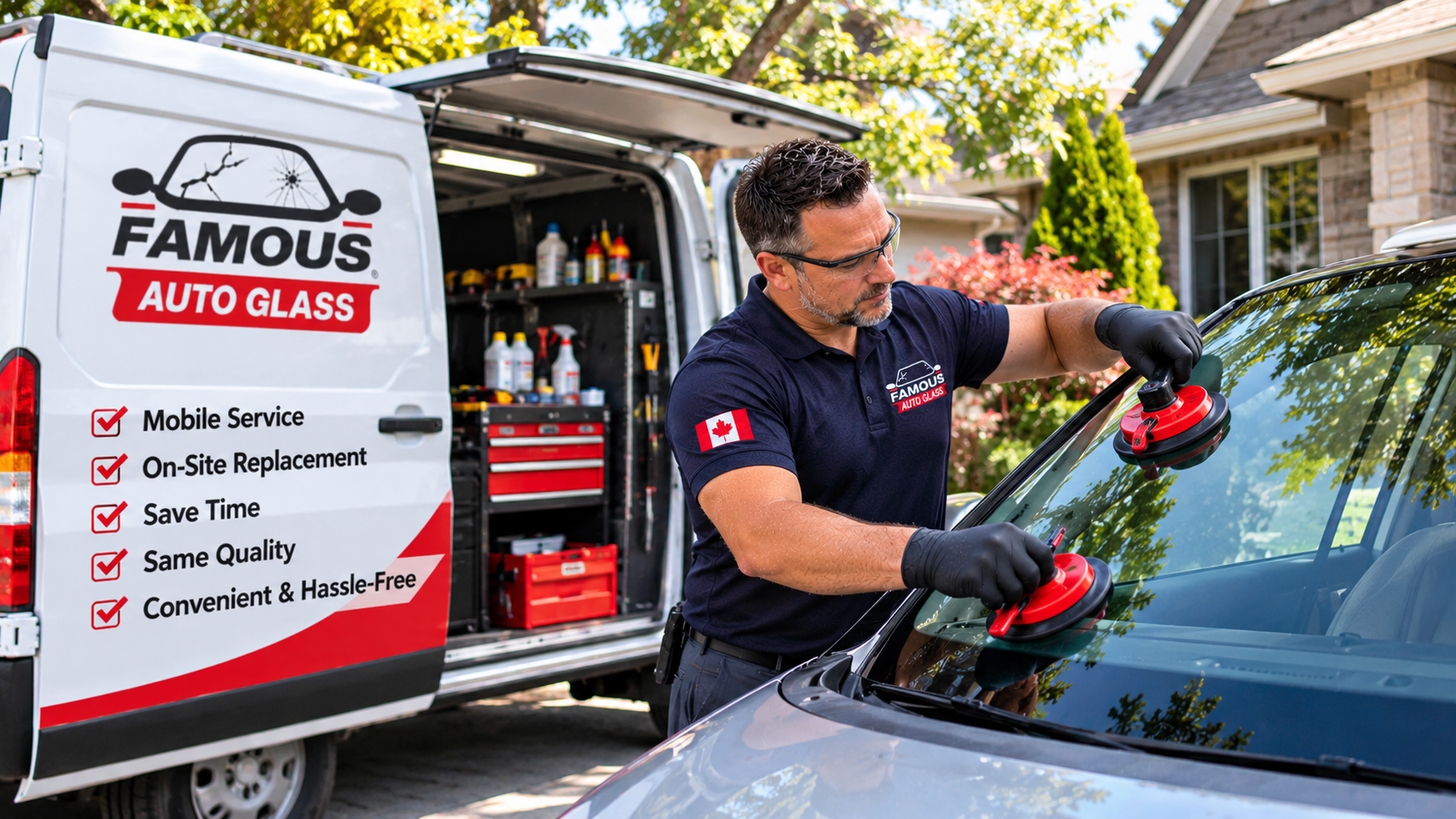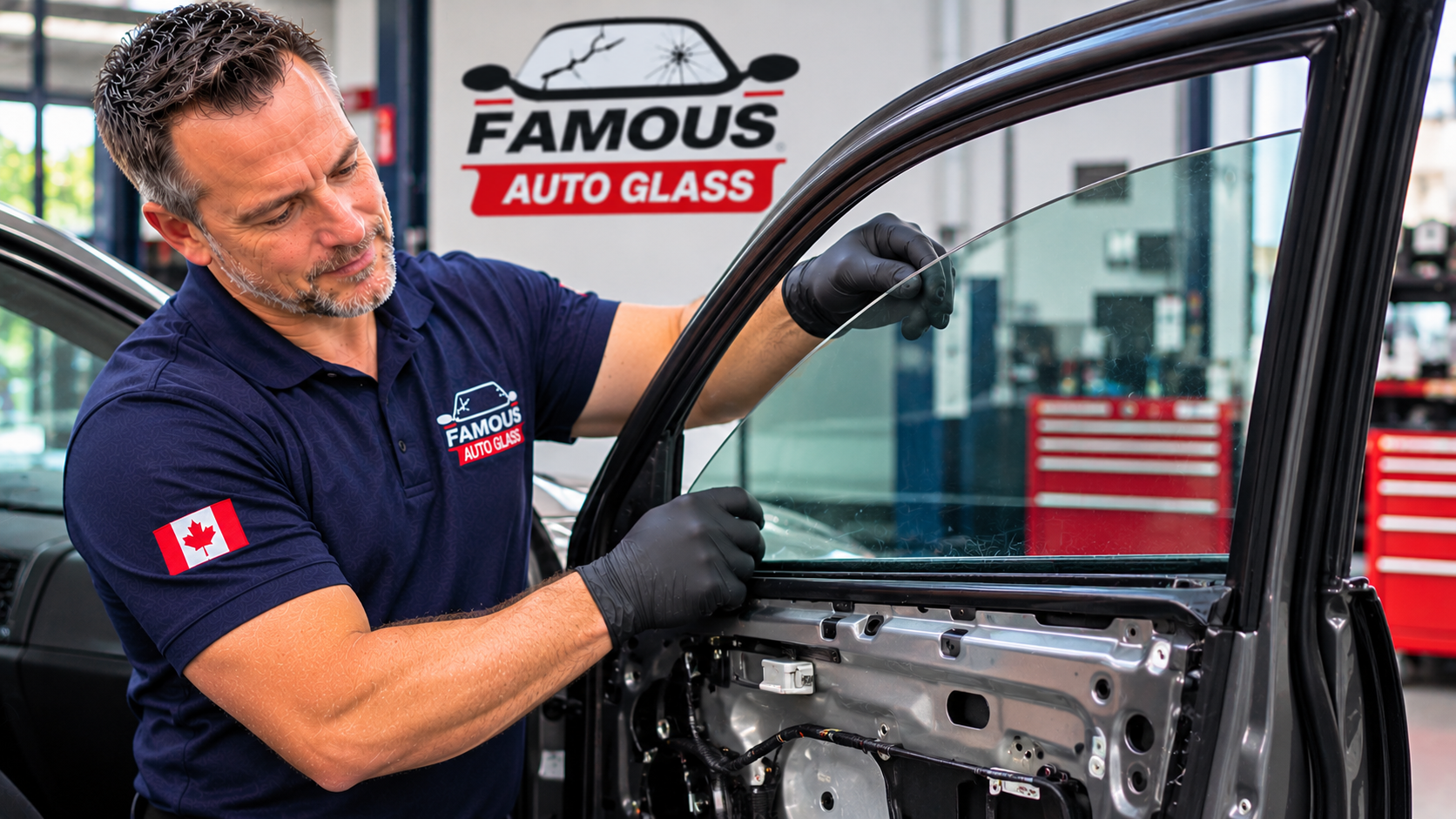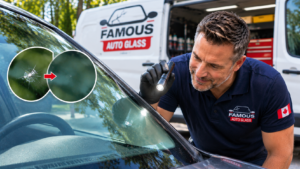
If you have recently booked a front window replacement, you probably expect the job to be over once the new glass is bonded in and the technician hands back your keys. On an older car, that is largely true. On most vehicles driving around Toronto today, it is only half the story.
Modern windshields carry cameras, sensors and mounting points that feed your lane-keeping, emergency braking and adaptive cruise control, and those systems need to be re-taught exactly where the road is once the glass changes. At Famous Auto Glass LTD., we treat calibration as a core part of every job rather than an optional extra. This guide explains what it involves, why it matters, and what to ask before you drive away.
Why the Windshield Is More than Just a Window
Before getting into cameras, it helps to remember what a windshield actually does. It keeps wind, rain and debris out, of course, but it is also a structural part of the vehicle. It is bonded to the body, helps support the roof in a rollover, and gives the passenger-side airbag something solid to deploy against. That is why the adhesive, the surface preparation and the cure time matter so much, and why a poor job is a safety risk long before any camera enters the picture.
Add the electronic layer on top, and the windshield becomes something closer to a sensor platform. It holds the camera, the rain sensor and, on some vehicles, the head-up display projection zone. Each of these has to sit in exactly the right place, which is why glass replacement on a modern vehicle is a precision task rather than a simple swap.
What Calibration Actually Means after a Windshield Is Replaced
Calibration is the process of aligning a vehicle’s forward-facing camera and related sensors so that they read the world accurately. Behind the glass, close to the rear-view mirror, most modern vehicles carry a small camera module that watches lane markings, vehicles, pedestrians and road signs. That camera was taught at the factory exactly where it sits and how it is angled relative to the vehicle’s centreline and the road ahead.
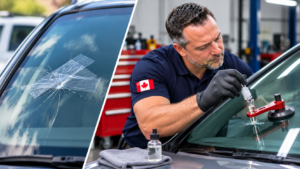
When a technician carries out a front window replacement, that camera has to be unclipped and moved, and the new glass sits in a slightly different position with a slightly different optical profile to the old one. Even a small shift changes what the camera believes it is looking at. Calibration puts those readings right again, so the vehicle’s computer can trust what the camera reports. Think of it as resetting a compass after it has been knocked. The compass still works, but it might point confidently in the wrong direction.
Why a New Windshield Changes What the Camera Sees
A windshield is not just a sheet of glass. It is a curved, laminated optical component, and the camera looks through it every second the vehicle is moving. Several small variables can change when the glass is replaced:
- Mounting bracket position: Brackets are bonded to the glass, and a difference of a millimetre or two shifts the camera’s viewing angle.
- Glass thickness and curvature: Subtle differences bend light slightly differently, which can alter how distances are interpreted.
- Tint band and coatings: The shaded strip at the top of the glass, along with any acoustic or infrared-reflective layers, can affect image clarity.
- Camera seating: Each time the module is removed and refitted, it settles in a fractionally different position.
None of these differences looks dramatic to the eye. The problem is distance. A fraction of a degree of error at the camera becomes a meaningful gap at highway range. That can mean a lane line read as slightly further left than it really is, or a stopped vehicle judged to be further away than it actually is.
Which Safety Systems Depend on a Calibrated Windshield Camera
Calibration is not about one feature. A single forward camera often supports several driver-assistance functions at once, including:
- Lane departure warning and lane keep assist
- Automatic emergency braking and forward collision warning
- Adaptive cruise control
- Traffic sign recognition
- Automatic high beams
- Pedestrian and cyclist detection
If your vehicle has any of these, a front window replacement should be treated as a safety-system job as much as a glass job. Drivers sometimes assume that if the dashboard shows no warning lights, everything must be fine. That is not always true. A miscalibrated camera can work perfectly well and still be slightly wrong, which is exactly why a deliberate calibration step matters.
Static and Dynamic Calibration: How Each Method Works
Manufacturers specify how calibration must be done, and the method varies by make and model.
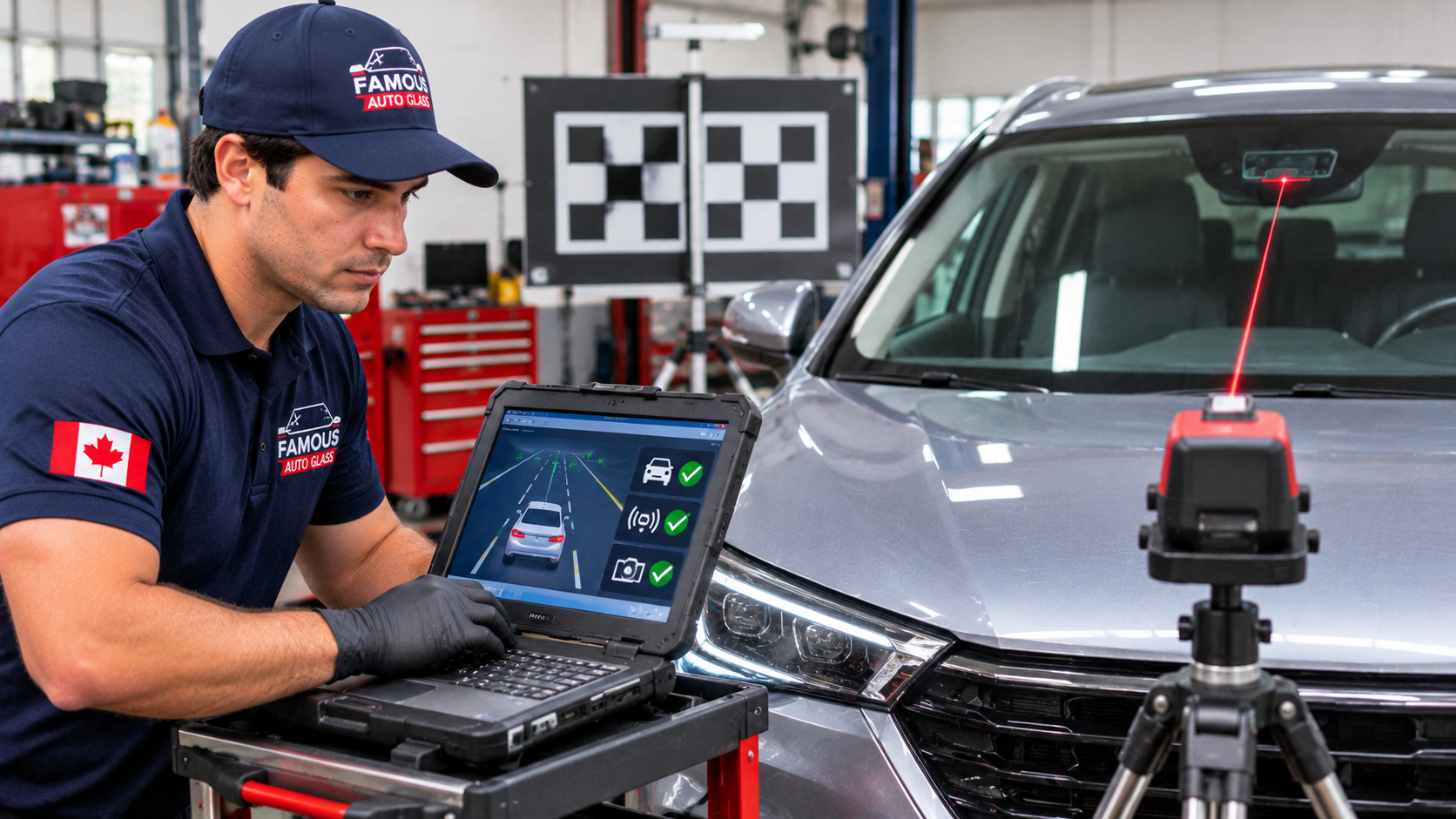
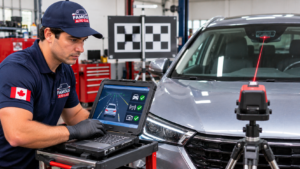
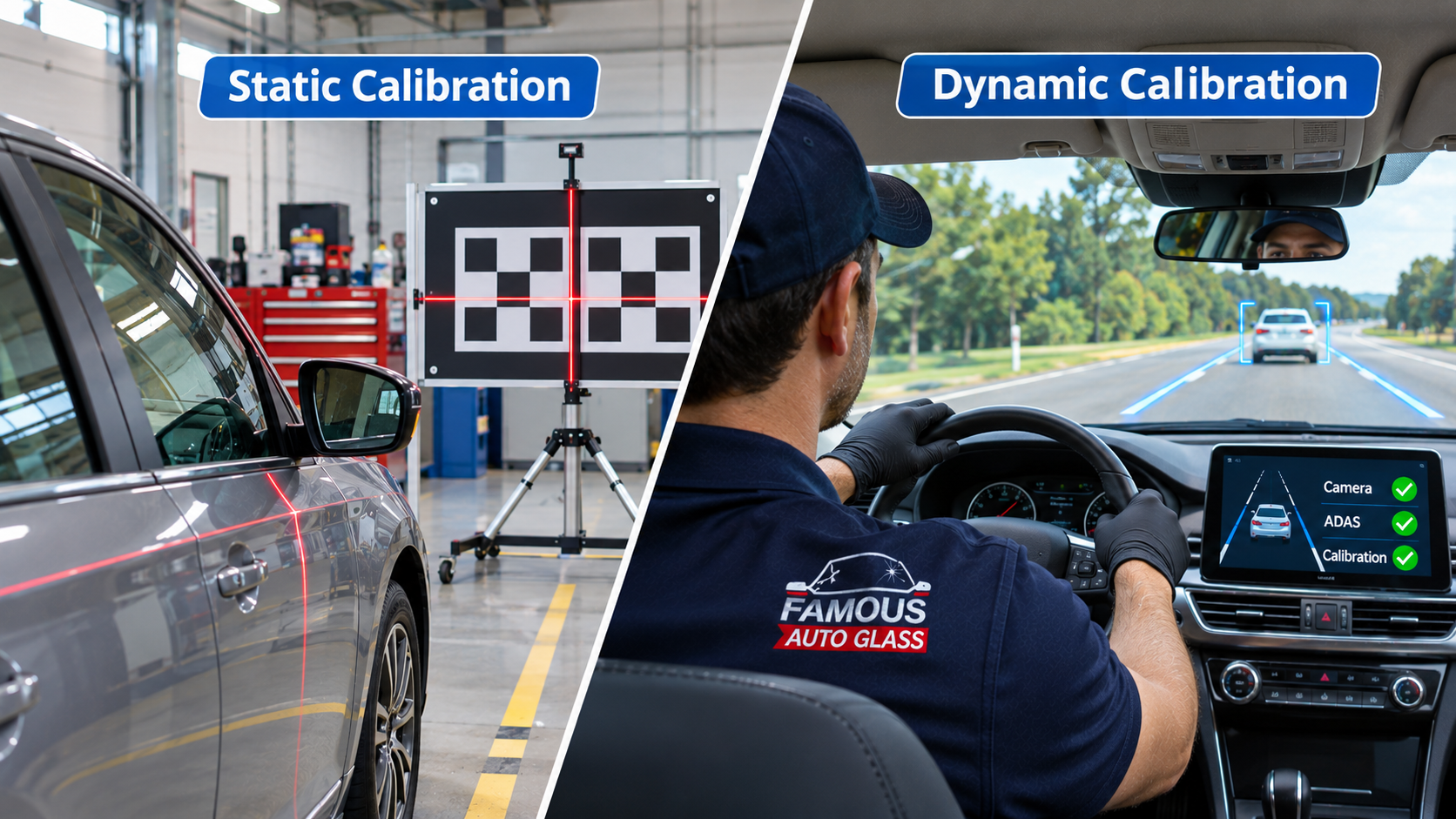
Static calibration happens in the workshop. The vehicle is positioned on a level floor at measured distances from printed targets or patterns, under controlled lighting, and the technician uses a scan tool to teach the camera what it is looking at. It is precise, repeatable and independent of traffic and weather.
Dynamic calibration happens on the road. The technician drives the vehicle at a set speed, on well-marked roads, for a set period while the system learns from lane markings and surrounding traffic. It depends on clear lines, decent weather and steady conditions.
Many vehicles need one method, and some need both. A reliable shop follows the manufacturer’s procedure rather than choosing whichever method is quickest. When you book a front window replacement, ask which method your vehicle requires and how it will be carried out.
What Can Go Wrong When Calibration Is Skipped
Skipping calibration is tempting because everything looks fine afterwards. The glass is clear, the seal is neat and the car drives normally. The risks show up later, and usually at the worst possible time:
- Lane assist that nudges you toward the wrong side of the lane, or fails to react when you drift
- Emergency braking that triggers late, or triggers when nothing is there
- Adaptive cruise control that misjudges the gap to the vehicle ahead
- Warning lights, or a system quietly switching itself off
- Headlights that dip or lift at the wrong moments
There are practical consequences too. A vehicle that cannot show its safety systems were restored after glass work can lead to awkward conversations with insurers if you are ever involved in a collision.
Ontario’s Highway Traffic Act sets out the framework for safe vehicle equipment and operation on the province’s roads, and keeping your vehicle’s safety features working as the manufacturer intended is part of being a responsible driver. A properly done front window replacement should leave you with the same level of protection you had before the glass was damaged.
OEM, OEE and Aftermarket Glass: Does the Type Change Calibration?
Drivers often ask whether the type of glass affects calibration. The short answer is that it can. Glass is commonly described as OEM (made by or for the vehicle manufacturer), OEE (made to the same specification as OEM by another supplier) or aftermarket. Quality varies across all of them, and what matters most is that the glass is made to the correct specification for your vehicle, including the right bracket position, the right camera window and the right optical clarity.
A poorly matched windshield can leave the camera struggling to calibrate, or calibrating but reading with slight distortion. Before the work begins, ask which type of glass will be used and whether it suits your vehicle’s driver-assistance system. A transparent shop will explain the options, the trade-offs and the price differences without pressure, and will confirm that the glass is compatible with the calibration your vehicle needs.
Why the Same Team Should Fit the Glass and Calibrate It
Some drivers get the glass fitted in one place and then send the car somewhere else for calibration. It can work, but it adds a handoff, and handoffs are where responsibility gets blurry. If a camera will not calibrate, whose problem is it? Was the bracket seated correctly, or is the sensor faulty? When one team handles both the glass and the calibration, the answer is clear, and any issue is fixed in a single visit.
That joined-up approach also improves the quality of the glass work itself. A technician who knows the camera has to be calibrated afterwards pays closer attention to bracket alignment, bonding and cure time. Our windshield replacement service in Toronto is built around that idea: the glass, the adhesive, the trim and the electronics are all treated as one system.
Price matters too, and we understand that. Choosing affordable front windshield replacement should never mean giving up calibration to save a little money. A cheaper job that leaves your braking assistance guessing is not a saving. It simply moves the cost to the future, along with the risk.
How Technicians Prepare a Vehicle for Calibration
Good calibration starts before any target is placed. A careful technician will:
- Run a pre-scan to record existing fault codes, so any problems are known before the glass is touched
- Confirm tire pressures, fuel level and ride height are within specification, because these affect camera angle
- Remove heavy loads from the trunk and cabin
- Check that the glass, bracket and camera housing are clean and correctly seated
- Prepare a level surface, correct lighting and the right distance measurements for static work
- Run a post-scan afterwards to confirm that no fault codes remain and the system reports a successful calibration
Skipping any of these steps can undermine the result, even if the calibration screen says “complete”. This preparation is one of the biggest differences between a shop that merely fits glass and one that completes a proper front window replacement.
Will Calibration Slow Down Your Front Window Replacement?
It is a fair question, especially if you rely on your car for work. Calibration does add time, often somewhere between thirty minutes and a couple of hours depending on the vehicle and the method. Dynamic calibration also needs a suitable road drive, and static calibration needs a controlled bay.
Speed and quality do not have to be enemies, though. A well-organised team schedules the glass fitting, the adhesive cure and the calibration as one smooth sequence rather than three separate appointments. If you are short on time, our fastest windshield replacement in Toronto option is designed to keep your day moving without cutting corners on the steps that protect you. A fast front window replacement is only a good one if the cameras are right when you drive away.
How Toronto Weather and Roads Affect Calibration
Anyone who has driven the 401 in February knows that Toronto is hard on vehicles. Road salt, slush, potholes and big temperature swings all play a part in how glass work and calibration go.
Cold and moisture affect adhesive cure times, so the vehicle usually needs to stay put for a safe drive-away time before it hits the road. Snow, ice or dirt over the camera area can also disrupt dynamic calibration, which needs clear lane markings and clean conditions. This is part of why static calibration in a controlled workshop is often preferred in winter.
After the job, keep the camera zone of the windshield clean, and have the system checked if a pothole strike leaves the lane assist behaving strangely. Even a good front window replacement cannot make up for later damage to alignment or suspension.
Insurance, Paperwork and Calibration Reports
Many Ontario auto policies offer some form of glass coverage, depending on the plan and the deductible you chose, so it is worth checking before you pay out of pocket. Our guide to windshield replacement insurance in Ontario explains how the process commonly works, and our team can walk you through insurance claim support if you would rather not handle the paperwork alone.
Whichever route you take, ask for the calibration report. A good shop will give you a document showing the pre-scan, the method used and the post-scan result. Keep it with your records. If you ever need to show that your vehicle’s safety systems were restored properly after a front window replacement, that paper is your proof. It also helps if a different shop works on your car in future, because they can see exactly what was done.
Warning Signs Your Windshield Camera Needs Attention
Sometimes the problem shows up after you have driven away. Watch for:
- A dashboard warning about the driver-assistance system, lane keep assist or forward collision alert
- Lane assist that pulls the steering one way, or constantly misreads the lane
- Braking alerts that appear for no reason, or fail to appear when they should
- Adaptive cruise control that disables itself without explanation
- Any message telling you the camera is blocked or needs calibration
If you notice any of these after a front window replacement, call the shop that did the work straight away rather than waiting. It is much easier to correct a calibration while the job is fresh.
How to Choose a Provider You Can Trust
Not every shop is equipped to calibrate, so before you book a front window replacement, ask a few direct questions:
- Do you calibrate in-house, or do you send the vehicle elsewhere?
- Which method does my vehicle need: static, dynamic or both?
- Do you follow the manufacturer’s procedure for my exact model?
- Will I receive a pre-scan and post-scan report?
- What happens if the calibration does not pass?
- Is the work backed by a written warranty?
Straight answers to those questions tell you most of what you need to know. Vague answers, or a quote that is far below every other shop, deserve a second look. Calibration equipment, targets and training cost money, and they are the first things to go when a price looks too good to be true.