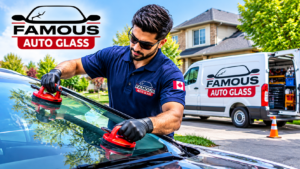
Picture this: it’s Monday morning, the kids are buckled in, and a stray pebble from a gravel truck has just turned your windshield into a spiderweb. The last thing you need is half a day lost in a waiting room. That’s where a mobile auto glass replacement service earns its keep. Instead of you driving to the shop, a certified technician arrives at your home, office or even a grocery store parking lot with the glass, adhesive and tools to finish the job on the spot.
At Famous Auto Glass LTD., we’ve built our approach around one simple idea: safety work shouldn’t wreck your schedule. In this guide, we walk through how a mobile auto glass replacement service works, when it makes sense, what affects the price, how insurance fits in, and what to ask before you book, so you can decide with confidence.
What Is a Mobile Auto Glass Replacement Service, Really?
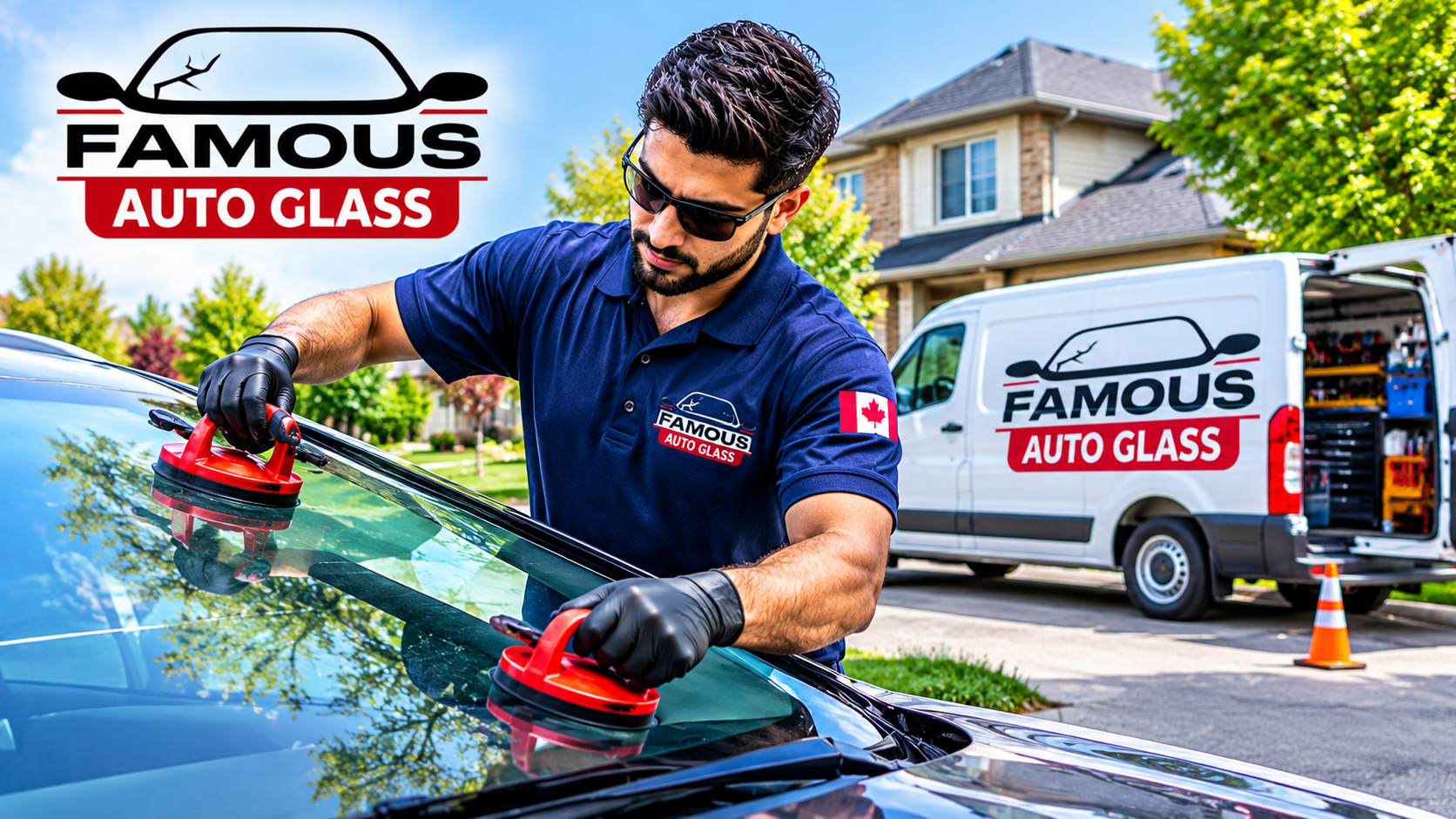
Strip away the marketing and it’s quite straightforward. A mobile auto glass replacement service is a fully equipped van that carries everything a workshop would use: the replacement windshield, primer, urethane adhesive, cutting tools, suction lifters, and safety gear. The technician does the removal, bonding and cleanup at whatever address you choose. There’s no shuttle ride, no loaner car and no leaving your vehicle overnight.
The work itself is identical to what happens inside a shop. The old glass is cut free, the pinch weld is cleaned and primed, fresh adhesive is laid, and the new windshield is set into place with precise alignment. The only real difference is the location. For most passenger vehicles, SUVs and light trucks, that difference is a huge convenience and no compromise in quality.
Why Canadian Drivers Are Choosing On-Site Glass Work
Life in Canada is busy, and our distances are not small. Commuting from Mississauga to downtown Toronto, running between job sites in Laval, or juggling school pickups in the suburbs all eat time. Add a cracked windshield and it can feel like one more job on an already overloaded list.
A mobile auto glass replacement service solves that in three ways. First, it saves travel time, since nobody has to drive a damaged vehicle across town. Second, it fits around your day, so you can keep working from home while the technician handles the glass outside. Third, it reduces risk. A crack that is already spreading can worsen with every pothole and every freeze-thaw cycle, so being able to book a technician quickly often protects both your safety and your wallet.
Step-by-Step: What Happens When the Technician Pulls Up
Knowing the process takes away most of the nerves, so here is how a typical visit unfolds:
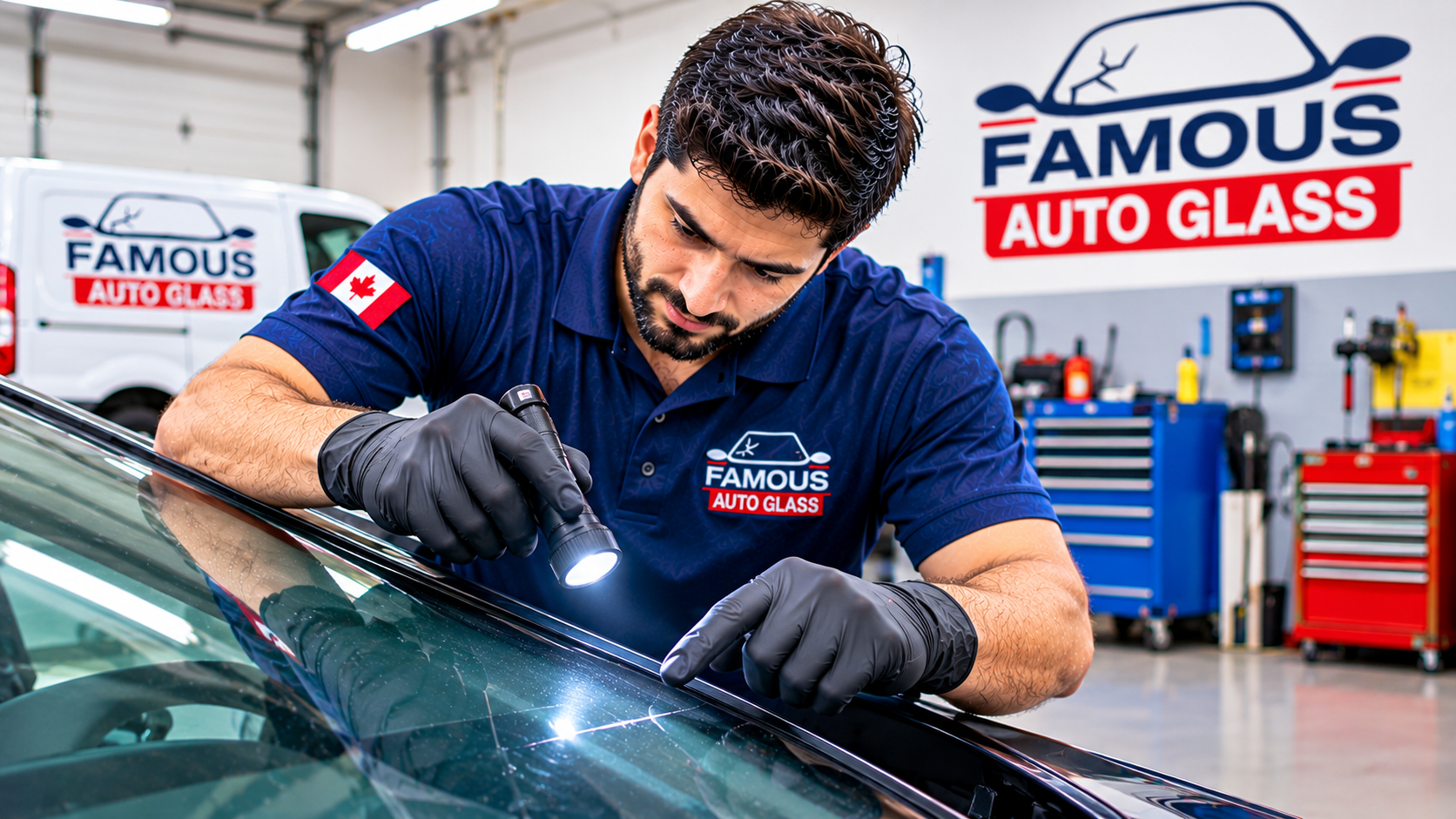
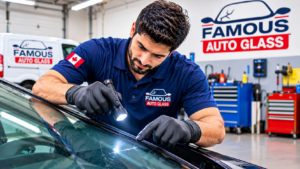
- Inspection: The technician checks the damage, confirms the glass part number, and looks for rust or old adhesive problems around the frame.
- Protection: Interior and exterior surfaces get covered so dust, glass fragments and adhesive never touch your paint or upholstery.
- Removal: Wipers, trim and sensors are carefully detached, and the damaged windshield is cut out of the frame.
- Preparation: The pinch weld is trimmed and primed, because a clean, correctly prepared bonding surface is where a safe installation begins.
- Installation: A continuous bead of adhesive is applied and the new windshield is set accurately in position.
- Final checks: Trim, wipers and any sensors are refitted, and the technician explains the safe drive-away time.
With a mobile auto glass replacement service, most jobs take roughly an hour to two hours of hands-on work, depending on the vehicle and any extra features like rain sensors or heated glass.
Repair or Replace? Making the Right Call Before You Book
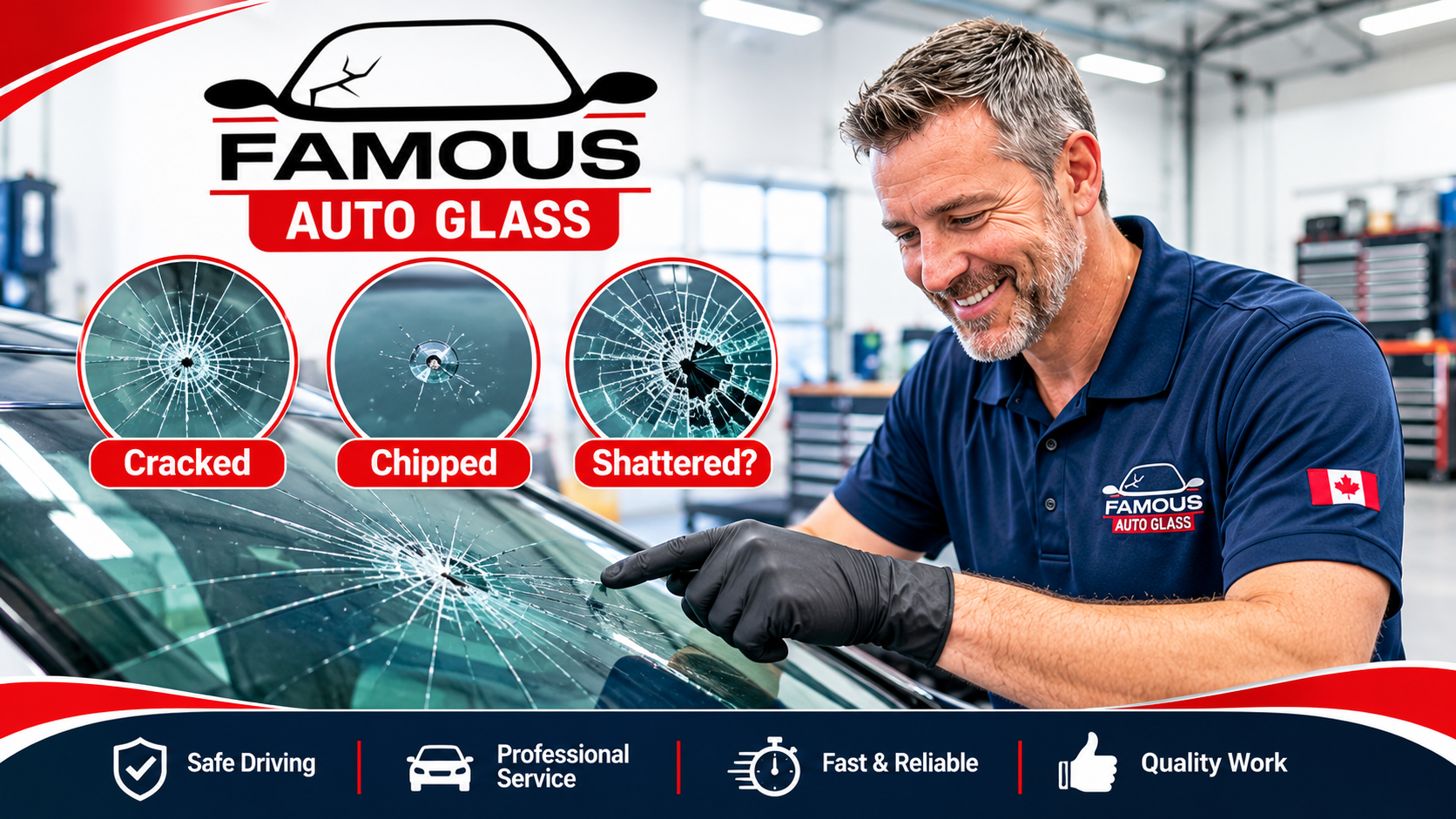
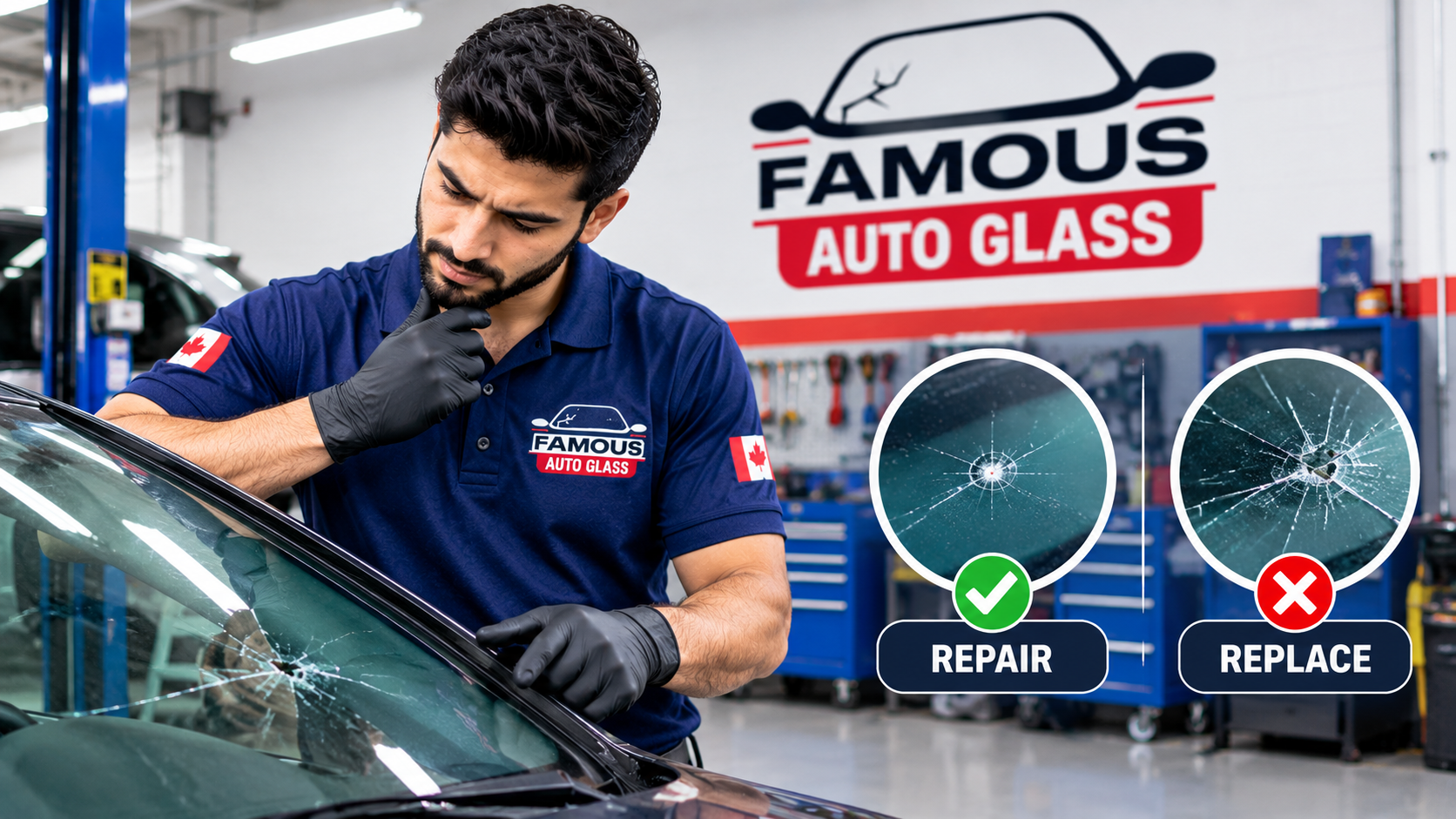
Not every damaged windshield needs a full swap. Small chips and short cracks can often be fixed with resin, which is faster and cheaper. As a rule of thumb, damage smaller than a loonie and outside the driver’s direct line of sight is a good repair candidate, while long cracks, damage along the edge, or deep impacts usually call for replacement.
If you’re on the fence, it’s worth reading our guide to mobile windshield repair in Toronto, which explains how early repairs can stop a small chip from becoming a costly replacement. The golden rule is to act quickly. Dirt, moisture and temperature swings work their way into a chip, making a clean repair harder every day you wait.
Does a Mobile Auto Glass Replacement Service Match Shop Quality?
This is the question we hear most, and the honest answer is yes, when it is done properly. The quality of any windshield installation depends on technician training, the glass itself, the adhesive and the conditions during bonding. A well-run mobile auto glass replacement service controls all of those variables by using quality glass, premium urethane, and trained technicians who know when conditions are right.
Where mobile work differs is the environment. A workshop has controlled temperature and a roof overhead, while a driveway has weather. A responsible provider will therefore reschedule or relocate the job if heavy rain, snow or extreme cold would risk a weak bond. That judgment call is a sign of professionalism, not a limitation. If you want a deeper walkthrough of the stages involved, our detailed breakdown of how a mobile auto glass replacement service handles each stage goes through them one at a time.
Adhesive, Cure Time and Canadian Weather
Adhesive is the unsung hero of every windshield installation. It holds the glass to the body, supports the roof in a rollover, and gives the passenger airbag a firm surface to deploy against. For that reason, cure time matters. Modern urethane adhesives can reach a safe drive-away strength within roughly an hour in good conditions, but the exact time depends on the product, humidity and temperature.
Canadian winters add a twist. Cold slows the curing process, so technicians may use warmer adhesive formulas, heat the work area, or ask you to wait longer before driving. Summer heat has its own quirks, speeding up curing but demanding care so the adhesive does not skin over too early. A skilled technician adjusts for all of this, which is exactly why a mobile auto glass replacement service should never rush a bond.
Is It Legal to Drive With a Cracked Windshield?
Many drivers assume a crack is just a cosmetic annoyance, but the rules say otherwise. In Ontario, the Highway Traffic Act sets out requirements around vehicle equipment and a driver’s clear view of the road, and similar rules apply in other provinces. A large crack in the driver’s line of sight can lead to a fine, a failed safety inspection, or trouble if the damage is judged to have contributed to a collision.
Beyond the legal side, there’s the practical one. A cracked windshield is weaker in a crash, and it can distort your vision with glare at night. If you have any doubt about your province’s specific rules, check your local transportation authority, then book the repair before the problem grows.
Insurance Claims without the Headache
Glass damage is one of the most common claims for Canadian drivers, and the paperwork worries many people more than the repair itself. Coverage varies widely. Some policies include glass under comprehensive coverage with a deductible, while others offer a dedicated glass endorsement with a lower or even zero deductible. Quebec, Ontario, Alberta and British Columbia each have their own insurance structures, so the details of your policy matter.
The simplest approach is to review your policy, then talk to a provider who handles claims regularly. Our team can walk you through the process, and you can start with our page on insurance claim support to see how documentation, deductibles and approvals typically work. Filing a glass claim through a mobile auto glass replacement service usually does not behave like a collision claim, but you should always confirm with your insurer how it affects your record and premium.
When a Mobile Auto Glass Replacement Service Is the Smarter Choice
A mobile auto glass replacement service is not just a convenience; in several situations it is simply the better option:
- Busy schedules: If you work from home or have a packed calendar, on-site service keeps your day intact.
- Unsafe-to-drive damage: When a crack runs across your view, driving to a shop is risky, and a technician can come to you.
- Fleet vehicles: Business owners with vans and trucks avoid downtime by having glass replaced at the depot.
- Mobility or family needs: Parents with young children, seniors and drivers with limited mobility avoid the stress of drop-offs.
- Remote or suburban locations: When the nearest shop is far away, a mobile auto glass replacement service closes the gap.
There are exceptions, of course. Severe structural damage, rust around the frame, or vehicles that need specialized calibration equipment may be better handled in a controlled workshop. A good provider will tell you honestly which route suits your situation.
What about ADAS Cameras and Sensors?
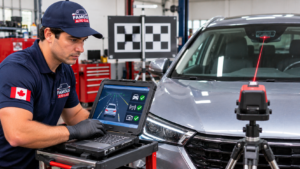
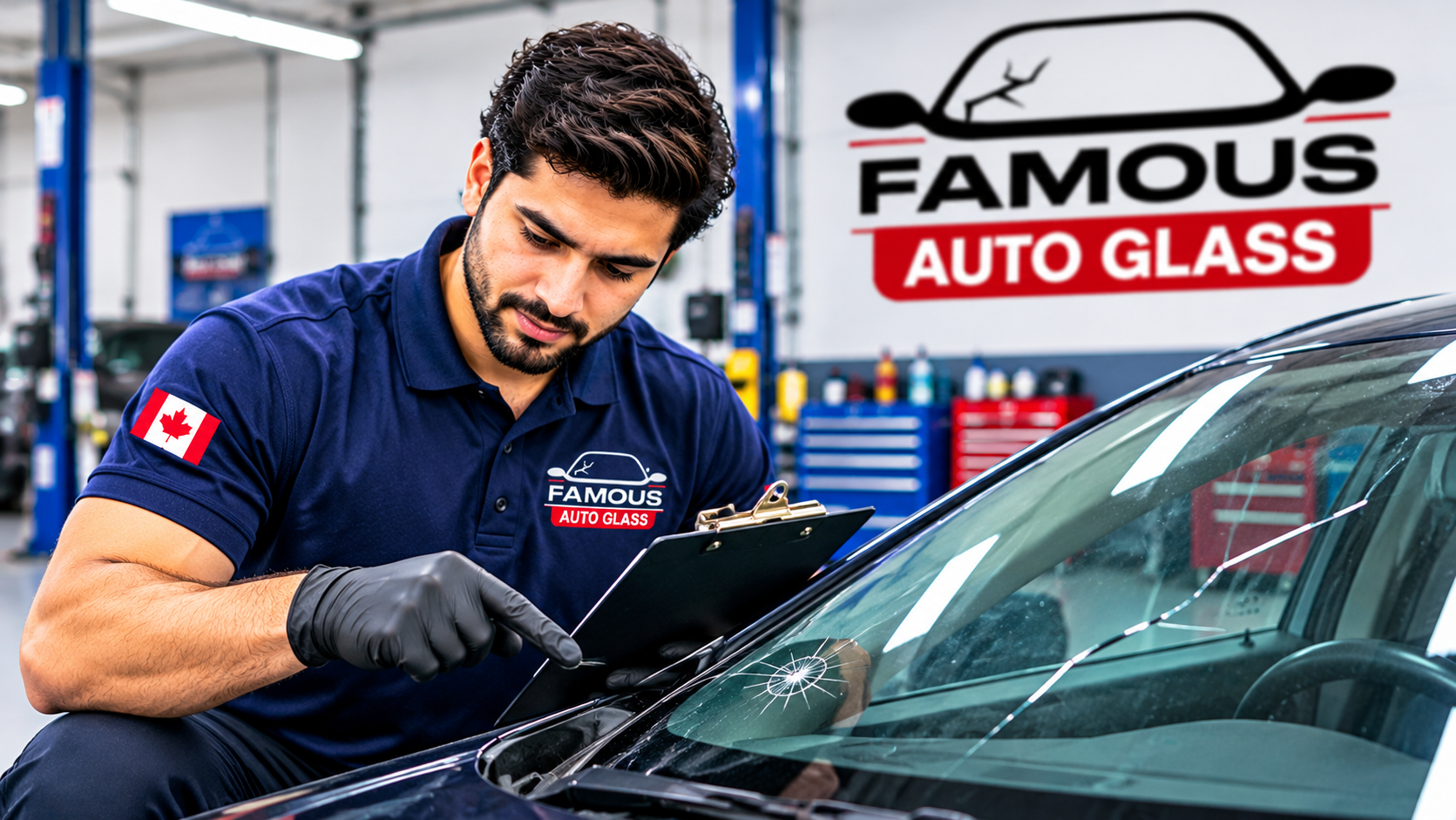
Modern vehicles are packed with technology mounted on or behind the windshield, including lane-departure cameras, rain sensors and collision-avoidance systems. These advanced driver assistance systems, usually called ADAS, rely on precise camera positioning. When the windshield is replaced, the camera may need recalibration to keep working accurately.
That doesn’t automatically rule out a mobile auto glass replacement service. Many vehicles can be handled on-site, and some require a follow-up calibration appointment. The key is to mention your vehicle’s features when you book, so the right equipment and plan are ready. Skipping calibration when it is needed can leave safety systems misreading the road, so it is not a corner worth cutting.
What Affects the Price of a Mobile Auto Glass Replacement Service?
There’s no single price tag, because several factors move the final number:
- Vehicle make, model and year: Luxury and newer vehicles often use more expensive glass.
- Glass features: Heated elements, acoustic layers, heads-up display zones and rain sensors increase the cost.
- ADAS calibration: If your vehicle needs it, this adds time and expense.
- Glass type: OEM glass costs more than quality aftermarket alternatives.
- Insurance coverage: Your deductible and policy terms determine what you actually pay.
Ask any mobile auto glass replacement service for a written quote that lists the glass, labour and any calibration separately. The cheapest quote is not always the best one, because shortcuts on adhesive or preparation can cost far more later. Transparent pricing is usually a good sign.
How to Prepare Your Car and Your Driveway
A mobile auto glass replacement service needs very little from you, but a little preparation makes the visit smoother. Park the vehicle on a flat, accessible surface with room to open all the doors, and make sure the technician has a few feet of working space around the windshield. If you can, choose a spot that offers some cover, like a garage or carport, particularly in winter.
Clear the dashboard and remove anything attached to the glass, such as toll transponders, dash cams and parking permits. Let the technician know about any electronics near the mirror.
Aftercare: The Rules That Actually Matter
Once your mobile auto glass replacement service has finished and the new windshield is in, the first day is important. Follow these simple guidelines to protect the bond:
- Wait for the safe drive-away time your technician gives you before driving.
- Avoid slamming the doors for the first day, since pressure changes can disturb a fresh bond.
- Skip high-pressure car washes for at least 48 hours.
- Leave retention tape in place until the technician says it can come off.
- Report any whistling, leaks or wind noise straight away.
A reliable mobile auto glass replacement service will stand behind its work with a warranty covering workmanship and leaks, so keep your paperwork somewhere safe.
How to Choose the Right Mobile Auto Glass Replacement Service
Not every provider is equal, so ask a few pointed questions before you commit. Are the technicians trained and certified? Do they use quality glass and premium adhesive? Do they provide a written warranty? Can they handle ADAS recalibration or refer you for it? Do they offer clear quotes and direct insurance support?
A trustworthy team explains the process openly, tells you when conditions are not suitable, and never pushes you to rush. At Famous Auto Glass LTD., we’d rather reschedule a job than risk a weak installation, because a safe windshield is the whole point.
Frequently Asked Questions
The hands-on work typically takes one to two hours, plus a short wait for the adhesive to reach a safe drive-away strength. Vehicles with extra sensors or special glass may take a little longer.
Light weather can sometimes be managed with a canopy or a covered spot, but heavy rain, snow or freezing conditions can weaken the adhesive bond. A responsible technician will reschedule or relocate the job rather than risk it.
Yes. The glass, adhesive and process are the same. What matters is the technician’s skill, the quality of materials and suitable conditions during installation.
You don’t need to watch the whole job, but someone should be available at the start to confirm the details and at the end to approve the work and receive aftercare instructions.
It depends on your policy. Many Canadian policies cover glass under comprehensive coverage with a deductible, and some include a separate glass endorsement. Check your policy or ask your provider to help you with the claim.
Your technician will give you a specific safe drive-away time, which is often around an hour but varies by adhesive and weather. Always follow that guidance rather than guessing.
If your vehicle has a camera or sensors linked to driver-assistance features, recalibration is often recommended or required after a replacement. Mention your vehicle’s features when booking so the correct plan is in place.