
Most windshield chip questions are about a single piece of damage: is this one fixable? This is a different question, and a more specific one — what happens if you’ve already had a chip repaired, and now there’s a new one? Or what if the old repair itself seems to be showing wear, or a fresh crack seems to be running out from where the original damage used to be?
This isn’t really about a magic number of repairs a windshield can tolerate. It’s about understanding what a repair actually changes in the glass, and why the answer to “can this be repaired again” depends more on the specific condition of your windshield than on how many times it’s already been fixed.
Key Takeaways
- There’s no fixed, universally agreed number of times a windshield can be repaired — it depends on the size, location, and condition of both the new and previous damage.
- A new chip in a different area of an already-repaired windshield is generally treated on its own merits, following the same size and location rules as any first repair.
- Damage that develops from or near a previous repair site is more likely to point toward replacement, since it can indicate the surrounding glass has already been weakened.
- Multiple repair sites on one windshield can start to affect overall visibility and structural integrity, even if each individual repair was done correctly.
- A professional inspection of the whole windshield — not just the newest damage — is the only reliable way to know where you actually stand.
What a Repair Actually Does (and Doesn’t Do) to the Glass
It helps to be precise about what resin repair accomplishes. When a technician repairs a chip, they’re injecting resin into that specific damaged area, curing it, and restoring strength and clarity to that one localized spot. It’s not a treatment that strengthens the windshield as a whole — it addresses the specific point of damage and nothing beyond it.
That distinction matters for this question. A windshield with one well-executed repair from a year ago and a brand-new chip somewhere else on the glass isn’t a windshield that’s “used up” some kind of repair allowance. The new chip is a separate piece of damage, in a separate location, and it gets evaluated the same way any first-time chip would be — based on its own size, depth, and position, covered in more detail in our windshield chip repair in Toronto service page.
A New Chip vs. Damage near an Old Repair: Two Different Situations
This is really the core distinction worth understanding.
A new, unrelated chip — say, a fresh stone chip on the passenger side of a windshield that had a driver-side chip repaired last summer — is generally straightforward. It’s assessed independently: is it small enough, far enough from the edge, and outside the direct line of sight? If yes, it’s a normal repair candidate regardless of the windshield’s repair history elsewhere.
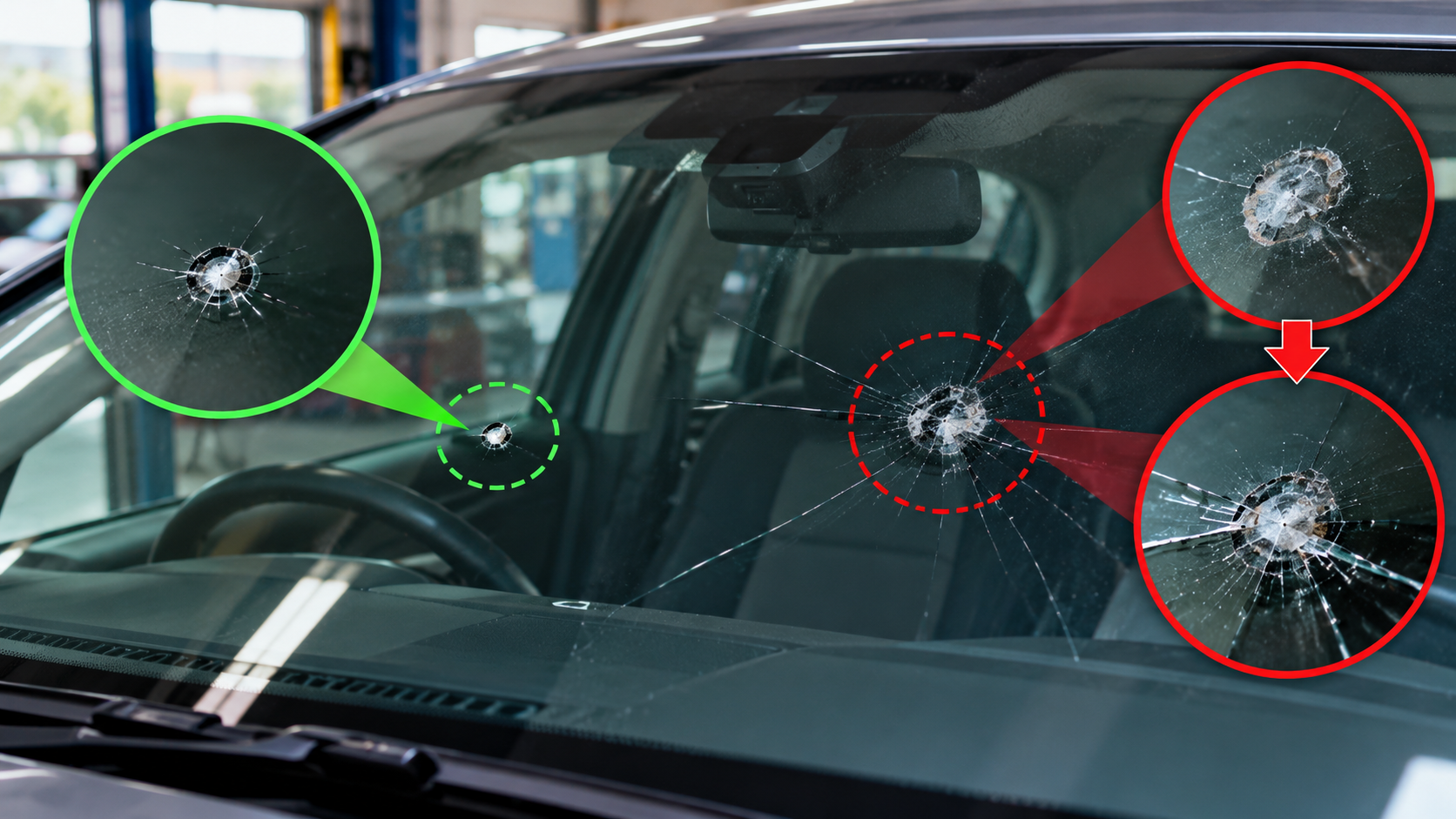
Damage developing at or near a previous repair site is a different conversation. If a crack starts extending from the edge of an old repair, or if the area around a prior chip starts showing new stress lines, that’s a sign the surrounding glass may have already been compromised by the original impact more than the initial repair addressed — or that the original repair area itself is under renewed stress. In these cases, a second attempt to repair essentially the same spot is less likely to hold up long-term, and a technician is more likely to recommend replacement rather than a repeat repair on the same compromised area.
Why Repeat Repair on the Same Spot Is a Harder Case
A resin repair bonds to the glass at the site of the original damage. If that same area develops new cracking, the structural situation is more complicated than it was the first time — there’s already a bonded resin fill in that spot, and any new fracture has to be evaluated in the context of that existing repair rather than as clean, undamaged glass. This is different from a completely fresh chip elsewhere on the windshield, which has no prior repair history to factor in.
In practice, this means a technician assessing damage near an old repair site is going to look more carefully at whether resin can genuinely restore the area, or whether the glass in that specific zone has reached a point where repair isn’t a durable option. It’s not that the windshield has hit some arbitrary repair limit — it’s that the specific location has a track record of stress that a brand-new chip elsewhere doesn’t.
Multiple Chips on One Windshield: When It Adds Up
A separate but related scenario is a windshield that’s accumulated several chips over time — maybe two or three, in different spots, none connected to each other. Individually, each one might be a perfectly reasonable repair candidate. Collectively, though, multiple repair sites raise a different question: at what point does having several repaired areas across one windshield start to affect overall visibility, or suggest the glass has simply taken more impacts than is worth continuing to patch?
There’s no fixed threshold here that applies to every windshield — a lot depends on where the chips are located relative to each other and to the driver’s sightline, and how each one behaved through the repair process. But it’s a fair question to raise with a technician directly: “at what point does it make more sense to just replace this windshield rather than keep repairing individual chips on it?” A straightforward shop should be able to walk through that trade-off with you rather than defaulting to repair every time simply because each individual chip, in isolation, would qualify.
Does a Previous Repair Affect the Windshield’s Overall Strength?
A well-executed repair restores a meaningful amount of strength to the specific damaged area — that’s the whole point of the resin injection and curing process. But it’s reasonable to think of a windshield with multiple past repairs as glass with more history than one that’s never been damaged. It’s not automatically weaker in a way that matters day-to-day, but it also isn’t the same as brand-new glass, and that’s a factor a technician takes into account when evaluating any new damage on that windshield, particularly damage near existing repair sites.
Location Still Matters More Than Repair History
Whether you’re looking at a first chip or a fifth one, the same core factors from any repairability assessment still apply, and they matter more than the repair count itself:
- Size — larger damage is less likely to be a good repair candidate, regardless of whether it’s new or forming near old damage
- Distance from the edge — damage near the windshield’s edge carries more structural risk, which compounds if it’s close to a previous repair site
- Driver’s line of sight — damage directly in the primary viewing area is treated cautiously even on a first repair, and more so if it’s developing near existing repair work
- Depth — damage through both layers of the laminate isn’t repairable at any point in a windshield’s history
Our windshield crack repair guide covers how these same factors apply specifically when damage has already progressed into a crack, which is common when repeated stress develops near an older repair.
When Repeated Repairs Signal It’s Time to Replace
A few signs that point toward considering full windshield replacement rather than another repair:
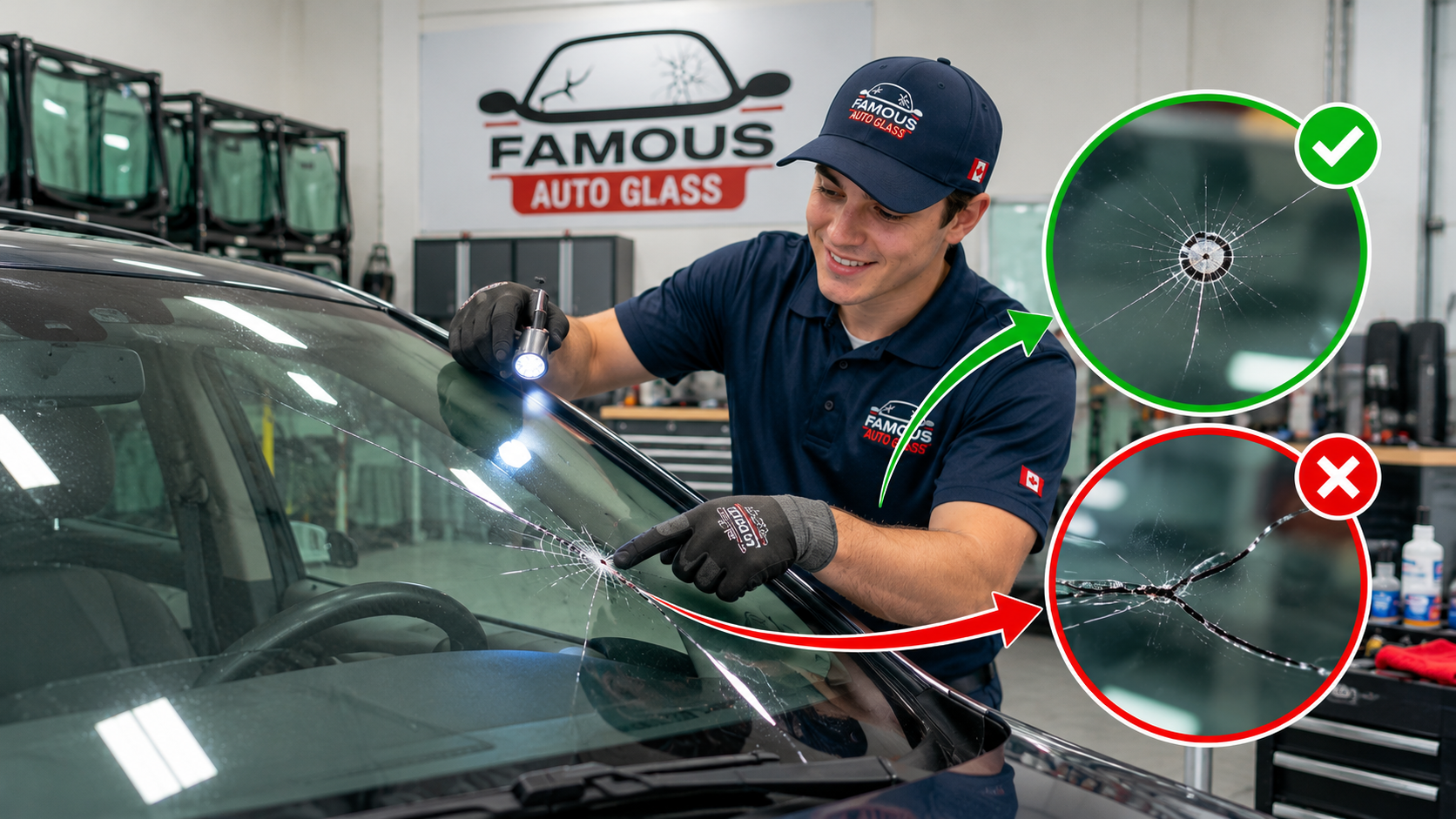
- New cracking developing from or near a previous repair site
- Several repair sites accumulating across the windshield, particularly if any are close together or near the driver’s sightline
- Visible distortion building up across multiple repaired areas that starts to affect visibility
- Any new damage that meets standard replacement criteria — length, edge proximity, or depth — regardless of the windshield’s repair history
None of this means a windshield with one or two well-placed prior repairs is automatically headed for replacement. Plenty of windshields carry a repair or two for their entire service life without issue. The point is that repair history is one more piece of information a technician weighs alongside the usual size and location criteria — not a countdown clock ticking toward an inevitable replacement.
Why a Full Inspection Matters More Here Than With a First Chip
With a brand-new windshield and a single fresh chip, an inspection is fairly contained — look at that one spot, assess it, decide. With a windshield that already has repair history, a proper assessment means looking at the whole windshield: the new damage, the condition of any prior repairs, and whether there’s any connection between them. Skipping that broader look and only assessing the newest chip in isolation can miss a situation where the smarter move is replacement rather than another patch.