Picture this. You’re cruising down the 401, coffee in the cup holder, tunes up, and tink. A little stone flicks off a truck and plants itself in your windshield like it pays rent there.
Now you’ve got a decision. Do you ignore it and hope for the best? Do you panic-Google at the next red light? Or do you do what the smart drivers do, and ask the one question that matters: can this thing actually be repaired?
Here’s the good news. You don’t need a degree in glass science to work it out. At Famous Auto Glass LTD., we boil it down to three questions: how long is the damage, how deep does it go, and where on the glass is it sitting? Get your head around those and you’ll know whether you’re looking at a quick fix or a full replacement before a technician even turns up.
Grab a cuppa (a double-double if you’re in Canada, no judgement), and let’s get into it.
Why Repairability Even Matters (Hint: It’s Not Just About Your Wallet)
Your windshield isn’t just a big window to keep the bugs off your face. It’s a structural part of your vehicle. It supports the roof in a rollover, helps airbags deploy properly, and keeps you inside the car if things go sideways.
Modern windshields are laminated glass: two layers of glass with a thin plastic interlayer (called PVB) sandwiched in the middle. That plastic is the hero. It’s what holds everything together when the outer layer gets damaged.
So when a chip or crack shows up, the question isn’t “is it ugly?” It’s “has it compromised the glass, the plastic, or my line of sight?” That’s what repairability comes down to, and it’s exactly what a professional looks at when you book windshield crack and chip repair.
Question 1: How Long Is the Crack?
Length is the first thing everyone notices, and it’s the quickest rule of thumb you can use in your driveway.
The Rough Guide
- Chips and small bullseyes (under about 2.5 cm / 1 inch): Usually very repairable. Think of the size of a loonie.
- Short cracks (up to roughly 10 to 15 cm / 4 to 6 inches): Often repairable if they’re clean, fresh and not sitting in a tricky spot. Think of the length of a dollar bill.
- Long cracks (beyond about 15 cm / 6 inches): Most shops will recommend replacement. The longer the crack, the more stress it puts on the glass, and the less likely a resin repair will hold.
Keep in mind that these figures are a guide, not gospel. Different shops, insurers and manufacturers apply slightly different limits, and the type of damage matters as much as the measurement. A tidy 8 cm crack in a safe zone might be a cracker of a repair. An 8 cm crack running into the edge? Different story.
Why Length Matters So Much
Glass is under constant tension. Every bump, every pothole (hello, Canadian spring), every blast of the defroster adds stress. A short crack has less “runway” to spread. A long one is already halfway across the windshield and just needs one cold morning to finish the job.
That’s why the rule is simple: the shorter it is when you get it looked at, the better your odds.
Question 2: How Deep Does the Damage Go?
This is the one most people miss, because you can’t see depth from the driver’s seat. A crack that looks small on the surface might be a sneaky one underneath.
Surface vs. Through-and-Through
Remember the two layers of glass? Damage falls into a few categories:
- Outer layer only: The impact has nicked or cracked just the outer pane. This is the best-case scenario and usually repairable.
- Reached the PVB interlayer: The damage has gone deeper and reached the plastic. Sometimes still repairable, but it depends on how far and how clean it is.
- Inner layer damaged: If the inside pane is cracked, resin repair is off the table. The structural integrity is gone, and the windshield needs to be replaced.
The Dirt Factor
Here’s something nobody tells you: a chip that’s been sitting around collects crud. Road grime, moisture, car-wash soap, winter salt. All of it creeps into the damage and gets trapped. Once that happens, resin can’t bond cleanly, and the repair may look cloudy or fail to hold.
That’s why we always say: don’t leave a chip “for later.” Later is when it becomes a crack, and crack becomes a replacement. If you want a fast turnaround, our mobile auto glass service can come to you, so there’s really no excuse.
Pro Tip: The Clear Tape Trick
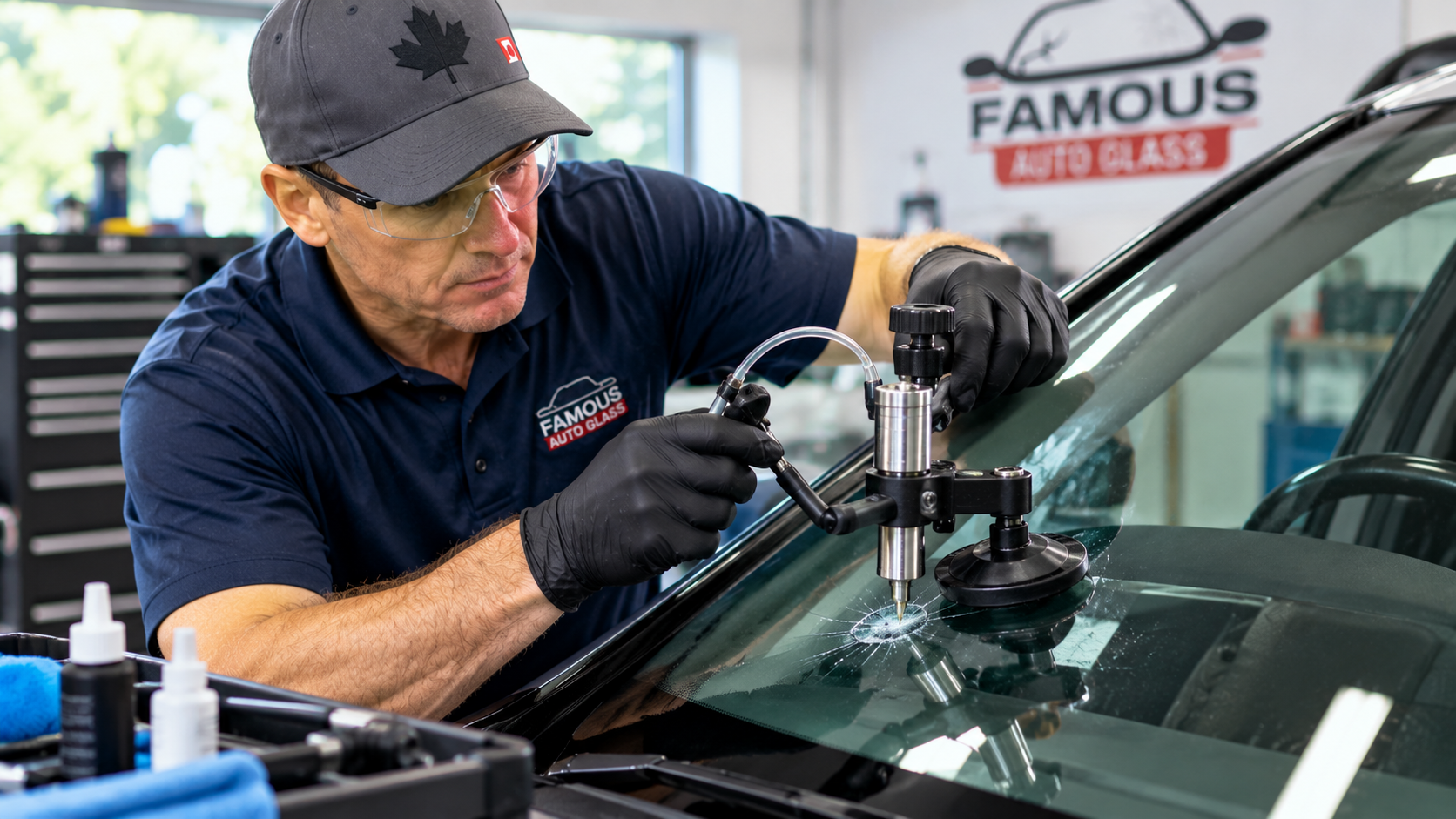
Got a fresh chip and can’t get it fixed straight away? Cover it with a bit of clear packing tape. It keeps water and dirt out and gives the resin a fighting chance later. Just don’t go slapping on duct tape and calling it a day. We’ve seen things.
Question 3: Where Is the Damage Located?
Real estate agents say it’s all about location, location, location. Turns out windshield techs agree.
You could have a tiny, shallow chip and still be told it needs replacing, purely because of where it landed. Here’s why.
The Driver’s Line of Sight
The area directly in front of the driver (roughly the wiper-swept area, about the width of a large sheet of paper) is the most critical zone. Even a perfect repair can leave a faint distortion or blemish in the glass. Normally that’s invisible, but if it’s right in your line of sight, it can be distracting or even hazardous.
Because of that, many repair providers and safety guidelines will recommend replacement for damage in this zone, even for smaller chips.
The Edges
Damage within roughly 5 cm (about 2 inches) of the edge of the windshield is a red flag. The edges are where the glass is under the most tension, bonded to the frame. A crack here tends to spread quickly and can compromise the bond holding the windshield in place, which matters for structural strength and airbag performance.
Edge cracks are rarely good candidates for repair. If you’ve got one, book a windshield replacement sooner rather than later.
Near Sensors and Cameras
Here’s the modern twist. A lot of newer vehicles have cameras, rain sensors and driver-assistance tech mounted behind the windshield, usually near the rear-view mirror. Damage in or near that area can interfere with how those systems “see” the road.
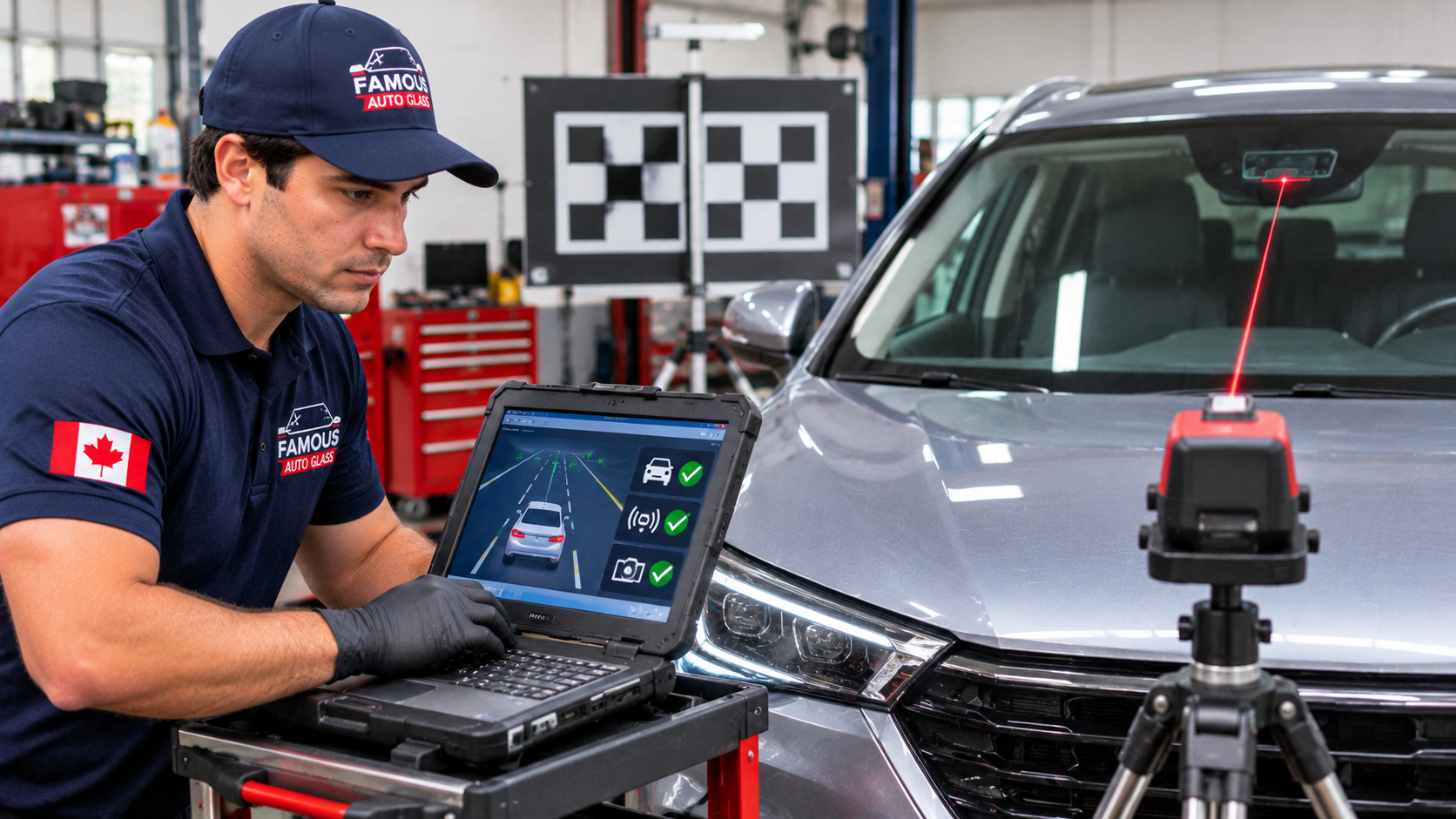
Even if a repair is technically possible, a replacement may be the safer call, followed by proper calibration of the safety systems. It’s one of those things you really don’t want to cheap out on.
The Quick Location Cheat Sheet
|
Where is the damage? |
Typical outcome |
|---|---|
|
Passenger side, away from edges |
Often repairable |
|
Centre of the glass, outside the driver’s view |
Often repairable |
|
Directly in the driver’s line of sight |
Usually replacement |
|
Within ~5 cm of the edge |
Usually replacement |
|
Near cameras or sensors |
Usually replacement, plus calibration |
Does the Type of Crack Matter Too?
Yes, mate, it does. Length, depth and location are the big three, but the shape of the damage plays a part too.
- Bullseye: A neat, circular chip. Very repairable.
- Star break: Little legs radiating out from a centre point. Repairable if the legs are short.
- Combination break: A bit of both. Repairable depending on size.
- Stress crack: A crack that appears with no impact at all, usually thanks to temperature swings. Common in Canadian winters when you blast the heater on a frozen windshield. Often grows fast and usually needs replacement.
- Edge crack: Starts at the edge and runs inward. Rarely repairable.
If you’ve got more than a couple of chips, or they’re too close together, repair gets trickier. Multiple damage points weaken each other and can make a single clean repair impossible.
The Canadian Weather Factor (Because We Have to Talk About It)
If you’re driving anywhere in Canada, you’re basically running a stress test on your windshield four seasons a year.
- Winter: Road salt, gravel, freezing temperatures and the temptation to pour hot water on an iced-up windscreen. Please don’t. The thermal shock can turn a tiny chip into a full-width crack in seconds.
- Spring: Potholes and frost heave. Every bump flexes the glass.
- Summer: Heat expands the glass and any damage in it. Blast the A/C on a baking-hot windshield and you can trigger a crack.
- Autumn: Loose gravel season, plus the first frosts.
The takeaway? Damage that was repairable in October can be a write-off by January. That’s not us being dramatic, that’s just physics having a laugh at your expense.
Repair or Replace? The Honest Decision Guide
Let’s make this simple. Here’s roughly how a technician thinks about it.
Likely repairable if:
- The chip is smaller than about a loonie, or the crack is under roughly 15 cm
- It only affects the outer layer
- It’s outside the driver’s direct line of sight
- It’s not near the edge of the glass
- It’s clean, fresh and hasn’t been through a car wash or a snowstorm
- You’ve got no more than a few damage points
Likely needs replacement if:
- The crack is long, spreading or running to the edge
- Both layers of glass are damaged
- It’s directly in the driver’s field of view
- It’s near cameras or sensors
- The damage is deep, contaminated or old
- There’s a stress crack with no clear impact point
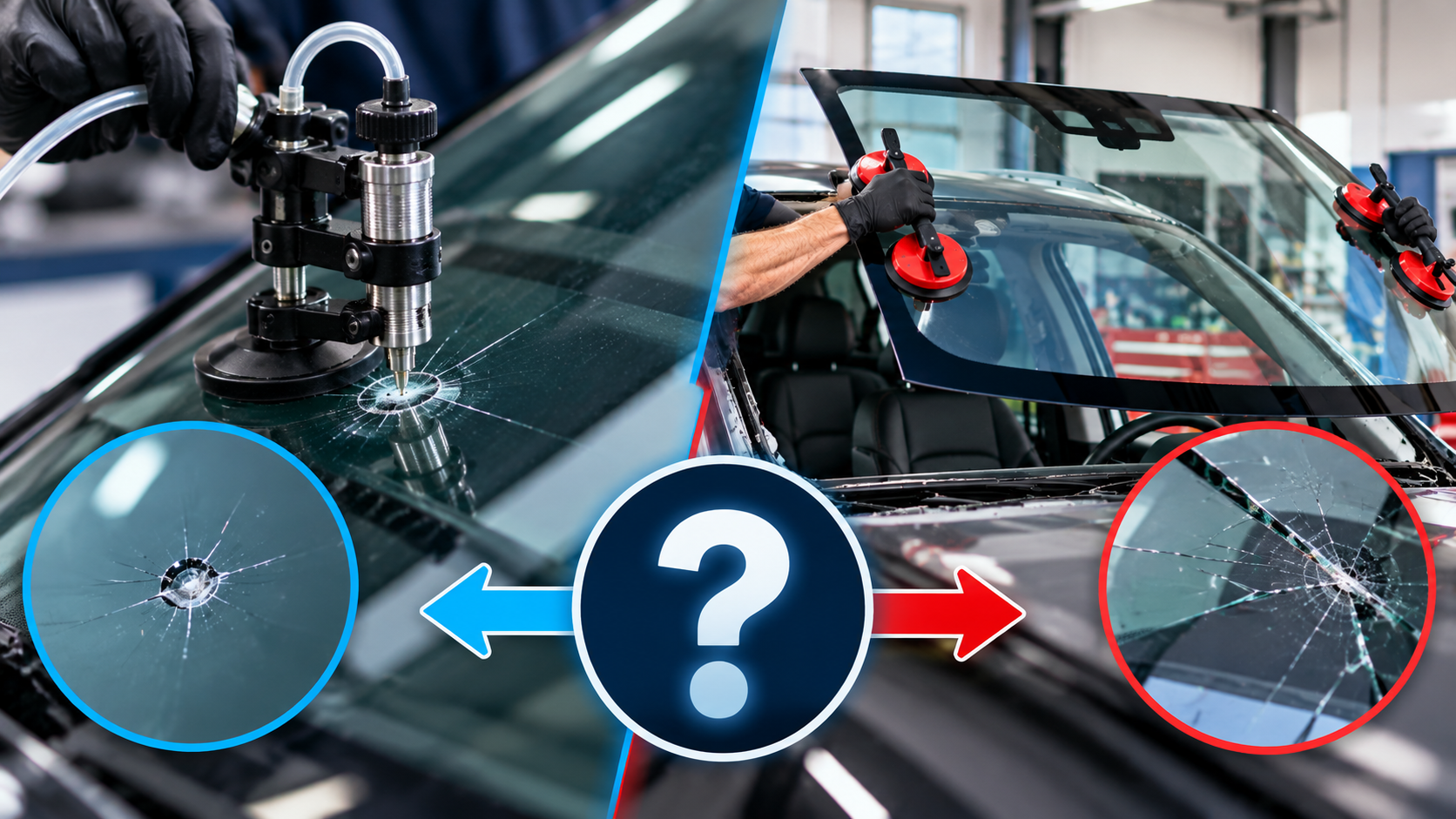
When in doubt, get a professional to look at it. A quick inspection costs a lot less than guessing wrong and ending up with a spreading crack and a failed inspection.
Why Repair When You Can Just Replace?
Fair question. Here’s why repair is worth it when it’s an option:
- It’s cheaper. A resin repair costs a fraction of a new windshield.
- It’s faster. Most repairs take around 30 minutes or less.
- It keeps your original factory seal. Your windshield’s original bond is stronger than most people realise.
- It’s better for the environment. Fewer replacement windshields means less glass heading to landfill.
- It stops the spread. A repaired chip can’t turn into a long crack.
And if your damage is past the point of no return? That’s fine. A quality replacement done by experienced technicians is just as safe. We cover everything from front windshields to rear glass replacement, door glass replacement and even side mirror repair, so one call covers the lot.
Does Insurance Cover It?
This is the question we get asked more than “how long will it take?”
In many cases, glass coverage is an optional add-on to your auto insurance policy, and in some provinces it works differently to others. Some policies cover chip repair with little or no deductible, because insurers would rather pay for a small repair than a full replacement down the track.
The details depend on your insurer and your province, so check your policy first. If you’d like a hand, our team offers insurance claim support to help you work out what’s covered and get the paperwork sorted without the headache.
Why Famous Auto Glass LTD.?
We’re not here to upsell you a new windshield when a quick repair would do. We’ll tell you straight whether your damage is repairable, and if it isn’t, we’ll tell you that too.
Here’s what you can expect:
- Honest assessments. If it’s fixable, we’ll fix it. If it needs replacing, we’ll explain why.
- Convenient service. Our mobile technicians come to your home, workplace or wherever you’ve parked, so you don’t have to rearrange your whole day.
- Quality materials. Proper resin for repairs and quality glass for replacements.
- Local knowledge. We know what Canadian roads and weather do to glass, and we’ve got the experience to back it up.
- Broad coverage. Whether you need a windshield repair in Toronto or service elsewhere in Canada, we’ve got you sorted.
Have a look around the Famous Auto Glass LTD. homepage for the full lineup of services.
What To Do Right Now If Your Windshield Is Damaged
Don’t panic, but don’t dawdle. Here’s your game plan:
- Don’t touch it. Skip the finger-poking. Skin oils and dirt make repair harder.
- Cover it. Clear tape over a chip keeps the muck out.
- Avoid temperature extremes. No hot water, no blasting the heater or A/C straight at it.
- Drive gently. Avoid slamming doors and hitting potholes where you can.
- Get it checked quickly. Within a few days is ideal.
- Take a photo. It helps with insurance and gives the technician a head start.