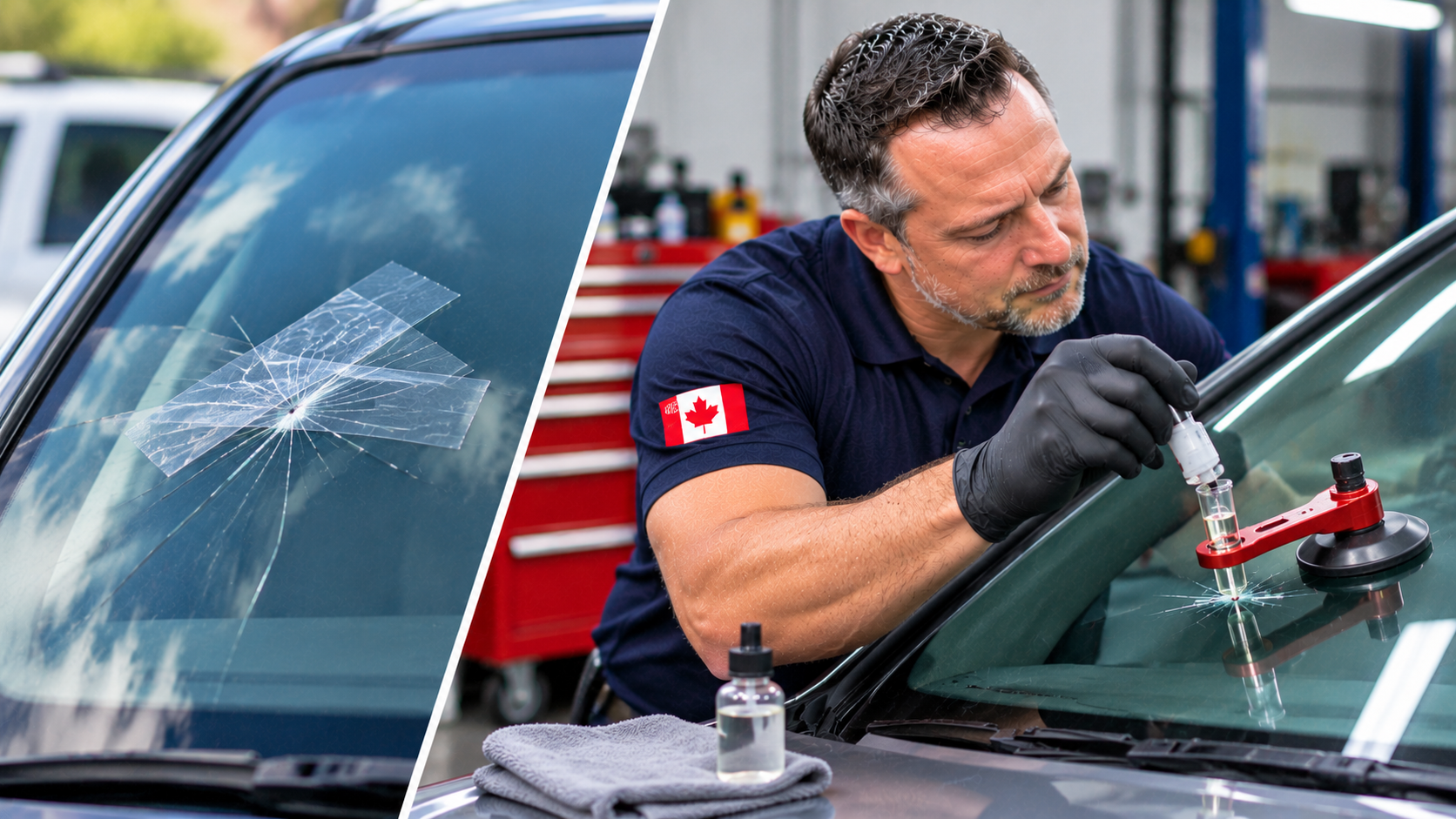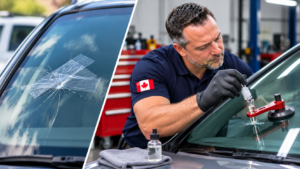
Not all car glass problems are windshield problems, even though people often use “windshield” and “window” interchangeably in conversation. A shattered door glass after a break-in, a side window that won’t roll up anymore, a cracked quarter glass panel near the rear — these are a different category of repair, with different materials, different failure points, and different fixes than windshield damage.
This guide walks through the different types of side and door glass problems Toronto drivers run into, how to tell what’s actually wrong, and when the fix is a glass replacement versus a mechanical repair to the window itself.
Key Takeaways
- Door and side window glass is tempered, not laminated — it’s designed to shatter into small pieces rather than crack, which changes how damage looks and how it’s handled.
- A window that won’t move isn’t always a glass problem — it could be the regulator or motor, which is a separate repair from a glass replacement.
- Shattered glass inside the door cavity needs to be properly cleared out, not just off the seat, to avoid rattling or damage to the window mechanism later.
- Quarter glass and vent glass are smaller, often overlooked panels that require their own seals and fittings.
- Mobile replacement is available for most side and door glass issues across Toronto and the GTA.
Tempered Glass vs. Laminated Glass: Why It Matters Here
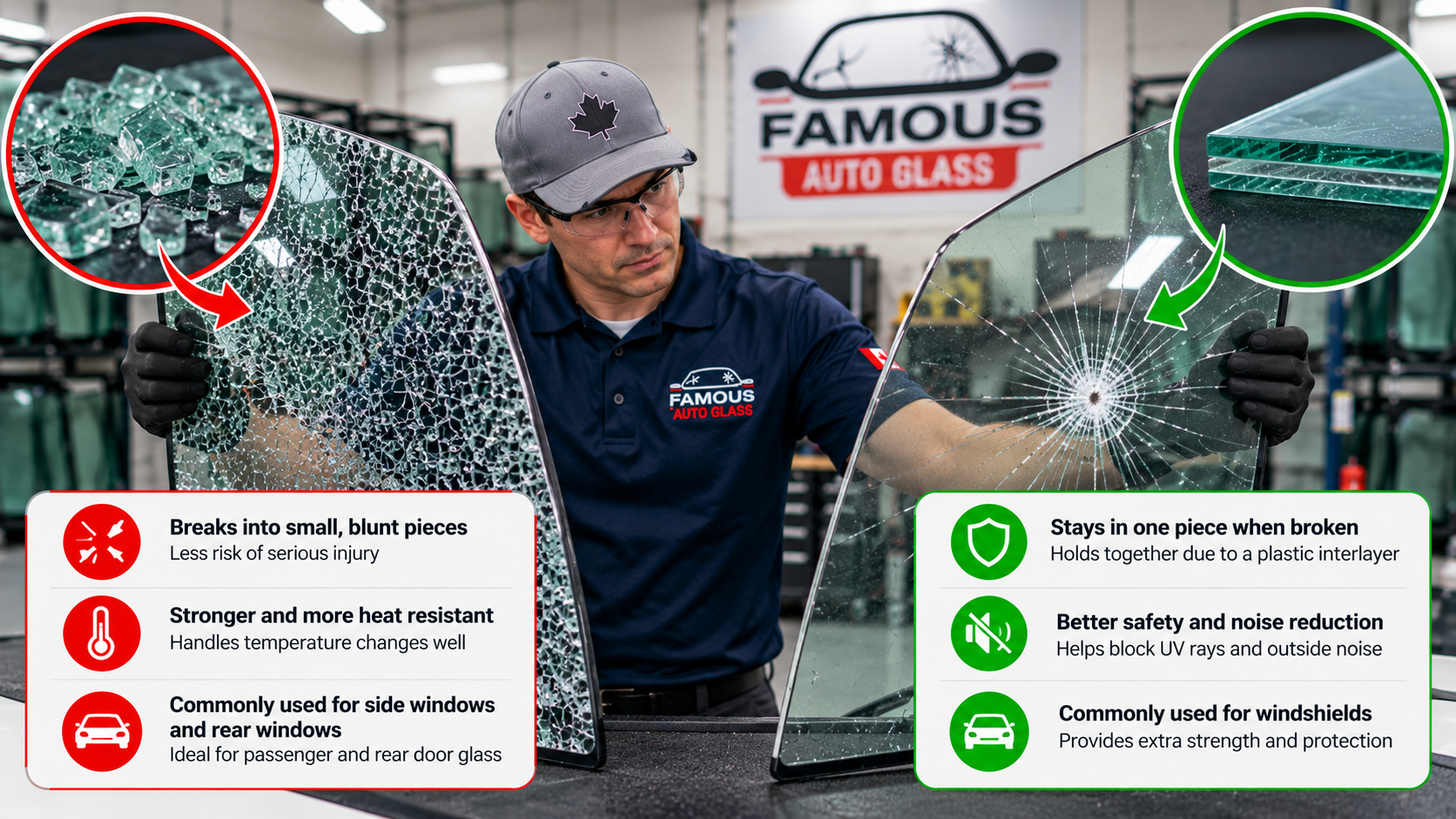
Windshields use laminated glass — two layers bonded around a plastic interlayer, which is why a windshield cracks rather than shattering completely. Door and side window glass, by contrast, is almost always tempered glass, engineered to break into small, relatively blunt pieces rather than large dangerous shards. That’s a deliberate safety design, but it also means side and door glass damage behaves very differently from windshield damage — there’s generally no “chip repair” option for tempered glass the way there is for a windshield, since tempered glass either holds together or it doesn’t. Once it’s compromised, replacement is typically the only path forward.
Some higher-end vehicles use laminated glass for side windows for noise reduction, which is worth mentioning to your technician if you’re not sure which type your vehicle has, since it can affect the parts sourced for replacement.
Common Side and Door Glass Problems
Shattered door glass. Usually from a break-in attempt, vandalism, or occasionally a hard impact from debris. The glass typically comes apart into the small tempered pieces described above, scattered across the seat, door panel, and often down inside the door cavity itself.
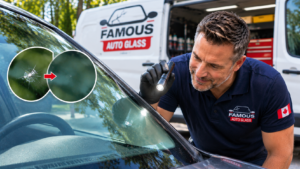
Cracked side window. Less common than a full shatter, but it happens — usually from a stress point or an impact that didn’t have enough force to shatter the glass completely but was enough to crack it. A cracked tempered window is still a safety and structural concern and typically needs replacement rather than repair.
Quarter glass and vent glass damage. These are the smaller, often-overlooked glass panels — the fixed triangular window near the rear on many vehicles, or the small vent window found on some older or specialty vehicles. They’re easy to forget about until they’re damaged, and they need their own specific seals and fittings, which aren’t always interchangeable with the larger door glass panels.
Window that won’t go up or down. This is where it’s important to separate a glass problem from a mechanical one. If the glass itself is intact, a window that won’t move is more likely a window regulator or motor issue — the mechanism that raises and lowers the glass — rather than something a glass replacement would fix.
Glass stuck partway inside the door. Sometimes after a regulator failure, the window drops into the door and gets stuck there. This needs the door panel opened to retrieve and properly reseat the glass, which is a different job than replacing broken glass.
Window Regulator vs. Glass Problem: How to Tell the Difference
This distinction trips a lot of people up, so it’s worth being direct about it. Signs that point toward a regulator or motor issue rather than a glass problem:
- The glass is intact and undamaged, but the window won’t respond to the switch at all
- You hear a motor sound but the window doesn’t move
- The window moves unevenly, tilts, or gets stuck partway
- The window suddenly drops into the door
Signs that point toward an actual glass problem:
- Visible cracks, chips, or shattering in the glass itself
- The glass is missing entirely
- The glass is loose or rattling in its track despite the mechanism working fine
Getting this right before booking service matters, because a glass replacement won’t fix a broken regulator, and a regulator repair won’t fix damaged glass. A good technician should be able to ask a few questions over the phone and narrow down which category your issue falls into before arriving.
What Happens During a Door Glass Replacement
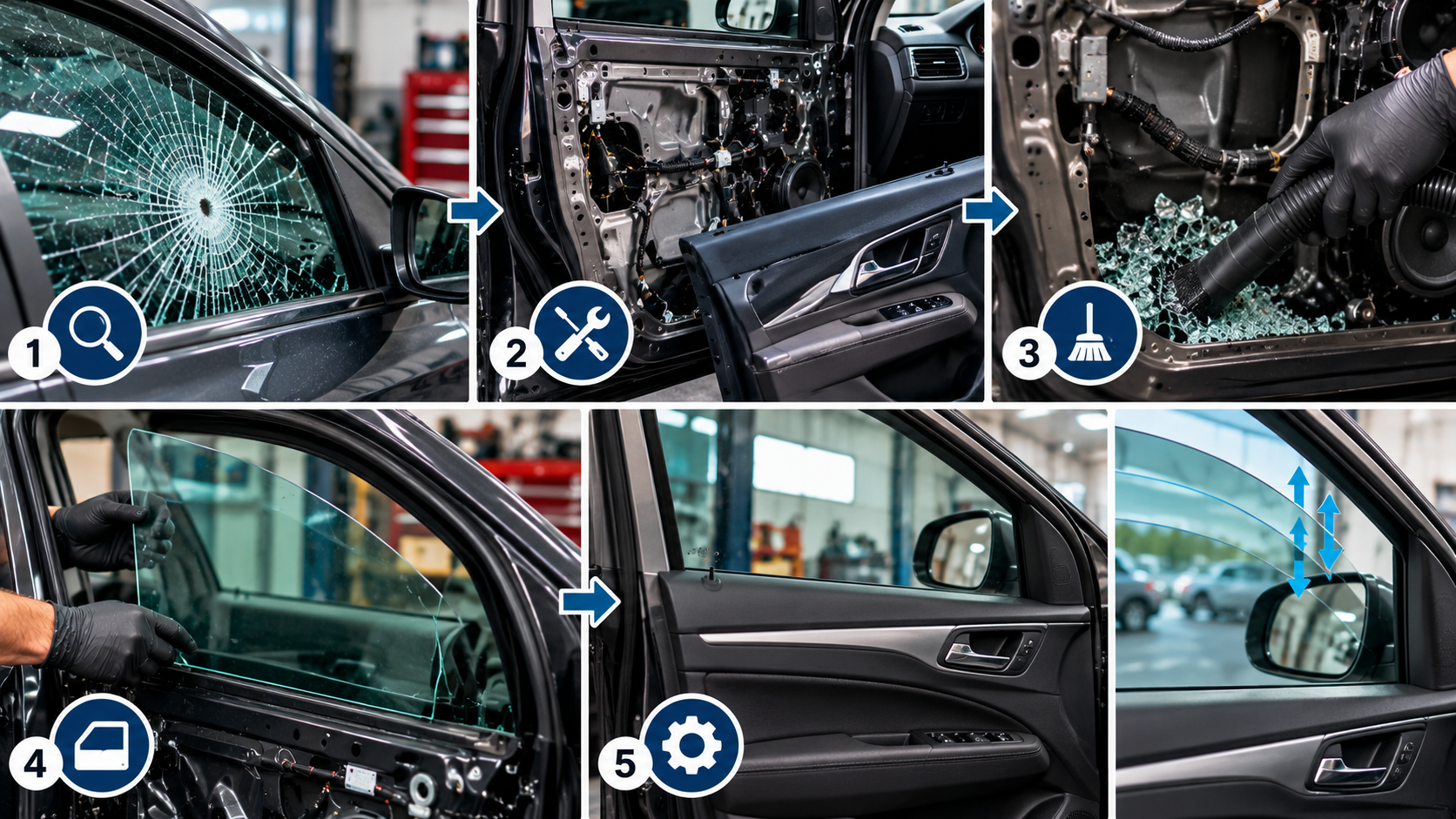
A typical car door glass replacement generally follows this sequence:
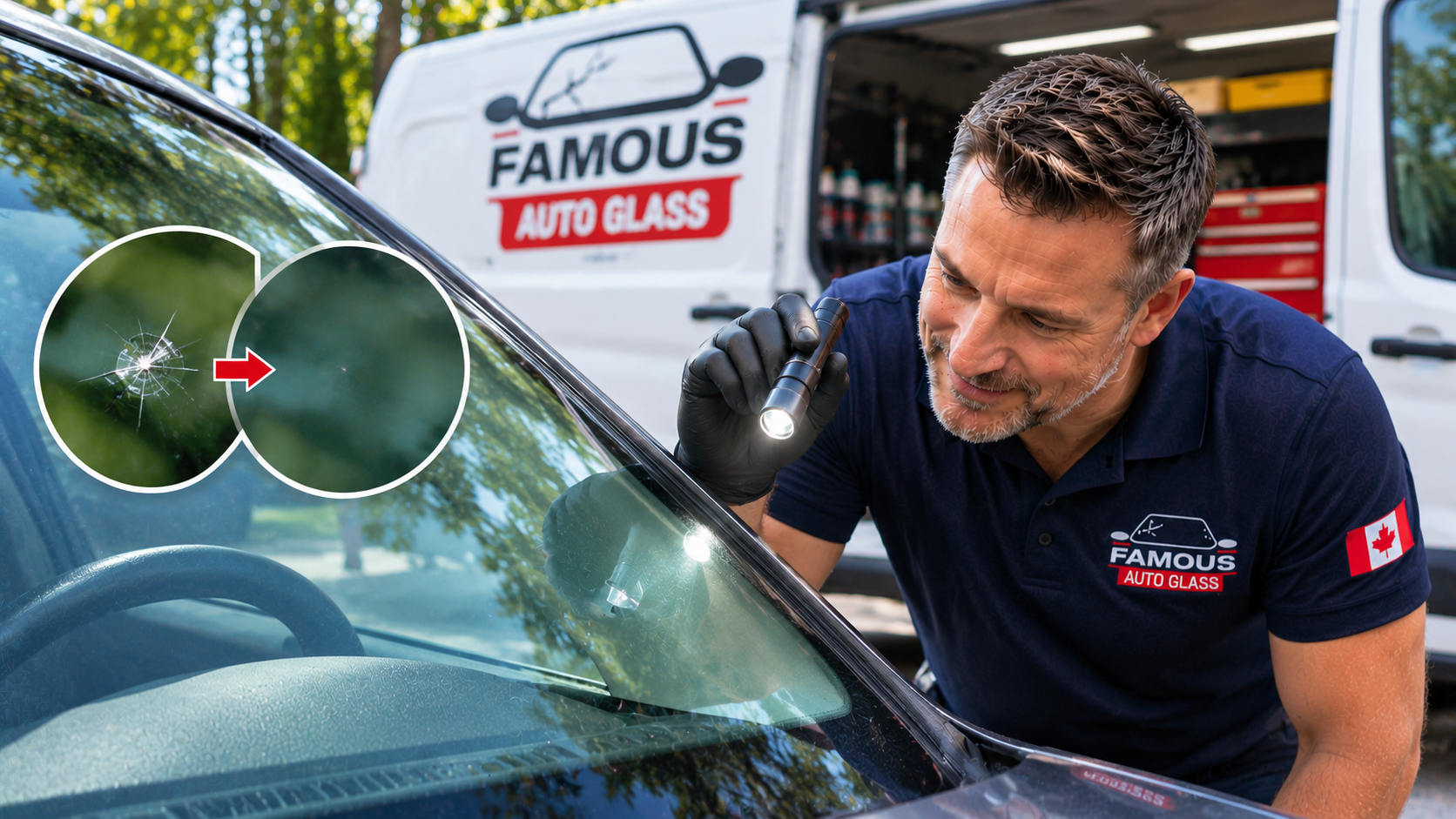
- Assessment — confirming it’s a glass issue rather than a mechanical one, and checking the type of glass and seal your vehicle uses.
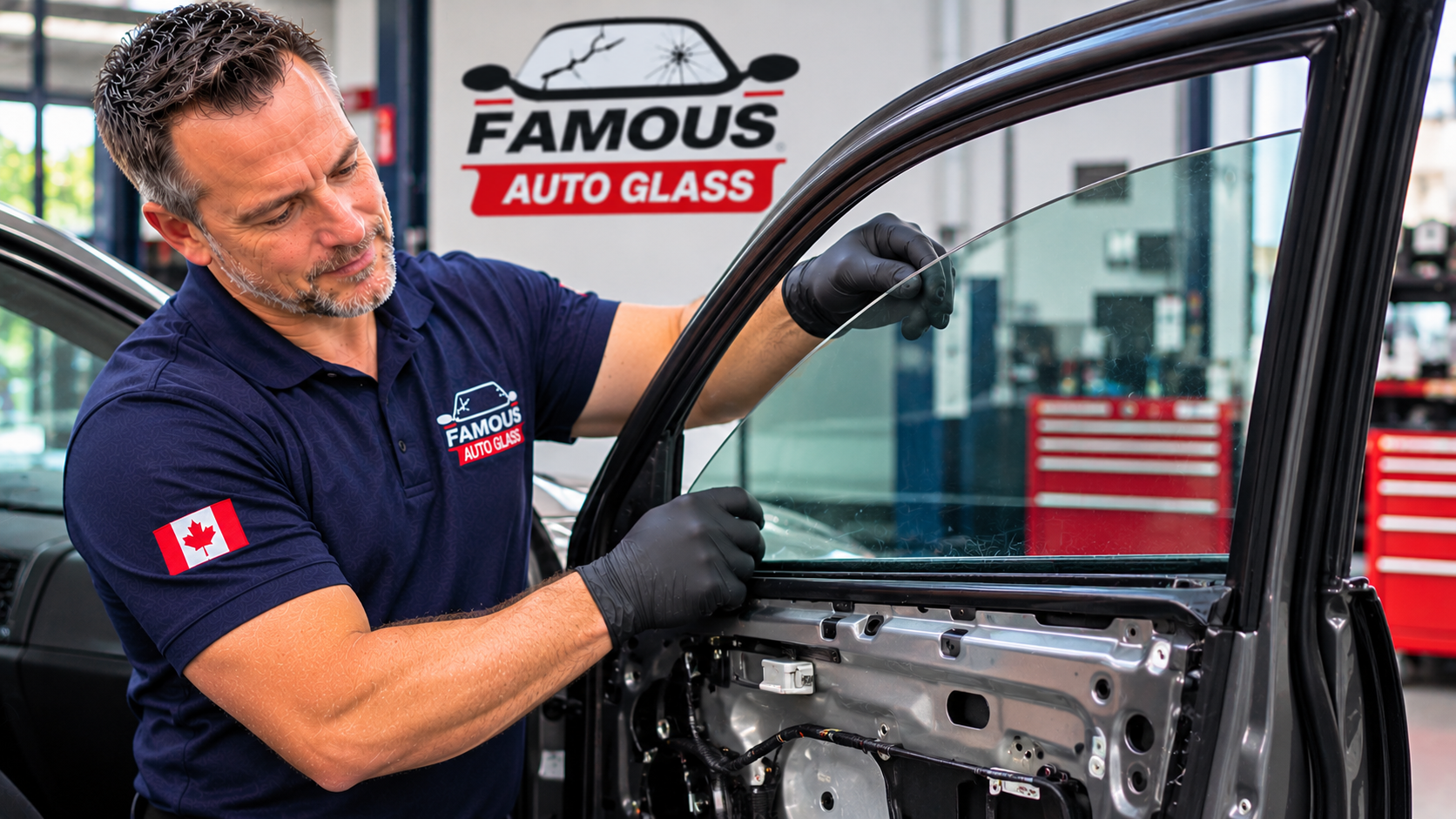
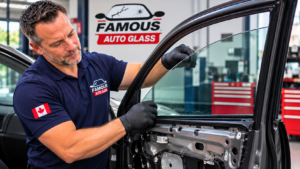
- Interior door panel removal — needed to access the window track and, in shattered-glass cases, to properly clear debris from inside the door cavity.
- Shattered glass cleanup — this isn’t just wiping down the seat. Broken glass that’s fallen down inside the door needs to be cleared out, since leftover fragments can rattle around or interfere with the window mechanism later.
- New glass installation — the replacement pane is fitted into the track and properly seated.
- Panel reassembly and testing — the door panel goes back on, and the window is tested through its full range of motion, along with any power features.
According to Famous Auto Glass’s published service details, this process is typically completed within about an hour, and includes both interior cleanup and a full functional test before the job is considered finished.
What Affects Car Window Replacement Cost
Similar to side mirrors, there’s no single number that applies to every vehicle, but the main cost drivers are:
- Vehicle make and model — glass sourcing and labour time vary by vehicle
- Type of glass — standard tempered glass versus acoustic or laminated side glass on some higher-end vehicles
- Tinting — factory-tinted or privacy glass may cost more to match
- Which panel — front door glass, rear door glass, quarter glass, and vent glass each have different part costs
- Extent of cleanup needed — a fully shattered window with debris inside the door takes more time than a simple crack-only replacement
For reference, published door glass replacement pricing for standard vehicles typically falls in the $200–$450 range, though specialty glass or less common vehicles can run outside that range.
Insurance Considerations for Door and Window Glass
Comprehensive auto insurance in Ontario generally covers vehicle glass broadly, not just windshields — that typically includes side and door window damage from things like vandalism, break-ins, or falling debris, subject to your policy’s deductible. Coverage details and deductible amounts vary by insurer and policy, so it’s worth confirming your specific terms. If your window was broken during a break-in, it’s also worth documenting the damage (photos, and a police report if applicable) before repair, since insurers may ask for that as part of the claim.
Emergency and Same-Day Situations
A shattered door window isn’t just inconvenient — it leaves your vehicle’s interior exposed to weather and, depending on the circumstances, an ongoing security concern. This is one of the more time-sensitive auto glass issues, and it’s handled accordingly: mobile technicians can typically prioritize a same-day appointment for shattered glass, clearing the debris and installing new glass so the vehicle is secure again without an extended wait.
Don’t Confuse This With Windshield Repair
It’s worth repeating plainly, since the terminology gets mixed up often in everyday conversation: windshield damage and side or door window damage are handled completely differently. If your actual issue is a chip or crack in the windshield rather than a side or door window, our separate guides on windshield chip repair and windshield crack repair cover that process, which involves resin injection rather than glass replacement in many cases. And if the damage is to your side mirror rather than a window at all, our side mirror repair and replacement guide walks through that separately, since mirror glass and door glass are also distinct components with different repair paths.
Mobile Service for Window and Door Glass
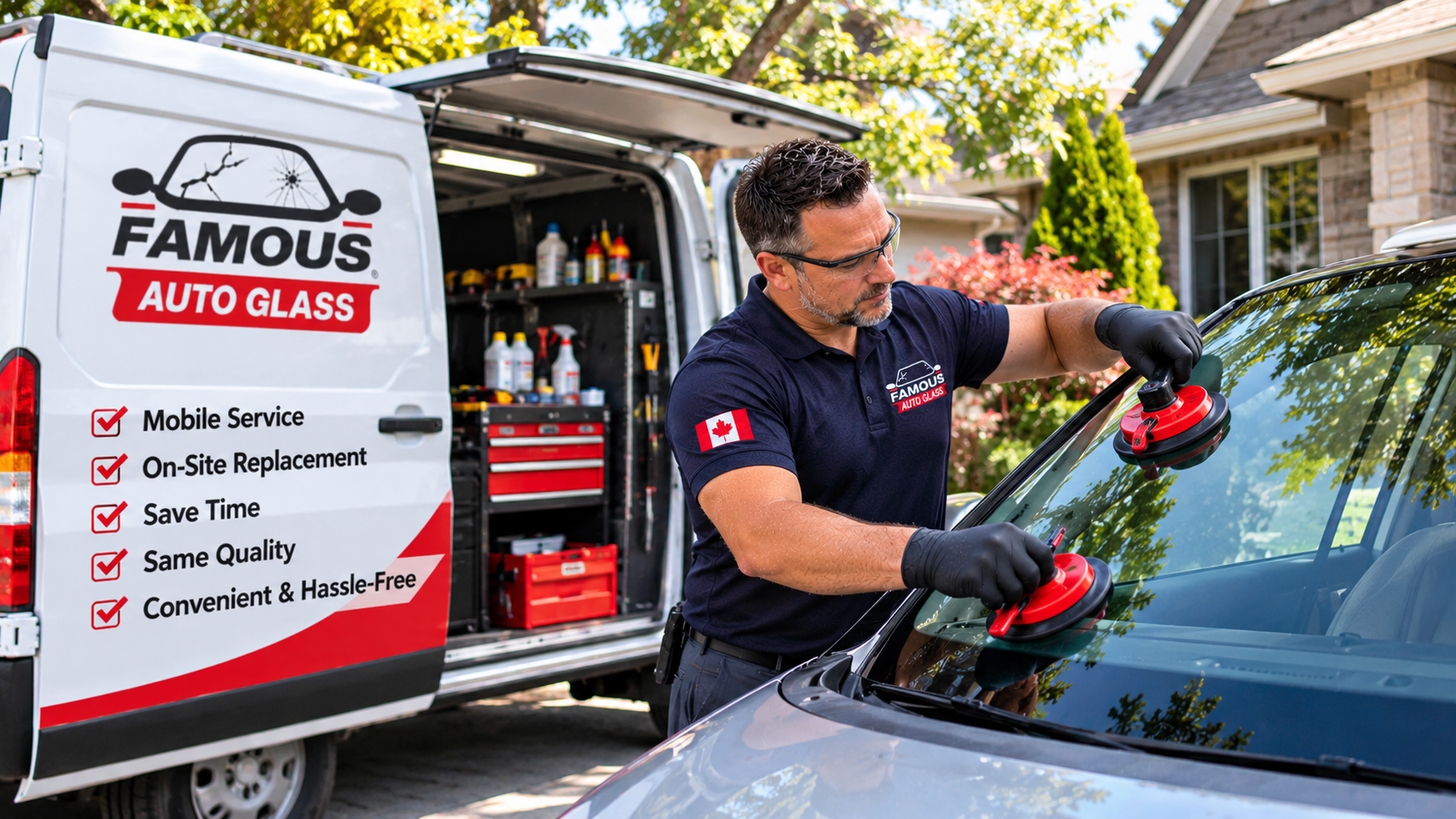
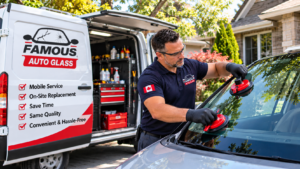
Most side and door glass replacements can be done on-site rather than requiring a shop visit. A mobile technician can come to your home, workplace, or wherever your vehicle is located across Toronto, North York, Scarborough, Etobicoke, Mississauga, Brampton, Vaughan, and the wider GTA, with the tools needed for panel removal, glass installation, and interior cleanup. For car door glass replacement specifically, that includes the full process described above — assessment, cleanup, installation, and testing — completed at your location.