The moment is usually jarring rather than gradual. Someone reverses into a shopping cart corral and the back glass goes. A break-in attempt leaves the rear window in pieces on the cargo floor. A branch comes down in a windstorm, or a piece of debris kicks up off a truck ahead on the 401. However it happens, a broken rear window puts you in a different situation than a chipped windshield — there’s no small-repair option here, and most people have never had to think through what actually happens next.
This is a walk-through of that process: why rear glass behaves differently than a windshield, what a proper replacement involves, what tends to drive the cost up or down, and what to actually do in the first few minutes after it breaks.
Key Takeaways
- Rear windows use tempered glass, not laminated glass, so a hard impact shatters the whole pane rather than cracking it — repair generally isn’t an option once it’s broken.
- Modern rear glass often carries defrosters, antennas, and sometimes camera or sensor wiring, all of which need to be reconnected and tested after replacement.
- Cost depends heavily on vehicle make, model, and which electronics are built into the glass — there’s no single flat rate that applies across vehicles.
- Getting the vehicle cleared of loose glass safely, and covering the opening if you’re not getting same-day service, matters more than people expect.
- Mobile rear glass replacement is widely available in Toronto and the GTA, and comprehensive insurance typically applies the same way it does to a windshield claim.
Why Rear Glass Isn’t Just “A Second Windshield”
It’s a natural assumption — glass is glass — but the rear window and the windshield are built to completely different standards, and that difference shapes almost everything about how damage is handled.
A windshield uses laminated glass: two layers of glass bonded around a plastic interlayer, which is why a windshield cracks and holds together rather than exploding into pieces. Rear windows, along with most side and door glass, use tempered glass — a single sheet of glass heat-treated so that when it fails, it breaks into small, relatively blunt fragments instead of large sharp shards. That’s a deliberate safety design.
The practical consequence is significant: because tempered glass either holds or shatters, there’s essentially no equivalent to windshield chip repair for a rear window. Once it’s compromised — even a partial crack — it needs to be replaced, not patched. This is a genuinely different decision-making process than the one you’d go through with a chipped windshield, where repair is often the first option considered.
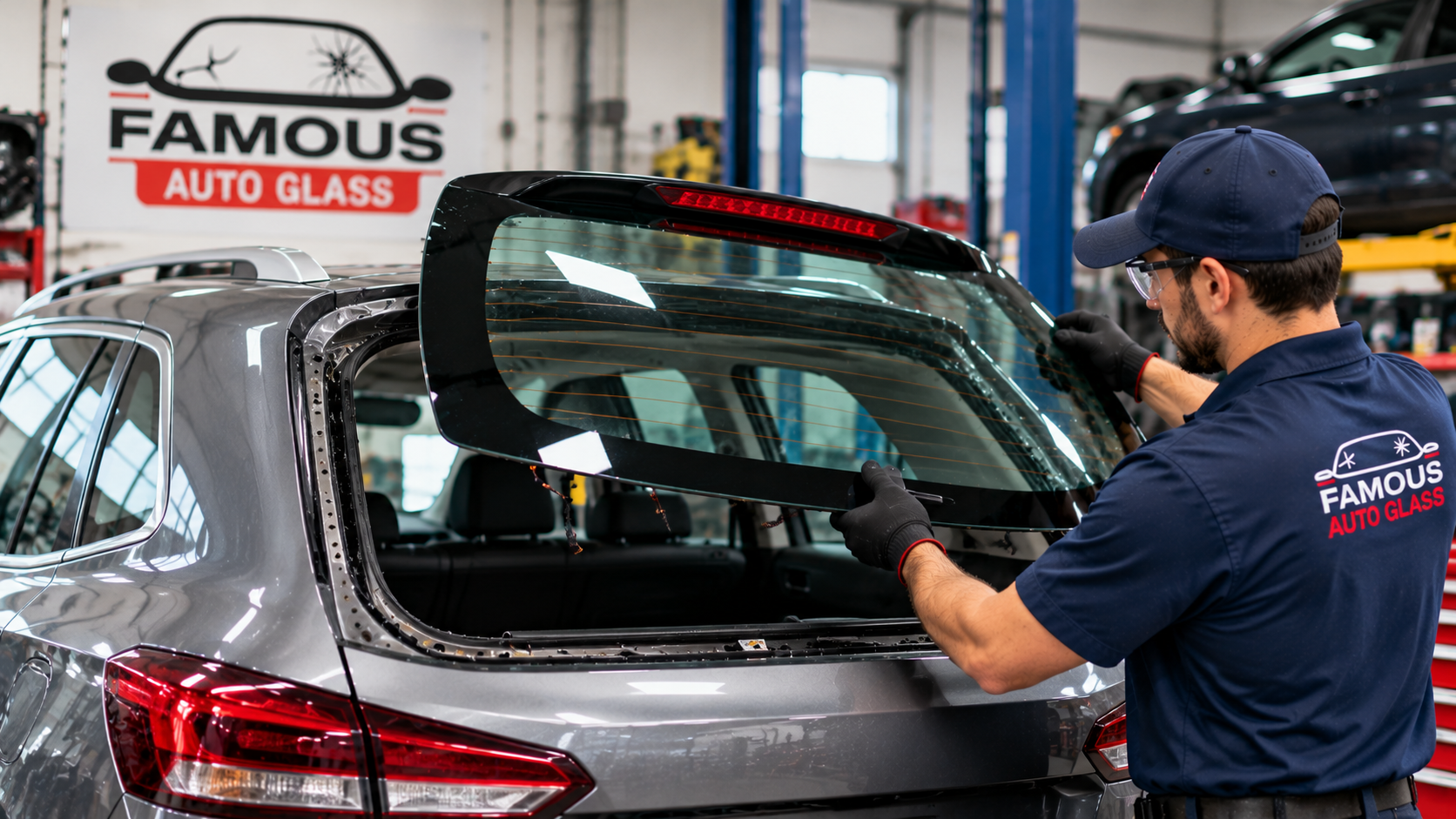
What’s Actually Built Into Modern Rear Glass
Rear windows on most vehicles built in the last couple of decades aren’t just a pane of glass. Depending on the vehicle, the rear glass can carry:
- A defroster grid — the thin horizontal lines embedded in the glass that clear frost and fog electrically
- An integrated antenna — many vehicles route radio or telematics antennas through the rear glass rather than a separate exterior mast
- A third brake light, in some vehicles, mounted at or near the glass
- A rear wiper motor connection, on hatchbacks and SUVs with a rear wiper
- Camera wiring, on vehicles with a backup camera mounted at or near the rear glass area
None of these features change the fact that the broken pane itself needs full replacement, but they do change what “replacement” actually involves. A shop that just drops in new glass without properly reconnecting and testing the defroster or camera wiring is leaving part of the job undone.
Real-World Scenarios: How Rear Glass Actually Breaks
A few common situations that bring people to this decision:
- Break-ins. Someone smashes the rear glass to reach items inside. This usually means glass scattered across the back seat and trunk or cargo area, and often a need for same-day service since the vehicle is exposed.
- Accidents and impacts. A minor rear-end collision, a reversing mishap, or debris kicked up from another vehicle can shatter the glass without necessarily causing other damage to the vehicle.
- Vandalism. Deliberate damage, sometimes alongside other exterior damage.
- Weather-related damage. Falling branches, hail in severe cases, or debris carried by high winds during a storm.
Each scenario leads to the same endpoint — full replacement — but break-ins and severe weather events often carry an added urgency, since a vehicle with an open rear window is exposed to the elements and, in a break-in situation, to further security concerns.
What to Do in the First Few Minutes
Before a technician arrives, a few practical steps make a real difference:
- Avoid brushing through the glass with bare hands. Tempered glass fragments are duller than a windshield’s sharp cracks, but they can still cut. Heavy gloves, if available, are worth using before touching anything.
- Clear loose glass off seats and surfaces you’ll need to use, but don’t worry about a full cleanup — a proper replacement service includes vacuuming glass out of seams, the trunk, and cargo area as part of the job.
- Cover the opening if you’re not getting same-day service — a heavy tarp or plastic sheeting taped securely can keep out rain and reduce the temptation for anyone passing by.
- Take photos of the damage before cleaning it up, particularly if this resulted from a break-in or an accident involving another vehicle, since this can support an insurance claim or police report.
- Avoid driving further than necessary with the rear window open, especially at highway speeds, where wind can pull debris and exhaust fumes into the cabin.
How Rear Glass Replacement Actually Works
A properly done rear glass replacement generally follows this sequence:
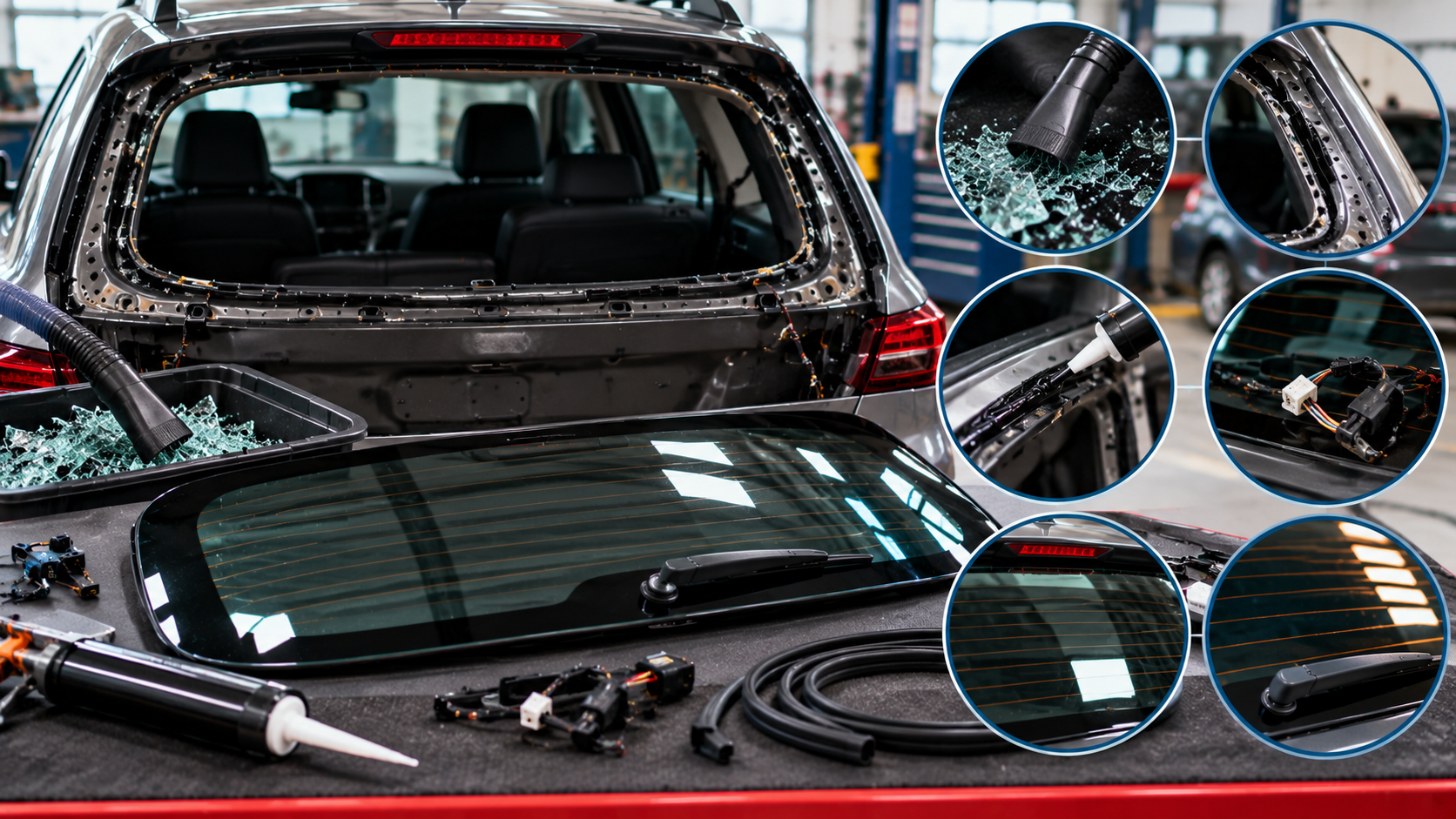
- Safe removal of shattered glass — clearing the remaining glass from the frame opening and thoroughly vacuuming the interior, including seat seams, the trunk or cargo floor, and any interior compartments where fragments tend to collect.
- Inspection of the frame and seal area — checking for damage to the surrounding trim or weatherstripping that might affect the new seal.
- Fitting the new tempered glass, using industry-approved adhesive designed for a weatherproof, structurally sound bond.
- Reconnecting integrated components — defroster leads, antenna connections, and any camera or sensor wiring specific to that vehicle.
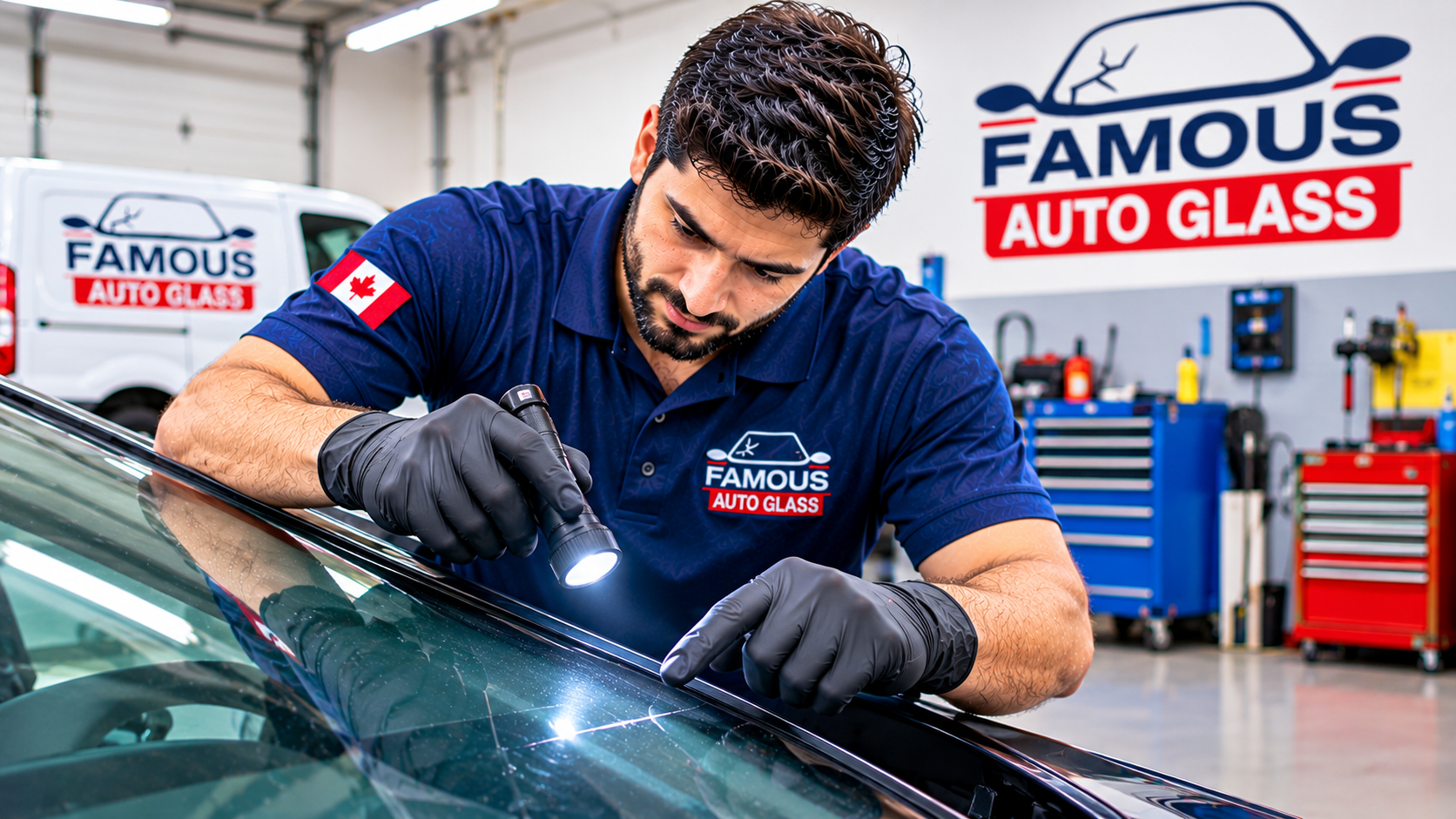
- Testing — confirming the defroster heats properly, the antenna and any wired features function, and the seal holds without gaps.
- Cure time — allowing the adhesive to properly set before the vehicle is driven, particularly important in colder weather.
Most rear glass replacements are completed in roughly an hour, based on Famous Auto Glass’s own published service timelines, though vehicles with more complex integrated electronics or less common glass shapes can take longer.
What Affects Rear Windshield Replacement Cost
There’s no single number that applies across every vehicle, and any shop quoting a flat rate without knowing your specific vehicle is guessing. The real cost drivers are:
- Vehicle make and model — glass availability and pricing vary significantly between a common sedan and a less common or older vehicle
- Integrated features — a rear window with a defroster, antenna, and camera wiring costs more in parts and labour than a basic pane
- Glass shape and curvature — hatchbacks and SUVs with more complex rear glass shapes can involve more specialized fitting than a simple flat rear window
- OEM vs. OEM-equivalent glass — factory-matched glass can cost more than an aftermarket equivalent, though both are built to safety standards
- Extent of related damage — if the impact also damaged trim, weatherstripping, or nearby bodywork, that adds to the job
A technician who asks for your vehicle’s make, model, and year before quoting is giving you a more accurate number than one who quotes over the phone without that information.
Insurance and Rear Glass Replacement
In Ontario, comprehensive auto insurance coverage generally applies to rear glass damage the same way it applies to windshield or side window damage — covering non-collision events like vandalism, falling debris, or a break-in, subject to your policy’s deductible. If the rear glass was broken as part of a collision with another vehicle, that may fall under collision coverage instead. Because policy terms and deductibles vary, confirming your specific coverage — or having a shop verify it through insurance claim support on your behalf — is the most reliable way to know what you’re actually on the hook for.
Mobile Rear Glass Replacement
Given how exposed a vehicle is with a broken rear window, mobile service is particularly useful here rather than driving (or towing) the vehicle to a shop with an open rear window. A mobile technician can come to your home, workplace, or wherever the vehicle currently is across Toronto and the GTA, carrying the glass, adhesive, and tools needed to complete the replacement on-site, including the interior cleanup that a rushed DIY approach tends to miss. Full details on how this works are covered on the rear glass replacement page.
If the damage extends beyond the rear window itself — a rear door glass that’s also cracked, for instance — that’s a related but distinct repair, covered separately on our car door glass replacement page.