Here’s a thing most drivers never find out until the invoice lands: your car has eyes, and they’re stuck to the inside of your windshield. Lane-keeping, automatic emergency braking, adaptive cruise, auto high-beams. A small camera behind the glass runs all of it. If the glass between that camera and the road is even slightly off-spec, the “smart” in your smart car gets a lot dumber.
At Famous Auto Glass LTD., we see this every week. Someone walks in thinking a windshield is a pane of glass with a rubber seal. Fair enough, it used to be. But on a modern vehicle it’s a precision optical component, and its specifications directly influence how your Advanced Driver Assistance Systems (ADAS) behave. So grab a coffee, and let’s go through it properly, minus the jargon headache.
Why Your Windshield Is Now Part of the Safety System
ADAS is the umbrella term for the driver-assist tech in most newer vehicles sold in Canada. Plenty of those features rely on a forward-facing camera, or an image-processing module, mounted high on the windshield near the rear-view mirror. The camera doesn’t look at the road directly. It looks through the glass.
That one detail changes everything. The glass becomes the camera’s lens cover, and any distortion, haze, odd curvature or wonky mounting point becomes the camera’s problem. Think of it like wearing someone else’s prescription glasses to drive. You might technically see the road, but nothing’s quite where it should be.
This is why a proper car windshield replacement on an ADAS-equipped vehicle isn’t just “pop the old one out, drop the new one in”. The specs of the replacement glass matter as much as the quality of the install.
The Glass Specifications That Actually Matter
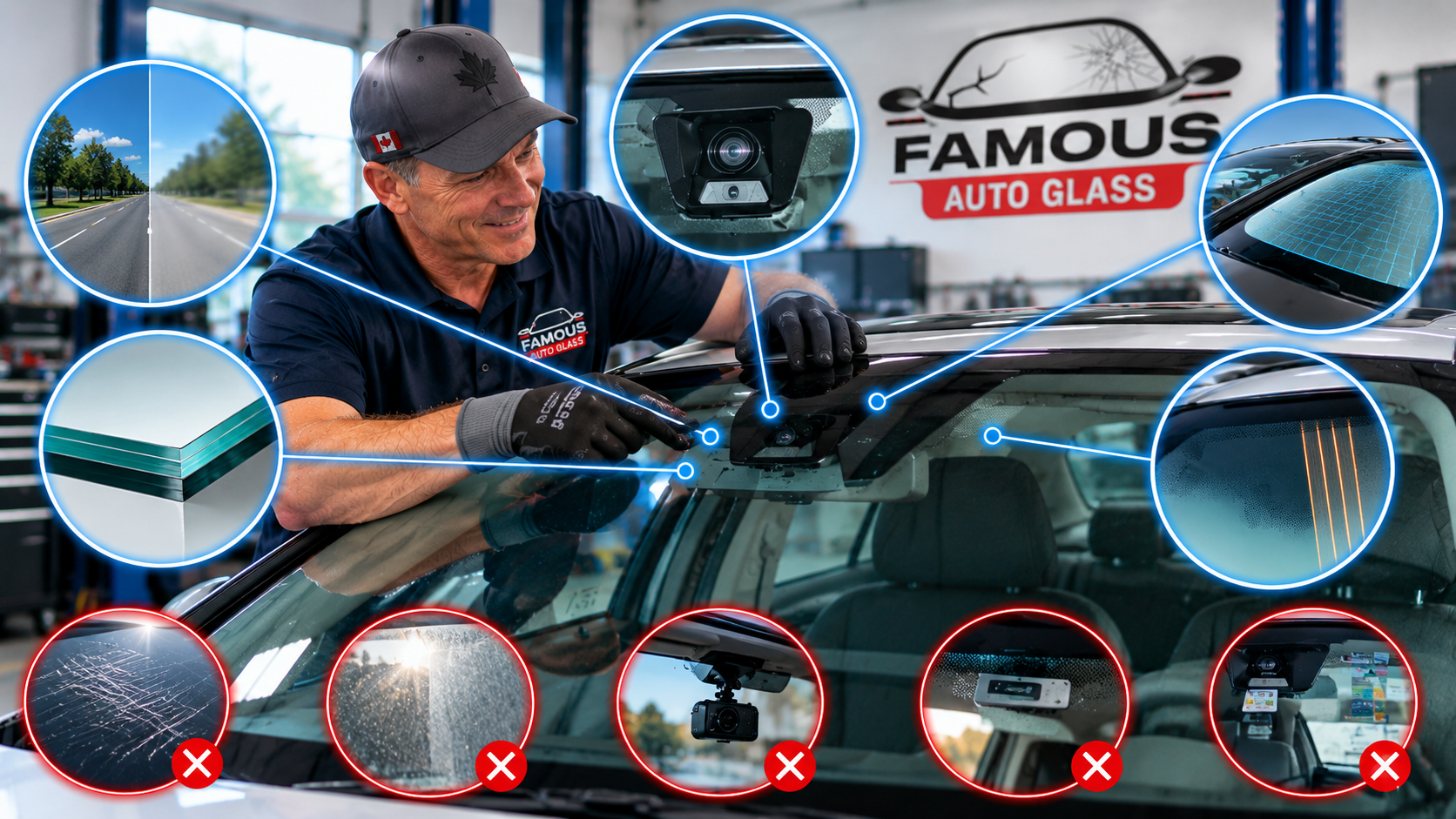
Not all windshields are created equal, even when they look identical on the shelf. Here’s what separates a camera-friendly windshield from a “close enough” one:
- Optical clarity and distortion: Glass that bends, shifts or blurs the image even slightly can make the system misjudge distances or miss lane lines.
- Curvature in the camera zone: The shape of the glass directly in front of the camera needs to be tightly controlled. Small deviations change what the camera “sees”.
- Camera bracket position: The bracket is bonded to the glass. If it sits a few millimetres out, the software can’t build correct reference points during calibration.
- Thickness and uniformity: Consistent thickness keeps light passing through the same way across the camera’s field of view.
- Coatings and tints: Acoustic layers, solar-reflective coatings, heated elements and rain-sensor zones all need to be compatible with what the vehicle was built to use.
- Fit and finish: If the glass doesn’t sit precisely in the opening, the camera’s angle shifts, and the system’s assumptions go with it.
A few things can also mess with the camera’s view that have nothing to do with the glass itself: scratches, haze, stickers and aftermarket add-ons in the camera area. If you’ve plastered a dashcam mount or toll tag in the wrong spot, that’s worth a second look too.
OEM vs Aftermarket: The Honest Version
This is where the internet gets loud, so let’s keep it sensible.
OEM glass is made to the vehicle manufacturer’s exact specifications, with tight tolerances on thickness, curvature and clarity. Aftermarket glass is produced to general standards, and quality varies by manufacturer. Some automakers, including Ford and GM, have published statements saying they don’t approve aftermarket windshields for their vehicles, specifically because of ADAS, camera bracket placement and optical quality concerns.
But it isn’t all doom and gloom for non-OEM glass. Some premium aftermarket glass is made by companies that also supply automakers, and it’s built to OEM-equivalent specs. Budget glass without proven ADAS compatibility is where the risk sits.
|
Factor |
OEM Glass |
Premium OEM-Equivalent |
Budget Glass |
|---|---|---|---|
|
Optical clarity |
Factory standard |
Same or very close |
Can vary |
|
Camera bracket accuracy |
Built to vehicle spec |
Built to match original |
Higher risk of variation |
|
ADAS calibration success |
Highest consistency |
Generally good |
Less predictable |
|
Cost |
Higher |
Mid-range |
Lowest upfront |
|
Best for |
Newer ADAS vehicles |
Most ADAS vehicles with the right spec |
Older vehicles without cameras |
Here’s the line worth remembering: a cheap windshield that triggers repeat calibration attempts, or never calibrates properly, isn’t cheap. If your car has a forward camera, ask exactly what glass is being fitted and whether it’s rated for your vehicle’s ADAS. Our team at Famous Auto Glass LTD. is happy to talk through the options for your make and model on our windshield replacement page or over the phone.
Calibration: The Step Nobody Wants to Hear About
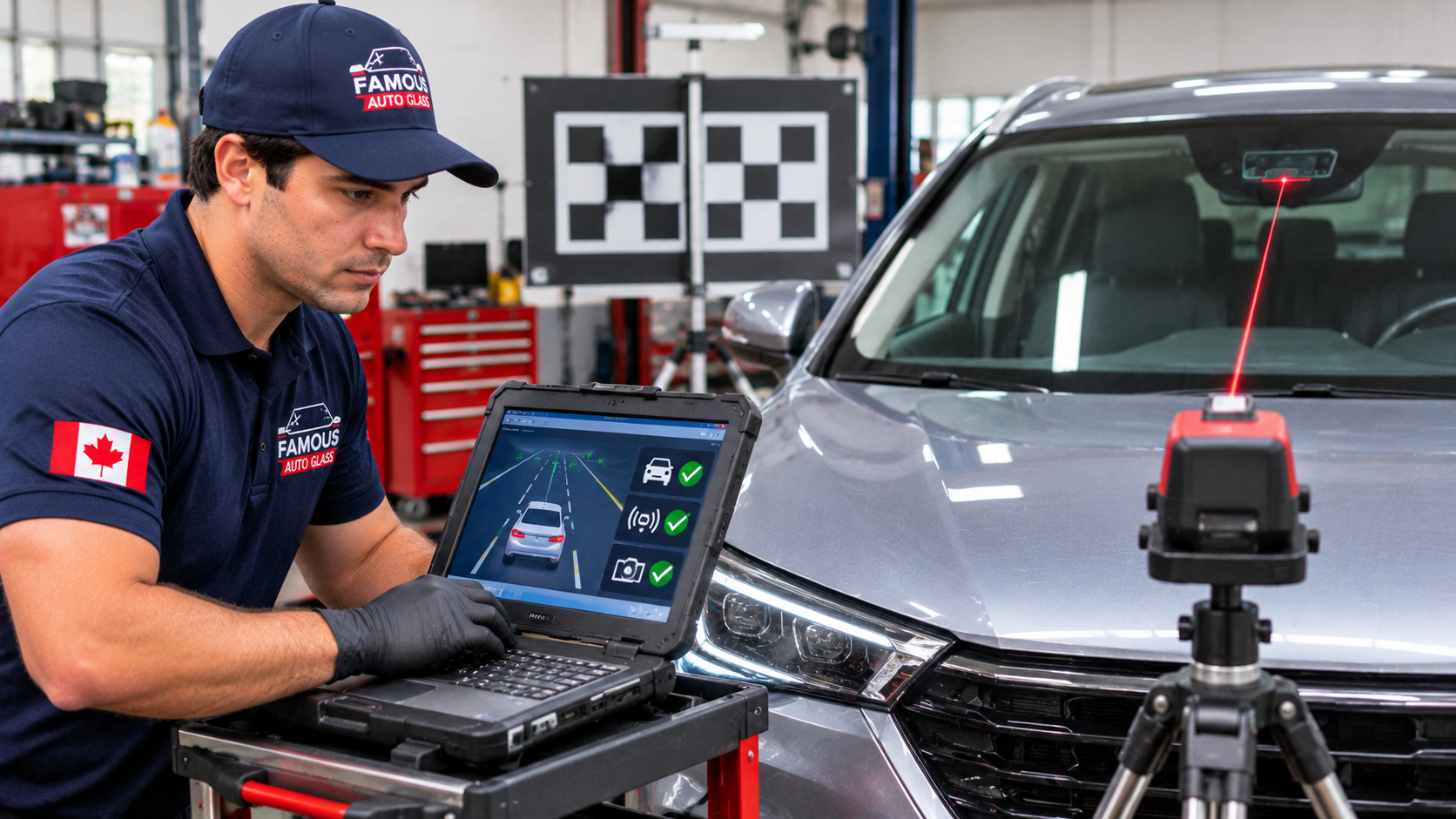
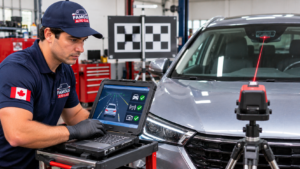
Every time a windshield is replaced on a camera-equipped vehicle, the camera is typically removed and refitted, and the new glass and bracket will never be identical to the old. Normal manufacturing tolerances mean the camera ends up pointing in a slightly different direction. The system still thinks it’s looking at the old angle, so it needs to relearn.
That relearning is called calibration, and it comes in three flavours:
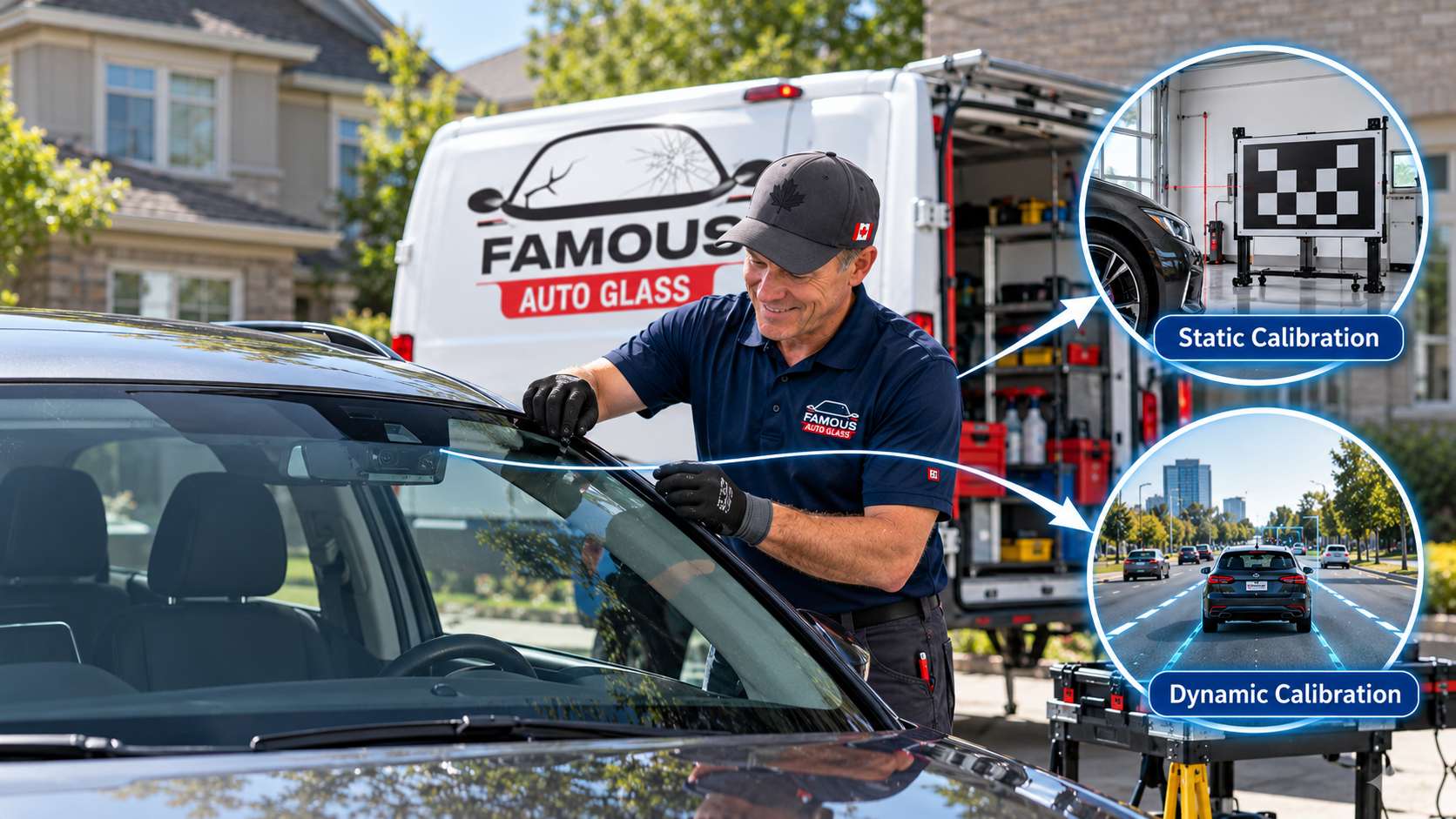
- Static calibration: Done with the vehicle parked, using targets and alignment equipment set up in a controlled space.
- Dynamic calibration: Done on the road, with diagnostic equipment monitoring in real time, at specific speeds and on clearly marked roads.
- Combined calibration: Some manufacturers require both.
How complicated is it? Industry commentary has pointed to up to 2,600 possible calibration protocols across the brands and trim levels sold in Canada. Every automaker sets its own rules. That’s why a one-size-fits-all approach doesn’t work, and why guessing is a bad idea.
Calibration generally adds to the cost of a replacement. Figures in the low hundreds of dollars have been reported depending on the vehicle and procedure, though yours will vary. The good news: when calibration is required for your vehicle, it’s commonly treated as part of the glass claim by many Canadian insurers. Policies differ, so check yours, and if you need a hand, our insurance claim support team can walk you through what to ask.
What Happens When Specs or Calibration Go Wrong
Skipping calibration, or fitting glass that doesn’t suit the system, can lead to some genuinely unsettling behaviour:
- Lane-keep systems that nudge you when you’re perfectly centred, or fail to nudge when you’re not
- Adaptive cruise control misjudging the gap to the car ahead
- Automatic emergency braking that fires too early, too late, or not at all
- Warning lights, disabled features or false alerts
- Insurers asking for proof of calibration if something goes sideways later
None of that is dramatic for the sake of it. These are safety systems, and they’re only as reliable as the data feeding them. A windshield that’s slightly off might not announce itself. The car just becomes a bit less trustworthy at the exact moment you need it.
Can You Avoid Replacement Altogether? Sometimes, Yes
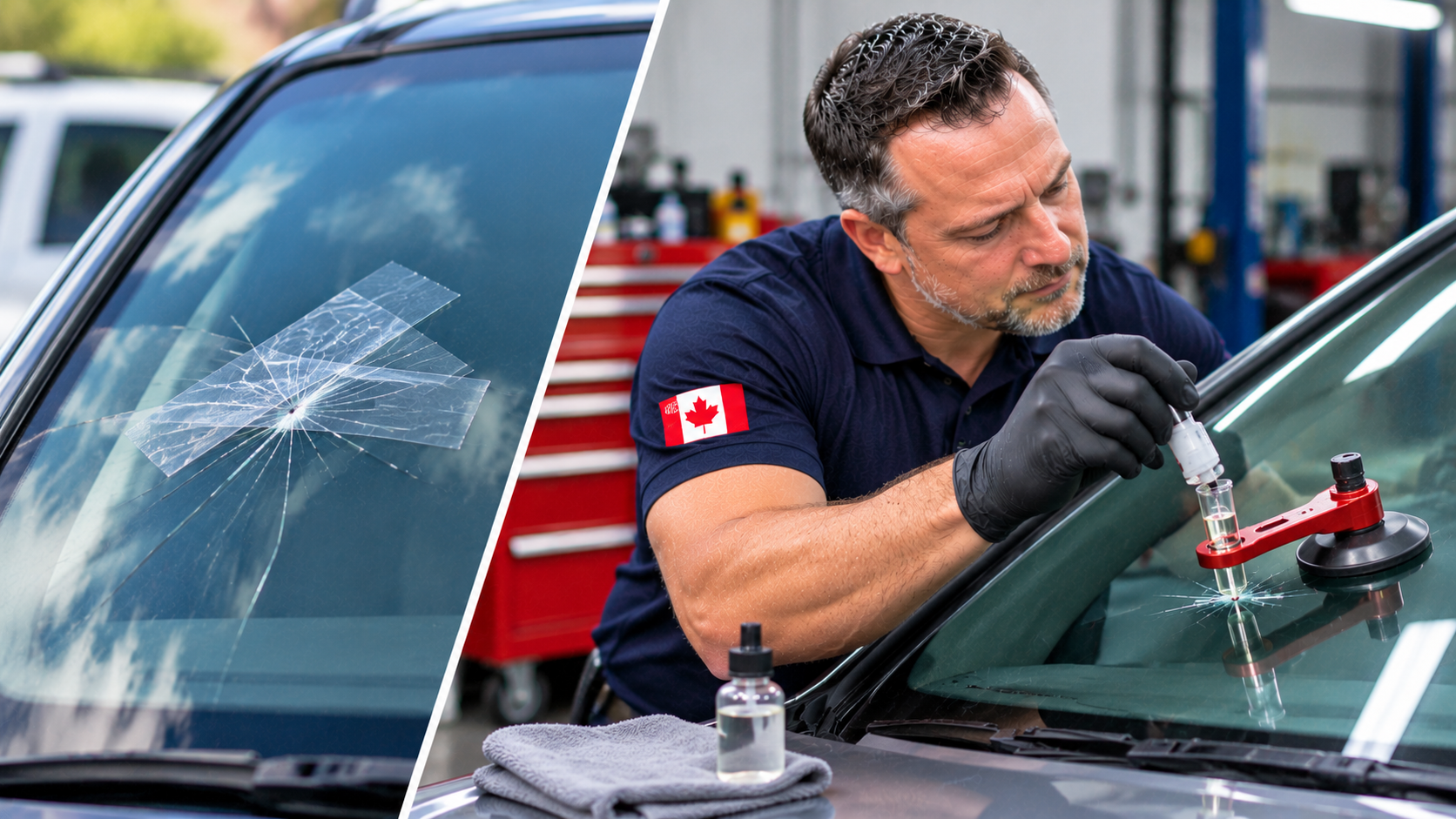
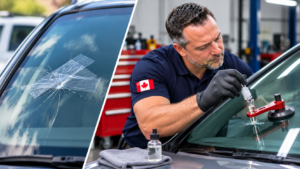
The best windshield for your ADAS is often the one already on your car. If the damage is small and sits outside the camera’s critical view, a resin fix keeps your factory glass, factory bracket and factory calibration intact. That’s why quick action on windshield chip and crack repair is such a smart move. A fresh stone chip is a cheap fix. A chip that’s been through three frosty Canadian mornings and a pothole-ridden commute is a crack, and cracks grow.
One catch worth knowing: damage sitting in or right next to the camera’s field of view is a different story. Even a small blemish there can reduce image clarity, and a repair can leave a slight optical mark. If the damage is anywhere near the camera zone, ask for an honest assessment before assuming a repair is fine.
Mobile Windshield Replacement and ADAS: Does It Work?
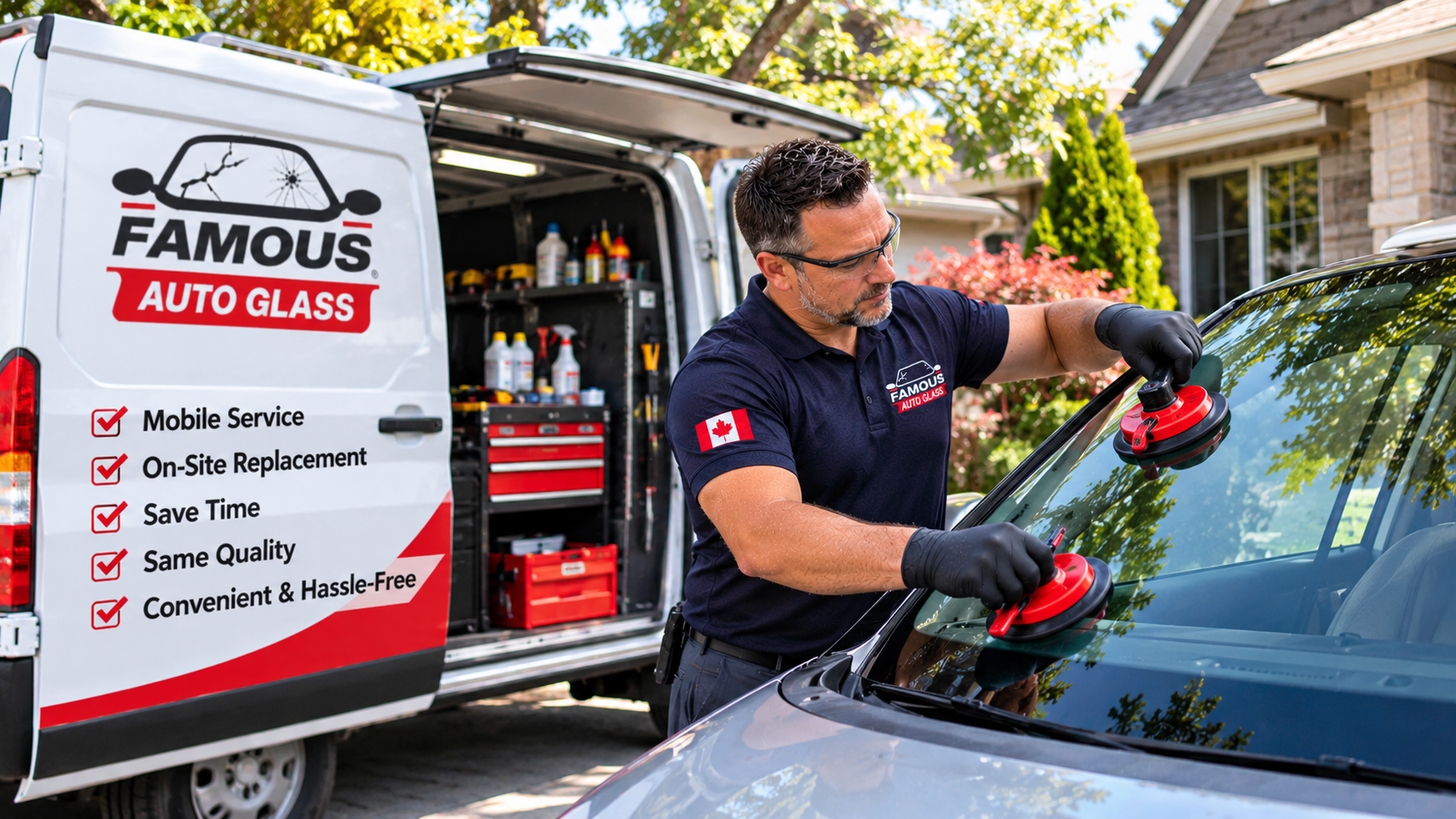
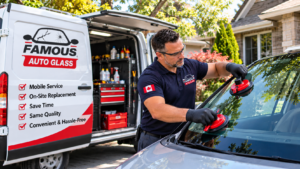
We love a good house call, and plenty of drivers need one. A mobile windshield replacement means a technician comes to your driveway or workplace, handles the replacement and has you back on your day without a trip to the shop.
But let’s be upfront, because the honest answer is “it depends on your vehicle.” Static calibration needs a level, controlled space with targets. Dynamic calibration needs road time. Some vehicles are fine with one or the other, and some need both. So before booking, tell us your make, model, year and whether the car has lane-keep or collision-avoidance features. That way we can plan the job properly instead of surprising you halfway through.
Local Drivers: Windshield Replacement in Vaughan
If you’re searching for windshield replacement Vaughan, you already know the conditions. Highway 400 gravel, 407 traffic, construction zones that appear overnight, and winters that love turning a tiny chip into a full-width crack. Salt, grit and temperature swings are tough on glass, and they’re tough on the adhesive and brackets too.
Our local team handles windshield replacement in Vaughan with the same attention to glass specs and camera requirements we’d want for our own cars. Cold-weather installs have their own considerations, so don’t be shy about asking how we handle adhesive cure times when the mercury drops.
It’s Not Just the Windshield: Other Glass That Matters
Your windshield gets all the glory, but other glass and parts on your vehicle pull their weight in the safety department too:
- Rear glass replacement: Rear glass often carries defroster lines, antennas and sometimes camera or wiper integration. Specs matter here so everything keeps working.
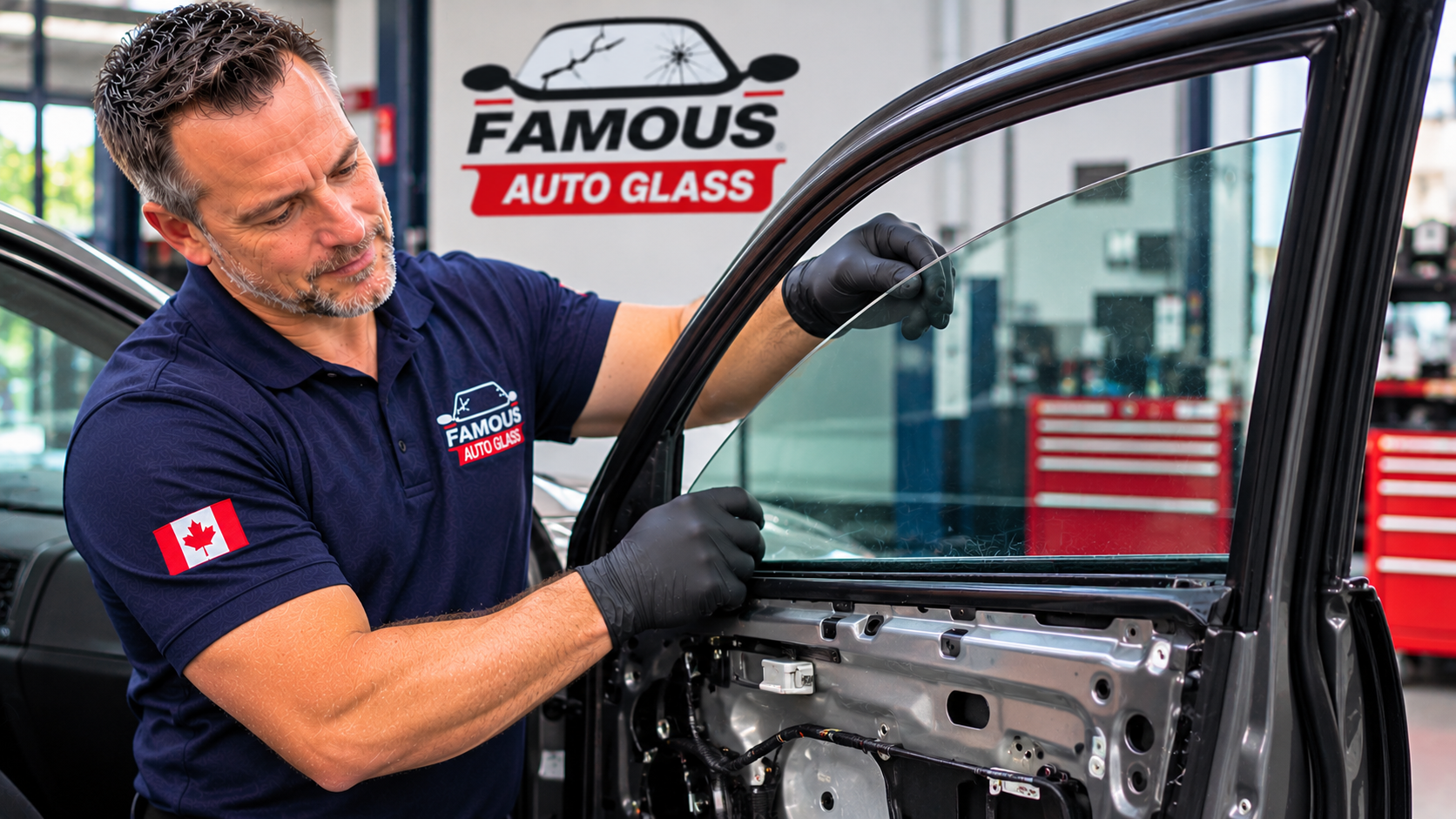
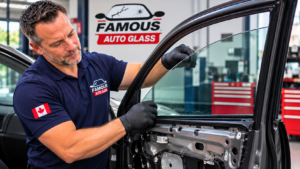
- Door glass replacement: Side glass affects visibility, cabin noise and security. Using the right glass for your vehicle keeps the door seals and regulators happy.
- Side mirror replacement: Many modern mirrors house blind-spot indicators, heating elements, turn signals or even cameras. A cracked mirror can mean more than a cosmetic problem.
Each of these is easy to put off. Don’t. Visibility is a safety feature.
Your Pre-Booking Checklist: Questions Worth Asking
Before you hand over the keys for a car windshield replacement on an ADAS-equipped vehicle, run through these:
- Does my vehicle have a windshield-mounted camera or sensors?
- Is the replacement glass specified for my vehicle’s ADAS, and what’s its source?
- Which calibration does my manufacturer require: static, dynamic or both?
- Is calibration done in the same visit, or booked separately?
- Is calibration included in my insurance claim?
- What happens if calibration fails the first time?
A good shop will answer these without a sigh. If you get a vague “she’ll be right”, politely keep shopping.