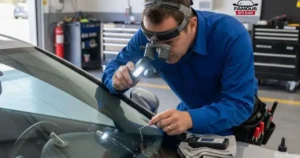
Windshield pitting is the gradual formation of tiny craters on your auto glass caused by sand, dust, and debris striking the surface at high speed during everyday driving. Most car owners ignore it, but that’s a costly mistake.
Pitting compromises driver visibility, distorts light, weakens structural integrity, and increases accident risk.
If you’re noticing haze or glare that won’t go away, your windshield may already be pitted. For windshield replacement in Toronto, acting early saves you money and keeps you safe.
What Is Windshield Pitting?
Windshield pitting is the gradual erosion of your windshield’s outer glass surface.
Unlike a chip or crack caused by a single impact, pitting develops over time as thousands of tiny particles, sand, grit, road debris, strike the glass repeatedly at high speed, leaving behind microscopic indentations or craters.
These aren’t surface-level smudges you can wipe away. The damage is physically embedded in the glass, creating a hazy, cloudy appearance that scatters light and distorts your view.
The more highway miles you log, the faster pitting develops.
Is your windshield looking hazy no matter how much you clean it? Book a free inspection today and get clarity back.
What Causes Windshield Pitting?
Pitting doesn’t happen from one moment. It builds up from repeated exposure to these key causes:
Road debris and gravel kicked up by vehicles ahead is the leading cause. At highway speeds, even a grain of sand hits your windshield with enough force to leave a mark.
Highway and high-traffic driving accelerates the damage significantly. The faster you travel, the harder particles impact the glass.
Construction zones throw extra grit, concrete dust, and aggregate onto the road, putting windshields under constant assault.
UV rays and direct sunlight weaken the glass structure over time, making it more vulnerable to pitting from even lighter impacts.
Road salt and sand used during winter create a sandblasting effect on your windshield every time traffic kicks them up.
Worn wiper blades drag trapped grit back and forth across the glass, grinding new pits into the surface with every rain cycle.
Acid rain, polluted precipitation, and extreme temperature swings compound the problem. Glass expands and contracts under thermal stress, deepening existing pits over time.
Think your windshield has taken too much damage? Get a professional assessment before it gets worse.
Why Is a Pitted Windshield Dangerous?
Pitting isn’t cosmetic. It creates genuine safety risks on the road.
Blinding glare is the most immediate danger. When sunlight or oncoming headlights hit a pitted surface, light scatters in every direction, potentially blinding you for critical seconds.
Reduced visibility at night is equally serious. Pits cause headlights and streetlights to appear as halos or starbursts, significantly impairing your reaction time.
Structural integrity is compromised. A pitted windshield is weaker glass. It shatters more easily in a collision and provides less protection during rollovers, where your windshield actively supports the roof structure.
Airbag function can be affected. Many airbag systems deploy against the windshield. A weakened windshield may not withstand this correctly, causing incorrect deployment.
Pits lead to cracks. Left alone, microscopic pits grow deeper, turning into chips and cracks that accelerate the need for full windshield replacement.
Your safety is not worth the risk. Talk to a certified technician today and protect everyone in your vehicle.
Signs You Have a Pitted Windshield
Pitting is subtle at first. Here’s what to watch for:
Persistent haze or cloudiness that doesn’t clear up after washing is one of the most common early signs. Cleaning helps with dirt, not with pits.
Increased glare from the sun, oncoming headlights, or streetlights, especially if it’s getting worse over time, points directly to pitting.
Starbursts or halos around lights at night mean light is refracting through the craters rather than passing through cleanly.
Wiper streaking on a new blade is a telling sign. If fresh wiper blades still leave streaks, the glass surface is no longer smooth.
Eye strain and squinting while driving toward the sun, especially during sunrise or sunset, suggest significant surface degradation.
Quick Self-Test
Park your car facing the setting sun. If you can’t comfortably see through the windshield without squinting, your pitting has likely reached a moderate-to-severe level.
Can You Drive With a Pitted Windshield?
Technically, yes. A pitted windshield won’t shatter on its own. But drivable doesn’t mean safe.
Most drivers with pitting unconsciously adapt:
- Slowing down at night
- Leaning forward to see better
- Avoiding driving into direct sunlight
That kind of adjustment is a sign the windshield is already affecting your safety.
Modern vehicles with ADAS features, including lane departure warnings, automatic emergency braking, and adaptive cruise control, rely on cameras mounted behind the windshield. Pitting distorts what those cameras see, just like it distorts your own vision.
The longer you drive with a pitted windshield, the deeper the pits get. What starts manageable quickly becomes a visibility and structural problem that costs more to address later.
How to Fix a Pitted Windshield
There are three approaches to fixing a pitted windshield. Which one applies depends entirely on the severity of the damage.
DIY Polishing Kits
DIY polishing kits use cerium oxide or similar compounds to buff out very light surface haze. They can reduce the appearance of mild pitting temporarily, but they come with real risks.
Polishing removes a thin layer of glass each time. Overuse creates optical distortion and weakens the windshield structurally.
For anything beyond the lightest surface haze, DIY kits do more harm than good. They are not a fix. They are a short-term mask.
Professional Polishing
Professional polishing is the safer, more controlled version of the DIY approach. A certified technician uses a cerium oxide compound and a buffing wheel to carefully smooth out shallow pits and reduce glare.
It’s most effective on moderate pitting that hasn’t spread across the full windshield.
That said, even professional polishing is not a permanent fix. It buys time. Once pitting is widespread or deep, polishing cannot fully restore optical clarity, and replacement becomes the only real answer.
Full Replacement
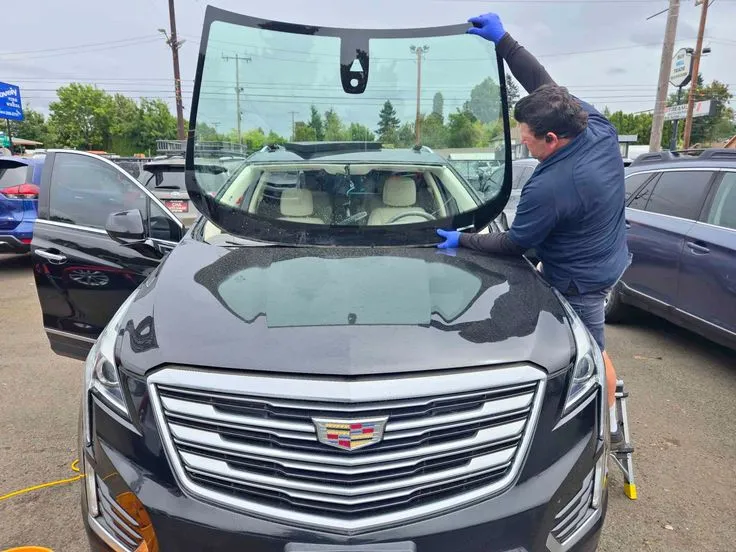
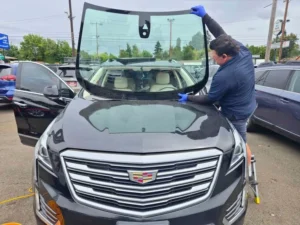
For severe or widespread pitting, full windshield replacement is the only permanent solution. No polishing, professional or DIY, can fix pitting that covers large areas or sits deep in the glass layer.
Replacement restores:
- Full optical clarity
- Structural strength
- Wiper performance
For vehicles with ADAS systems, technicians must also recalibrate the cameras and sensors mounted behind the new glass after installation.
Always choose a certified technician who follows Auto Glass Safety Council standards. Improper installation creates its own safety risks.
Ready for a clear windshield and safer drive? Get your windshield replaced by certified experts in Toronto.
Can a Pitted Windshield Be Repaired?
This is the most common question, and the honest answer is: not really.
Resin injection works for chips and cracks because there’s a single void to fill. Pitting is thousands of microscopic craters spread across the glass. There’s no practical way to fill them individually.
Polishing can reduce the appearance of light pitting, but it doesn’t repair the glass. It removes material, which can make the windshield thinner and optically uneven.
Be cautious of anyone who claims they can fully “repair” a pitted windshield. Extremely minor, early-stage pitting may be managed temporarily with professional polishing, but only if caught immediately.
Once damage is widespread, windshield replacement is the only safe, permanent solution.
When in doubt, get a professional inspection from a certified auto glass technician. They can assess depth, coverage, and whether your situation falls in the repairable window or beyond it.
Don’t wait until pitting becomes a crisis. Contact our Toronto team today for a fast, honest windshield assessment.
Frequently Asked Questions
Does car insurance cover windshield pitting in Canada?
Most standard auto insurance policies do not cover windshield pitting because it’s classified as gradual wear and tear, not sudden damage. However, if you have comprehensive coverage, some insurers may contribute toward replacement costs. Always check your specific policy and ask your provider directly before assuming you’re covered.
How long does it take for windshield pitting to become dangerous?
There is no fixed timeline. Pitting develops faster for drivers who log heavy highway miles, drive through construction zones regularly, or live in areas with harsh winters and road salt. A windshield can show significant pitting within two to three years under those conditions. The key factor is not time, it’s cumulative exposure.
Can I pass a vehicle safety inspection with a pitted windshield?
It depends on severity. Minor pitting that doesn’t obstruct the driver’s primary field of vision may pass. Widespread pitting that causes visible distortion or glare in the driver’s sightline can result in a failed inspection in many Canadian provinces, including Ontario. A certified technician can tell you where your windshield stands before you go in.
Is windshield pitting covered under a new car warranty?
No. Windshield pitting is considered road damage and wear and tear, not a manufacturing defect. It falls outside the scope of standard new car warranties. Some dealerships offer separate glass protection plans at purchase, but standard warranties do not apply.
What is the difference between windshield pitting and a windshield chip?
A chip is caused by a single, identifiable impact that creates one visible divot or crack. Pitting is the result of hundreds or thousands of microscopic impacts accumulated over time. A chip has a clear location you can point to. Pitting is spread across the surface and creates a hazy, diffused effect rather than a single visible damage point.